“Trust your instincts, one anonymous artwork at a time.“
Wait…wrong manifesto. Let’s try that again...
“Hey, a girl can scheme, can’t she?.“
There we go.
This city runs on two things, unchecked capitalism and performative activism. We’ve got condo developers hosting “affordable housing panels” at $500/plate fundraisers. Tech bros “disrupting” industries while their baristas pee in cups to avoid bathroom breaks. And don’t even get me started on the “girlbosses” who think free kombucha counts as a living wage.
Now, in RainCouver‘s endless cycle of unaffordable lattes and soul-crushing side hustles (*cough cough*), your boss just sent a 10PM Slack. The DTES SRO you call “a steal at $1800/month” just got flipped into “luxury micro-lofts.” And somehow, somehow, Dolly Parton saw this coming 45 years ago when she wrote the anthem for every overworked, underpaid, and thoroughly pissed-off woman in America.
Jaysuits, imagine that anthem, that glorious, twangy middle finger to the patriarchy, exploding across the Massey Theatre stage with enough sequins to blind a West Van trust fund baby.
Enter :
And honey, it’s a goddamn reckoning.
WHY THIS? WHY NOW?
Let’s cut through the usual theatre review hoohah. You don’t need another thinkpiece from moi about “the transformative power of art” or whatever they’re serving at the Vancouver Playhouse gala this week. What do we need? (Well me). A goddamn catharsis.
Last December, I sat in the Stanley Industrial Alliance Theatre watching Dolly Parton drag Ebenezer Scrooge kicking and screaming into the 1930s Appalachians. Smoky Mountain Christmas Carol was everything; homespun, heartfelt, and so aggressively wholesome it made me want to forgive my landlord. For, like, five minutes.
Cut to May. The snow has melted, and despite the blooming cherry blossoms all across town, my holiday spirit has curdled into existential dread, but thankfully Dolly’s back. This time, she’s not here to save Scrooge’s soul. Parton understands the assignment.
She’s here to help us end a boss
From April 25 to May 11; Under the choreography of the revered Valerie Easton and her codirection with Chris Adams, in the heart of New Westminister, the fantasy isn’t dragons or magic wands—it’s getting away with it.
Think OFFICE SPACE, a dash of HORIBBLE BOSSES and sprinkles of THELMA & LOUISE
(BUT WITH MORE HAIRSPRAY)
THE FANTASY: WHAT IF WOMEN RAN THE SHOW?
It’s 1979 at Consolidated Industries. The typewriters clack, the coffee burns, and three women—Violet, Judy, and Doralee—are slowly losing their damn minds under the thumb of Franklin Hart Jr., the kind of boss who’d probably describe himself as a “disruptor” while stealing credit for your ideas. (*cough Musk cough*)
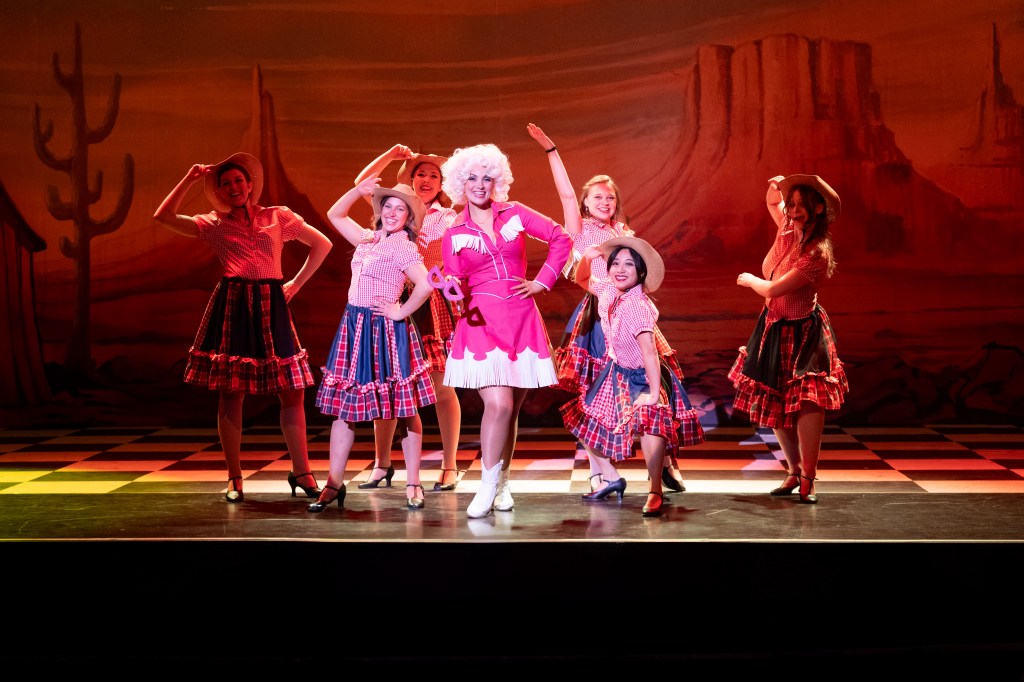
Maia Beresford as Doralee. Irene Karas Loeper as Violet. Madeleine Suddaby as Judy. Photography by Emily Cooper. Costumes by Deborah Basterfield.
Here’s where *9 to 5* shifts from workplace satire to full-blown wish fulfillment. After a series of mishaps (and one accidental kidnapping), Violet, Judy, and Doralee find themselves in charge of Consolidated Industries. What follows is nothing short of a corporate revolution: flexible hours, onsite childcare, equal pay. It’s the HR policy of every progressive company’s dreams—dreamed up and implemented by three women who’ve had enough.
Photo credits-Moonrider productions.
“THREE WOMEN, ONE TERRIBLE BOSS“
Violet (Irene Karas Loeper) is the seasoned office manager who’s been passed over for promotion one too many times. She’s sharp, capable, and sick of watching less-qualified men climb the ladder while she’s left holding the Rolodex. Sound familiar? It should. In a city where “culture fit” often means “not a woman over 40,” Violet’s struggle is as relevant as ever.
Photography by Emily Cooper Costumes by Deborah Basterfield
THE SHOW’S HART
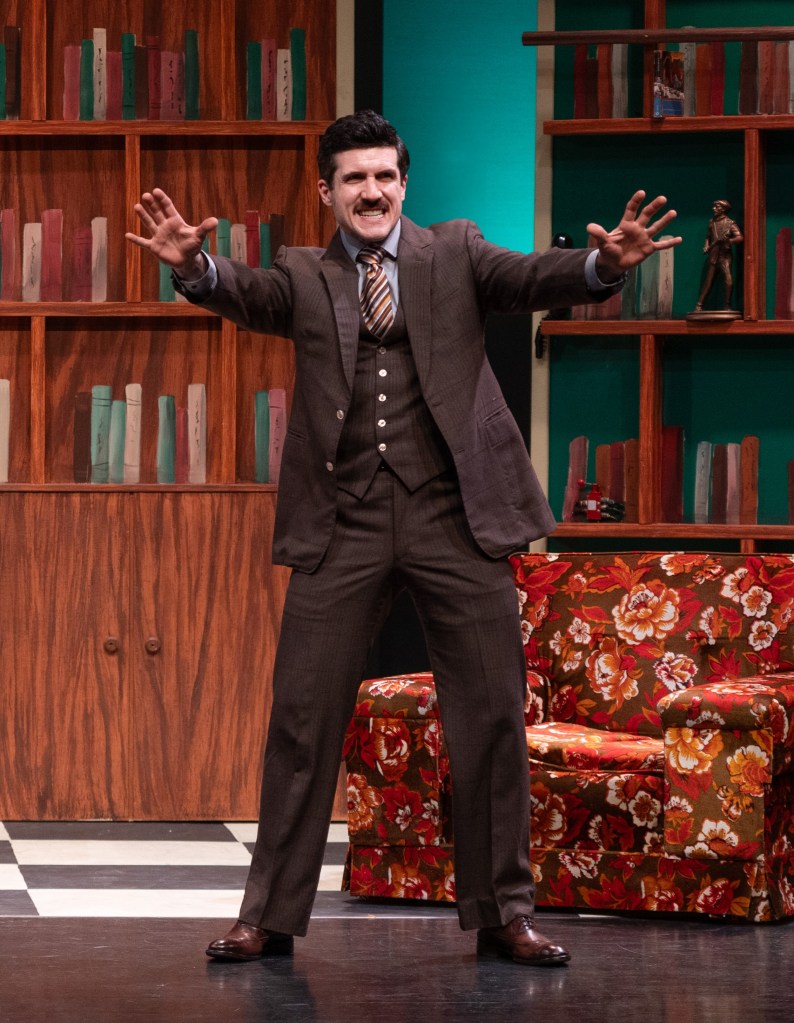
Franklin Hart Jr., the misogynistic, hypocritical, cigar-chomping CEO of Consolidated Industries—played to sleazy perfection by Dustin Freeland. If you’ve ever had a boss who called you “sweetheart” in a meeting, took credit for your work, or generally embodied the phrase “toxic masculinity” long before it was a hashtag,congrats. You’ve met Hart.
Photo credits: Moonrider Productions
Let’s now talk about how RMCT took the soul-crushing reality of 70s office life and turned it into something we can clap and plot corporate takeover to.
THE SECRET SAUCE: DOLLY’S LYRICISM
We’ve traded typewriters for Slack and Rolodexes for LinkedIn, but the soundtrack to workplace despair hasn’t changed. The gender pay gap? Still 17% in BC. Bosses taking credit for your ideas? Now they call it “collaboration.” That moment when the ensemble belts “We want justice, we want fairness, we want what we deserve”? That’s not 1979—that’s next Tuesday’s staff meeting.
The performers’ histories are woven into the fabric of this adaptation, transforming Dolly’s anthems into lived-in truths. Loeper’s resilience, Suddaby’s transformative power, Beresford’s charm, and Suratos’s comedic brilliance, all rooted in years of Vancouver theatre, create a production that resonates as both entertainment and empowerment.
“9 to 5” – The Pulse of the Daily Grind
That opening number’s pure magic. The moment those typewriter keys start clicking to the rhythm of “9 to 5”, you’re transported – not just to 1979, but to every soul-sucking Monday morning you’ve ever endured. The choreography whisks us from bedrooms to bustling streets in a whirlwind of alarm clocks and the universal dread of another workweek. It’s the morning routine as Olympic sport, set to Dolly’s twangy beat.
The ensemble’s precision here is vital, their movements reflecting the absurdity of repetitive labor. Madeleine Suddaby’s Judy is introduced as a wide-eyed newcomer, her tentative steps contrasting with the seasoned resolve of Irene Karas Loeper’s Violet, whose deadpan delivery of lines like “Pour myself a cup of ambition” underscores the song’s biting irony. Angus Kellett’s orchestra amplifies the tension between drudgery and defiance, to create a soundscape that feels both nostalgic and urgently modern. The number’s brilliance lies in its duality: it critiques systemic exhaustion while celebrating the friendships of those who endure it.
“Get Out and Stay Out” – Judy’s Cathartic Reclamation
This solo marks Judy’s transformation from fragile divorcee to self-assured rebel, anchored by Madeleine Suddaby’s vocal mastery. Suddaby’s voice crackles with raw emotion as she grapples with betrayal. As the orchestration swells—strings surging, her delivery shifts to thunderous resolve, culminating in the defiant belt of “I’ll never need you again!” Suddaby’s performance draws on her experience in roles demanding emotional range (e.g., Adelaide in Guys and Dolls), balancing technical precision with visceral intensity.
“Backwoods Barbie” – More Than Looks
Showcases Maia Beresford’s ability to merge charm with quiet rebellion. The country ballad’s waltz rhythm and instrumentation masks its lyrical sharpness, as Doralee dismantles assumptions about her intelligence. Beresford’s warm, twang-infused delivery of lines like “Don’t let these false eyelashes lead you to believe…” reveals the steel beneath her character’s glamorous exterior. The arrangement keeps the focus on Doralee’s humanity, allowing vocal nuances, to underscore the song’s critique of gendered stereotypes. This performance aligns with the musical’s broader mission to challenge workplace sexism, proving beauty and brains are not mutually exclusive.
“Heart to Hart” – Office Comedy
Leaning into dark comedy, Suratos turns Roz’s delusional crush into a satirical masterpiece. Performed in an office bathroom with “sassy dancers,” the jazz-infused melody clashes hilariously with lyrics about obsessive devotion. Suratos commits fully to the absurdity, her pelvic thrusts and exaggerated swoons synced to office machinery rhythms, while her “electrifying” vocals elevate the camp into biting social commentary, honed through her past work in ensemble-driven productions like Tony and Tina’s Wedding. The choreography, blending slapstick with precision, critiques workplace power imbalances by reducing authority figures to laughable obsessions. This number exemplifies the show’s tonal balance, merging humor with incisive critique.
“Shine Like the Sun” – Working Together
The Act 2 showstopper transforms workplace reform into a disco-fueled utopia. This wonderful local ensemble, some 30 odd strong, praised for their “polish and pizzazz,” executes Easton’s choreography with infectious joy, leaping over desks, twirling around filing cabinets, and harmonizing with gospel-like fervor.
This number crystallizes the musical’s thesis: systemic change thrives on solidarity. The joy radiating from the cast (almost got me out of my seat), honed through years of collaboration in productions like Jersey Boys, makes the message feel less like idealism and more like a tangible call to action.
VERDICT
✨✨✨✨✨
Let’s not pretend we’re just here for the toe-tapping numbers and Dolly’s iconic music. What makes this production land is in its refusal to just be a period piece. Valerie Easton’s choreography turns filing into fight moves. Angus Kellett’s orchestra makes typewriter sounds feel like revolution drums. And that moment when the trio finally takes control? It plays less like 70s fantasy and more like an instructional video for your next performance review.
While other reviewers might call this show “a visual, sonic, and emotional treat,” I’m calling it what it is—a goddamn necessity for your mental health. You’ve blown $37.50 on far worse things. That sad excuse for a craft cocktail at that pretentious Gastown bar last weekend. The “vintage” shirt from Main Street that fell apart after one wash. The therapy session you canceled last-minute and still had to pay for. (Not me at all, no way….)
What you get instead: pure, unadulterated catharsis wrapped in tight suits and big hair, set to music that will have you strutting into your next staff meeting like you own the damn place.
In a city where they’re tearing down artist studios to build “innovation hubs,” this musical is the closest thing we’ve got to collective bargaining. The standing ovation, I feel, is our community realizing they’ve been humming the resistance anthem for decades.
🚨WHY ARE YOU STILL READING THIS? GO BUY TICKETS🚨
May 11th. Nine days. Eight days. Well depends on when you read this. That’s all that stands between you and missing out on the most satisfying two-and-a-half hours you’ll spend all month.
The Massey Theatre is RIGHT THERE, 5 minutes from New West station. Your commute takes longer than getting to this show. Stop making excuses.
You know what costs more than these tickets? Your sanity. Your joy. Your will to live through another excruciating team-building exercise where Brad from accounting talks about his crypto investments.
So here’s what you’re going to do:
Put down whatever overpriced, ethically-sourced beverage you’re nursing
Open royalcitymusicaltheatre.com
Book your tickets for any night before May 11th
Thank me later when you remember what hope feels like
A few more days. That’s it. Then this gem vanishes like affordable housing in this godforsaken city. Don’t you dare message me saying “I meant to go” when I’m raving about it at that dinner party next month.
Your future self—the one who’s one passive-aggressive email away from quitting without notice—deserves this night out. Trust me, after watching women take charge on that stage, Monday morning’s drudgery will feel a little more bearable. Or at least you’ll have better fantasies about what to do with the stapler.
Your impending workplace meltdown can wait until after the show.
9 to 5, the Musical is presented through special arrangement with Music Theatre International (MTI). All authorized performance materials are also supplied by MTI (MTIshows.com).