

Okay Vancouverites and fellow Jaysuits. It’s that time again.
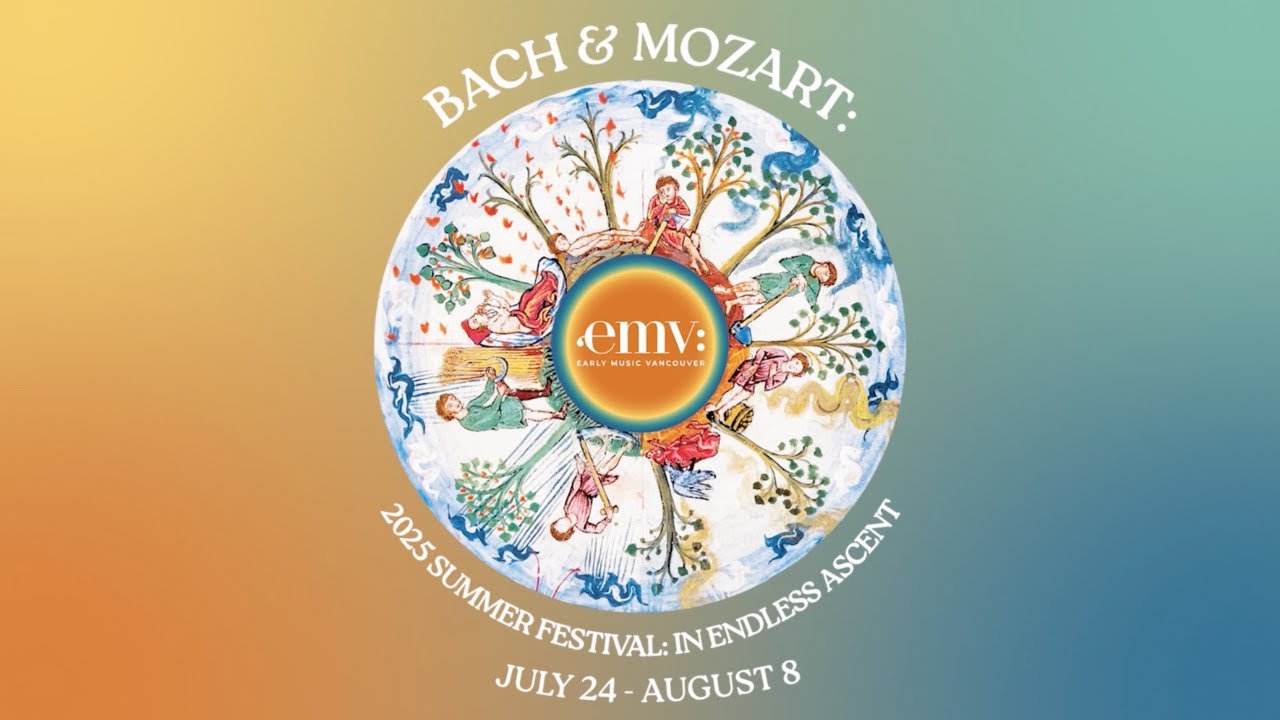
Early Music Vancouver is back with its 55th Summer Festival, and after Bach Untamed last year stretched the limits of what “early music” could sound like; this year, they’re launching us straight into the stratosphere. BACH & MOZART: In Endless Ascent. Scroll on, as I’ll be breaking down two of the most iconic names in classical music, now layered with new Canadian works, Chinese instrumentation, Baroque dance, and a heavy dose of transcendence featuring RISING QUEBEC SOPRANO Magali Simard-Galdès.
You already know I’ve been following EMV for a minute, with last year’s festival being a full-blown sensory baptism. Monteverdi’s Vespers of 1610 had me floating inside the Chan Centre, and Goldberg Variations, reimagined with winds and strings, quite literally cracked open how I hear Bach now. And at the center of all that brilliance was Alexander Weimann, director of the Pacific Baroque Orchestra. Over the years, I’ve gone from casually appreciating his work to recognizing him as one of the most versatile, quietly fearless conductors on the Baroque scene, quite literally reshaping it. You don’t forget his interpretations. He brings the PBO in like a precision force and makes even the oldest compositions feel uncannily present. Weimann’s work is part of a larger lineage here in Vancouver, a city that’s long punched above its weight in early and historically informed performance. This town has hosted giants. The Vancouver Chamber Choir under Jon Washburn, the pioneering work of the Vancouver New Music society, and of course, the early roots of EMV itself, which go back to a few passionate players in the 1960s bringing authentic instruments and forgotten scores into churches and libraries. There’s a legacy here, a steady burn of innovation and restoration.


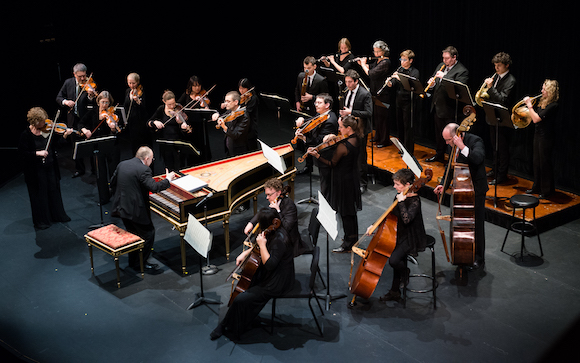
This summer, the whole thing feels bigger, bolder. There’s a gravity to it, but also an upward pull. A slight shift. The structure holds, the venues remain familiar, but the programming carries a different weight depending on the year. This season, that weight moves inward. The music is quieter in its design but more deliberate in its reach. Across multiple performances, there’s a clear relationship forming between sound and environment, between form and belief. Several programs turn directly toward nature, as you’ll read below; but without framing it as subject. In Bach & The Heavens, the connection appears through celestial geometry and Indigenous worldview, drawn forward in new commissions that remain grounded in ritual structure. I’ve noticed a shift in pace. Even large programs feel closely held. That suits the venues. It suits the season. Christ Church, with its length and resonance, carries tone more than texture. The Playhouse holds stage movement without letting the music recede. The Annex keeps the piano tight and articulate. Each concert has been placed with care, and that placement becomes part of the listening.
After covering several EMV seasons, I’ve come to hear these choices less as statements and more as alignments. The programming doesn’t break from tradition but rather, It tunes into what the tradition can still carry. That approach brings the festival closer to something essential: music as attention. So whether you’re EMV-curious or a diehard like me who already has their Christ Church Cathedral seat picked out (aisle, stage-left, thanks), buckle up. This one’s reaching higher.
🎪Festival Highlights & Must-See Shows🎪
What’s hot. What’s wild. What’s already in my calendar.
With over 50 artists and performances packed across 14 days, this year’s EMV lineup is curated like a mixtape for the soul. Bach and Mozart are the anchors, but it’s everything orbiting around them that makes this festival next-level. Here’s what I’ve got my eye (and ears) on:
🌲 The Enchanted Forest🌲
Baroque meets mythology meets dance magic.
📍 Vancouver Playhouse | 🗓 July 31 @ 7:30pm
Baroque fantasy meets ritual theatre in a show that reads like a fever dream (the good kind). Choreographed by Les Jardins Chorégraphiques and infused with Indigenous design via Rande Cook, The Enchanted Forest merges court dance, live music, and mythic storytelling into a lush, breathing tableau. Oh, and Tarun Nayar (of Modern Biology) is involved. That’s the guy turning plants into synths. EMV regulars will recognize the structure of a dramatic cantata here, though stretched across more mediums.
The program opens with Jean-Féry Rebel’s Les Élémens (1737), a groundbreaking orchestral suite that begins with “Le Chaos,” a chord composed of every note in the scale; a daring move for the time, symbolizing the primordial disorder before the creation of the world. Rebel, a former student of Lully and one of the 24 violons du roi, wrote the suite as a ballet symphony: each movement paints a vivid picture of one of the four classical elements. Earth rumbles through heavy bass pulses, water flows in scales and rhythmic waves, air lifts in trills and upper-register ornamentation, while fire darts and flashes in tremolo strings. The suite’s later dances; loure, chaconne, tambourins, carry these elemental imprints forward with baroque flair.
Then comes Francesco Geminiani’s The Enchanted Forest, inspired by Torquato Tasso’s Gerusalemme Liberata, a 16th-century Italian epic of crusaders confronting a haunted wood conjured by a sorcerer. The original pantomime, La forest enchantée, premiered in Paris in 1754 under Giovanni Niccolò Servandoni’s direction, featuring illusions, moonlit landscapes, and magical beasts. Geminiani’s music outlived the stagecraft and survives today as an evocative concert piece rich in texture and drama. Instead of literal storytelling, the score holds onto the mystique; the spells, seductions, and looming giants that once gripped Parisian audiences.
In this new EMV staging, the fantasy is reimagined through contemporary lenses. Les Jardins Chorégraphiques, co-directed by Marie-Nathalie Lacoursière and Stephanie Brochard, layer the performance with period-informed choreography, while Rande Cook’s Mushroom Kingdom Dance fuses Indigenous rhythm with storytelling grounded in cultural ecology. Tarun Nayar; best known for turning mushrooms and plants into electronic instruments, composes an original score that blends natural frequencies with acoustic timbres, creating bridges between living systems and baroque instrumentation.
The cast of performers includes the full PBO under Weimann’s direction, with Cook on drum, Nayar on modular synthesis, and dancers moving within and around the ensemble. There’s a sense of collapse here, of old worlds falling into new ones. Pre-show, a conversation moderated by sustainability expert Vanessa Timmer will bring Weimann, Lacoursière, and Cook together to unpack how myth, land, and sound came together in this production.
Every gesture is musical. Every movement plays against the phrasing. It’s theatre through the lens of counterpoint. This one feels like a portal. Something sacred’s going to happen here.
Vibe: If Ari Aster directed a ballet in Versailles.
🧵 Silk Strings: A Chinese-Baroque Musical Dialogue🧵
📍 Christ Church Cathedral | 🗓 July 29 @ 7:30pm
What happens when a melody shaped by Confucian classicism meets ornamentation rooted in European court tradition? You get something completely fresh, but grounded in tradition on both sides. Now this is why I love EMV.
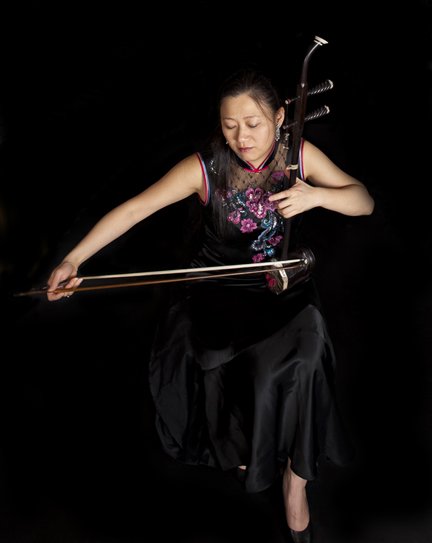
Christina Hutten and Edward Top pull together Vancouver’s Sound of Dragon Society and EMV Festival Players to create something wild: a dialogue between early Chinese string instruments and Baroque continuo players. It’s something more layered than the usual. Call it cultural time travel. Think pipa meets harpsichord, erhu vs viola da gamba. It’s East meets West in the most respectful, unexpected way. The result is an exploration of line, mode, and tuning, as Chinese pentatonic materials intersect with European figured bass practice.
And it runs deeper than crossover. According to Stir Magazine’s Alexander Varty coversation with Hutten, the entire concert plays off the long arc of history; from 18th-century Jesuit composers like Teodorico Pedrini at the Qing court (written in a hybrid voice between Corelli’s Italian style and the unique sound world of the Chinese imperial court, his surviving manuscripts offer only sketches, requiring modern performers to fill in the texture through improvisation and ornamentation, echoing how Baroque music was always meant to live) ; to contemporary works by Edward Top and Dorothy Chang. Top’s Farewell Songs draws on Tang Dynasty poetry and Mahler’s Das Lied von der Erde, reimagined with his own translations and arranged for voice (sung by soprano Emma Parkinson), Chinese instrumentation, and Baroque ensemble, by re-translating the poems and layering them across a cross-cultural instrumentation that includes; erhus, suona, sheng, and zheng. Traditional Chinese instruments mirroring the textures of their Baroque counterparts; violin, cello, sackbut, and harpsichord.
Yes, the sheng makes an appearance, that polyphonic reed instrument whose closest Western cousin is probably the pipe organ. There’s no simple blending here. The musical grammar stretches, but never snaps.
Dorothy Chang sets texts by modern Canadian poets who carry the spirit of Zen and Taoist image-making. Her background as a Chinese-Canadian-American composer gives her work a unique kind of fluency, allowing for organic intersections between musical languages.
The program arcs toward music by Lan Tung, whose “Sound of Dragon” provides a thematic closing, built around motifs from the Chinese folk melody “Crazy Snake Dance.” It jumps off into improvisation, African rhythms, and Moroccan textures; a fusion that reflects both the musical journey and Vancouver’s global crossroads energy. Appearing alongside Tung will be Jun Rong on erhu; Zhongxi Wu playing suona and sheng; Dailin Hsieh on zheng; percussionist Gregory Samek; violinist Majka Demcak; cellist Martin Krátký; Jesse Lu on bass; and Jeremy Berkman on sackbut. The ensemble is a one-time constellation, a living conversation between sound-worlds that are often siloed.
Hutten described it best in her interview with Stir: “You might start with a simple idea, sometimes a very old simple idea, and the way that you develop it is by making it more and more beautiful.”
The concert includes newly arranged historical pairings, like Hujia, an 18-verse lament by Lady Cai of the Han Dynasty, arranged by Tung. Unter der Linden, a medieval Minnesänger poem by Walther von der Vogelweide, is stitched together from period arrangements by Sweelinck and van Eyck, here reworked for harpsichord and solo trombone; a speculative re-creation inspired by historical Dutch performances in Chinese courts.
Pedrini’s Sonata in G Minor, preserved in the National Library of China, closes the loop. Inspired by Corelli and reshaped by generations of musicians, the piece stands as the only known manuscript of Baroque music to survive in China. Its inclusion here is the heart of Silk Strings; it’s a musical reminder of the continuity and resilience of dialogue across borders, styles, and centuries. It’s one of the most ambitious and thoughtful programs EMV has staged in recent memory, and it’s happening right here in our city.
Vibe: What if Yo-Yo Ma’s Silkroad Ensemble got dropped into a Bach fugue?
🎹 True North Variations: O Canada Reimagined🎹
📍 The Annex | 🗓 July 27 @ 2:00pm + CD launch
Alexander Weimann steps out solo here, reworking “O Canada” into something I’m genuinely curious about. I know; on paper, it sounds like a concept album your uncle might pitch. But this is Weimann, and if anyone can turn a national anthem into a meditative, genre-bending musical journey, it’s him. Plus, it’s a rare piano-focused performance from someone who usually hides behind the harpsichord. The work moves across French overture, sarabande, and fugal textures, pulling the anthem into counterpoint with itself. Presented in The Annex, where the dry acoustic supports crisp articulation, this recital is promises to be both playful and formal. Bonus: CD launch reception = wine = go.

Vibe: Glenn Gould goes north, goes rogue.
🎻 Bach’s Musical Offering🎻
📍 Christ Church Cathedral | 🗓 August 7 @ 7:30pm
Chloe Kim is back! Teaming up with Grégoire Jeay (traverso), Margaret Little (viola da gamba), and Christophe Gauthier (keyboard). This one’s chamber music with edge. The Musical Offering isn’t just Bach flexing; it’s a riddle in notes. Originally built as a response to a theme given by Frederick the Great and includes canons, fugues, and a trio sonata that push contrapuntal writing to its edge. This will be a concert of clean entrances, sustained tension, and carefully revealed architecture, and with Kim’s playing, expect emotion and heat. The last time I saw her, I walked out in a daze. Like the good kind.
Vibe: Genius decoding genius. Come for the canon, stay for the spiritual whiplash.
🎶 Bach Cantatas: The Ascent🎶
📍 Christ Church Cathedral | 🗓 August 5 @ 7:30pm
Here’s your traditional feast, but with EMV’s signature flare. Magali Simard-Galdès, Daniel Moody, Jacob Perry, Drew Santini, and the full Pacific Baroque Orchestra. Directed by Weimann (obviously). These cantatas are stacked with emotional peaks and given this year’s “ascent” theme, you know they’re going to lean all the way in. This is liturgical music shaped by inner tension and release. Instrumentally, the cantatas weave between obbligato solos and choral density, and vocally, they balance ornamentation with word-painting that sharpens the theological imagery. The cathedral will hold this texture well.
Vibe: Baroque beauty at full power. Bring tissues.
🕯️ Mozart’s Requiem🕯️
📍 Chan Centre | 🗓 August 8 @ 7:30pm
The festival closer. We end big. Simard-Galdès, Emma Parkinson, Jacob Perry, and Drew Santini, plus the Vancouver Cantata Singers and PBO, performs Mozart’s Requiem using the 2024 Howard Arman completion. The scoring is faithful to Mozart’s known manuscript, but Arman’s edits refine orchestral voicing and clarify inner lines. The Chan’s acoustic promises to support the Requiem’s spatial elements; from the brass doubling in the Tuba mirum to the unison choral writing in the Kyrie. If you’re going to experience Mozart’s final, unfinished masterpiece anywhere, make it here, under the vaulted dome of UBC’s iconic venue. It’s the kind of show that might just turn a casual listener into a lifelong fanatic.
Vibe: Sacred, cinematic, soul-rattling.
And don’t sleep on the smaller gems either, Figments and Fragments, Forgotten Harmonies, and Bach and the Heavens (from the Gallo Chamber Players) are all stacked with talent. But the shows above? These are the ones I’d crowd surf into if I could.
Artist Spotlight: Magali Simard-Galdès
Raised in Rimouski, Quebec, in a house where nature and science were the norm; her parents a biologist and a doctor, EMV’s 2025 Artist-in-Residence, Magali Simard-Galdès, is a presence. Anyone who’s heard her knows that crystalline tone, how it floats one moment and slices clean the next. But what really stands out is how she carries her artistry into the world. She’s a trained opera soprano, yes, but also a sustainability strategist, someone asking real questions about how we make and share music now.
She grew up watching birds and hiking valleys. That groundedness stayed with her, even as her career launched her into Europe’s opera houses and onto Canada’s top stages. During the early days of the pandemic, with flights grounded and concerts paused, she pivoted: a master’s in sustainability management from HEC Montréal. Serious work. Big systems thinking. Less about slogans, more about structure.
That thinking shows up everywhere in her work. On July 30, she’ll lead a roundtable at the Vancouver Playhouse salon: Sustaining the Arts: A Conversation on Cultural and Environmental Responsibility. The lineup includes Vanessa Timmer from One Earth Living, Barbara Adler from The Only Animal, Rande Cook from the Awi’nakola Foundation, and fellow EMV musicians Chloe Meyers and Natalie Mackie. It’s not just about reusable water bottles or fewer printed programs, though those matter. They’ll be getting into the deeper stuff: touring logistics, audience travel, production waste, even the idea of universal modular opera sets. This isn’t side-project territory but rather, It’s baked into the work.
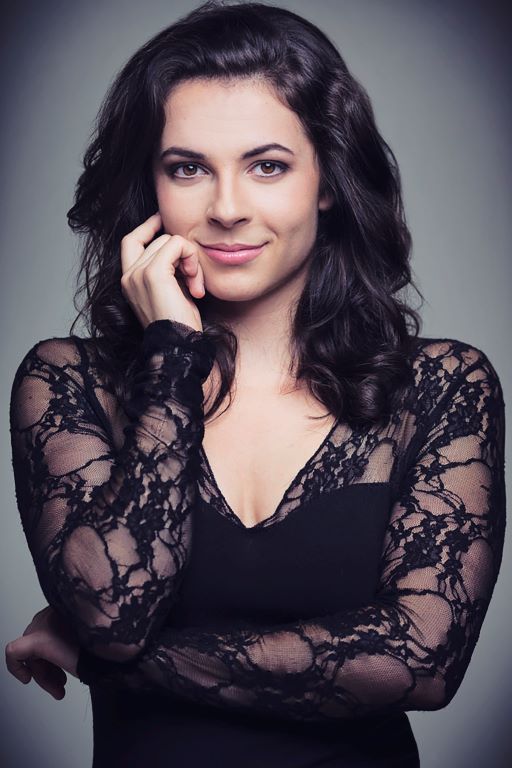
But none of this slows her down as a performer. Quite the opposite. You’ll hear her on August 5 at Bach Cantatas: The Ascent, where she joins Daniel Moody, Jacob Perry, Drew Santini, and the PBO. She has a way with this repertoire, her phrasing feels both meticulous and alive. Her voice sits cleanly in the texture without ever getting swallowed, and she brings an emotional honesty to Bach that feels earned. “Bach just elevates you,” she told Stir Magazine. “It brings you peace… but also it lets you express really deep feelings.”
Then there’s Forgotten Harmonies on August 1. This is where things get even more personal. Alongside her partner, natural horn player Simon Poirier, and pianist Olivier Godin on fortepiano, Simard-Galdès digs up 19th-century songs by Schubert and his contemporaries; many of them previously unrecorded. They did the archival work themselves, pulling scores from the British Library, looking for lieder that deserved another life. It’s a quiet kind of revival, careful and deeply researched.
She also appears in the festival’s closer, Mozart’s Requiem, back at the Chan Centre on August 8. If you grew up spinning the Amadeus soundtrack on repeat, this one’s going to land hard. “I listened to it a lot when I was in high school,” she said. “Before I was trained, I sang it in my living room.” Now she’s anchoring it with the PBO and the Vancouver Cantata Singers.
You can preview her voice on YouTube, or just show up and hear what it’s become. As an artist, she’s somewhere between clarity and fire. As a thinker, she’s asking what art can do when it stops pretending it exists outside the world. And this year at EMV, she’s right where she needs to be.
(With excerpts from Stir Magazine, interview by Janet Smith)
🎟️ Tickets & Access🎟️
EMV’s 2025 Summer Festival – BACH & MOZART: IN ENDLESS ASCENT
📅 July 27 – August 8, 2025
📍 Various Venues
Ticket Prices: From $25 to $88
🎓 $15 student tickets
🪶 Free tickets available for Indigenous persons and youth ages 7–17
🎟 Ticket link + full policy: earlymusic.bc.ca
If you’re planning to attend more than a few events, look into festival bundles and multi-show passes to save. Seats at key shows (Mozart’s Requiem, Silk Strings, The Enchanted Forest) won’t last long. Book early if you want to breathe in that cathedral air with the best acoustics.
Copyright © 2025 EARLY MUSIC VANCOUVER