

Vancouver, Jaysuits, has this funny way of surprising you. One minute we’re queued up outside the Playhouse during VIFF, debating whether that three-hour Cannes import is a masterpiece or just an expensive nap, the next we’re bragging about being Hollywood North, with Percy Jackson & Sandler’s Grown Ups 3 staking their claim on our streets this fall.
As VIFF brings down it’s curtain come Mid-October, it’s worth remembering that our stages deserve just as much shine as our screens.
DanceHouse, a cornerstone of our local arts community, known for consistently bringing world-class contemporary dance to our stages with it’s embrace of diverse cultural expressions; announces the return of a landmark work that has captivated audiences around the world for over two decades.
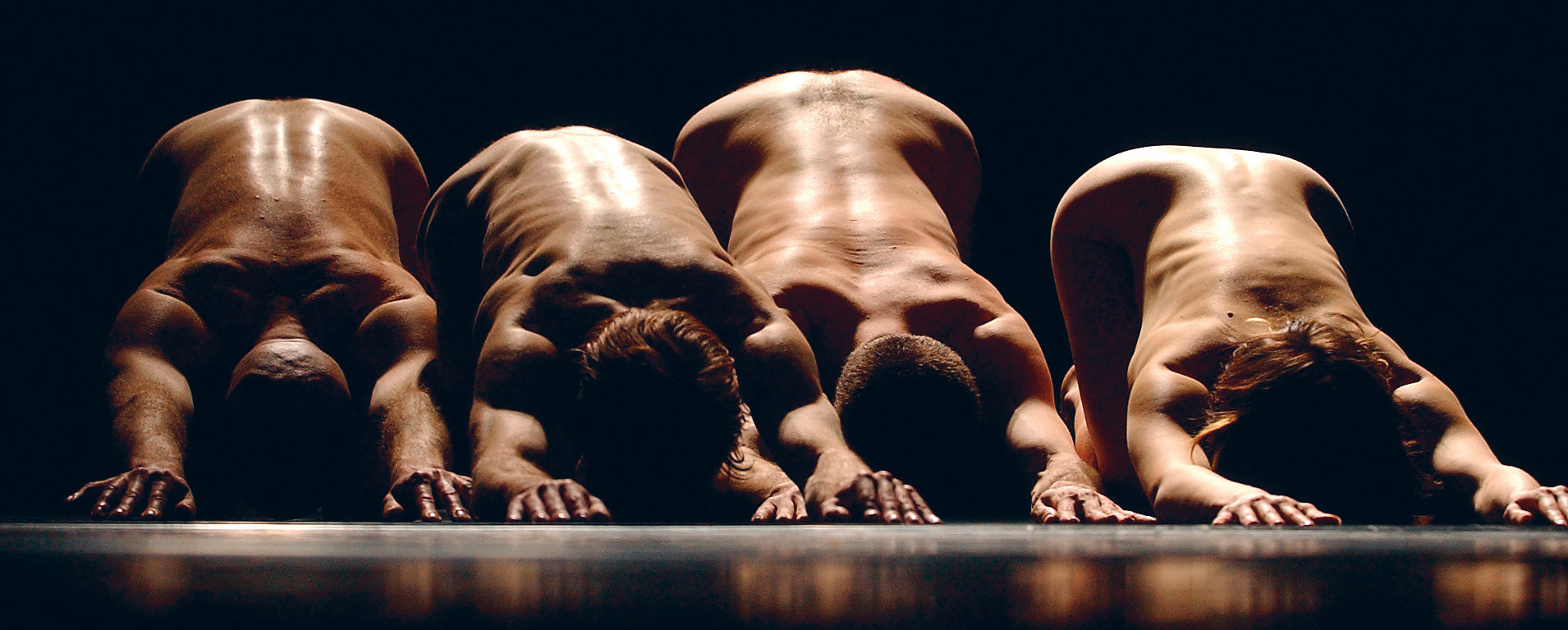
This October 24th and 25th, at the Vancouver Playhouse, prepare for an encounter with Daniel Léveillé’s striking and tension-filled masterpiece, “Amour, acide et noix“, or as it’s known in English, *Love, Acid and Nuts*.
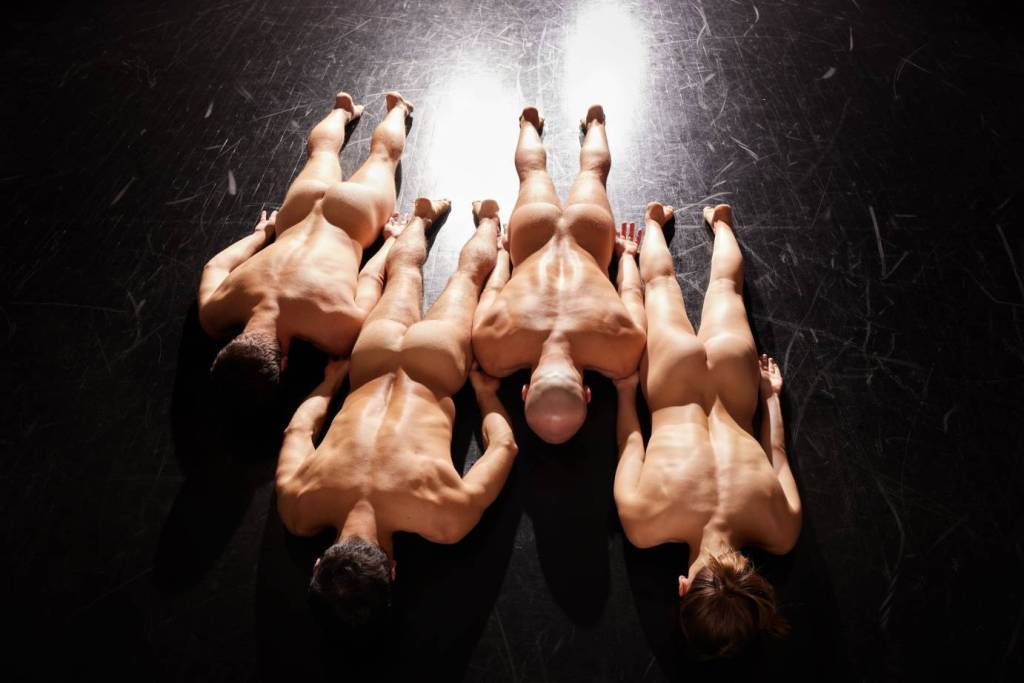
Featuring four dancers, performing fully nude, and set against music that swings from Vivaldi to pop music and birdsong, using their bodies to plumb the very nature of the human condition.
A piece that’s been called one of the rawest, most vulnerable works in Canadian contemporary dance; it represents a vital encounter with a work that transformed Montréal’s dance scene upon its premiere in 2001 and continues to resonate with profound relevance today.
Jim Smith, Artistic and Executive Director of DanceHouse, aptly describes it as an “unflinching, minimalist masterpiece that confronts beauty, vulnerability, and the human body with rare honesty.”
Free of costumes (quite literally) or pretense, it promises to be both disturbing and compelling, by forcing us to into a participatory act of confronting taboos and desires, all while exploring loneliness and the simple act of surviving a harsh world with a little bit of touch.
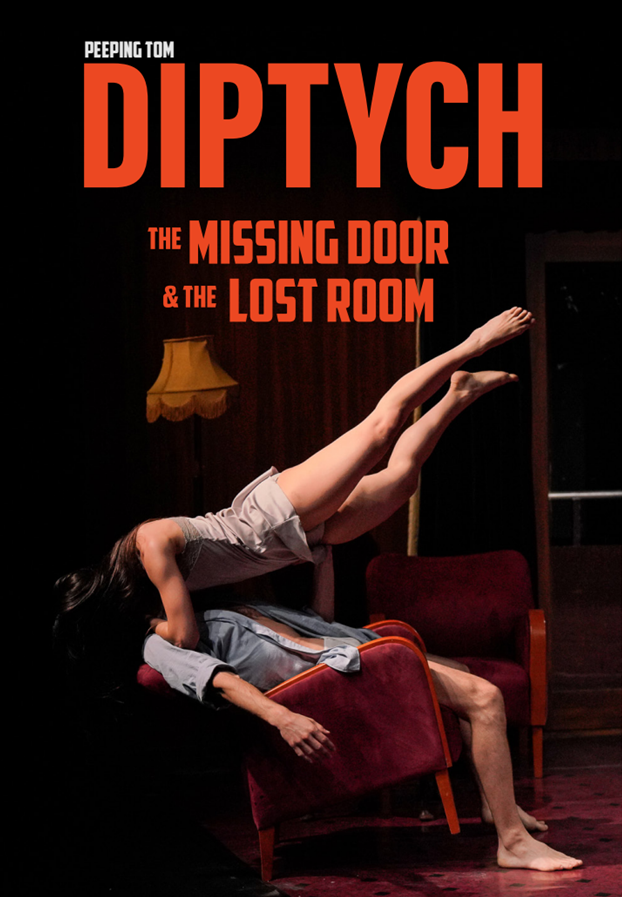
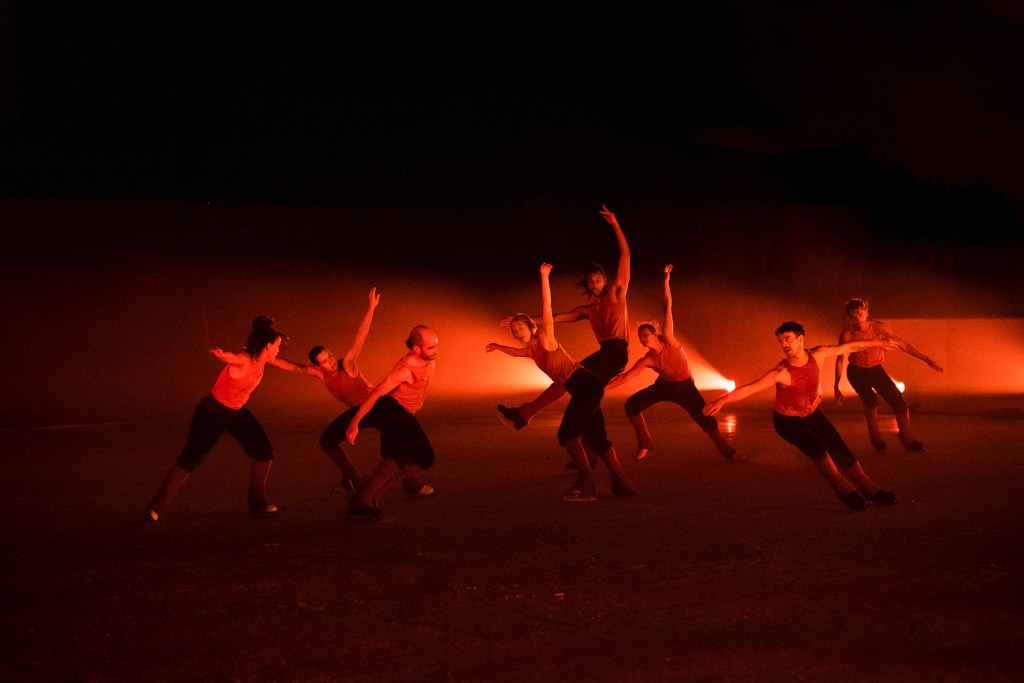
DanceHouse, by the way, has made a habit of this. Last season they let me wander into Peeping Tom’s twisted nightmare worlds (The Missing Door & The Lost Room), and they even put skaters on ice at Kerrisdale with Murmuration.
In the sections below, I’ll guide you deeper into the visionary mind of Léveillé, exploring his artistic journey and the philosophy behind his groundbreaking work, examining its enduring impact and why it remains a masterpiece you can’t miss.
My previous DanceHouse coverage:

Every city has its legends. For us Vancouverites, you might remember my discovery of Joshua Beamish earlier this summer, the maestro who at the age of 17 re-defined ballet founding MOVETHECOMPANY (now setting up even more boundary-blurring work with his new company Ballet Vancouver).
For Montreal, one of its legends in the world of performance is without question Daniel Léveillé ; a choreographer and dance teacher who, for more than forty years, has pushed Canadian contemporary dance into places most artists wouldn’t dare tread.
Daniel Léveillé: The Reluctant Master of Vulnerability
“Dance is the thing I do not control. My role is to write the choreography: it is the role of an author. The dance is the dancers who perform it, so it is the part over which I have no control.” – Daniel Léveillé
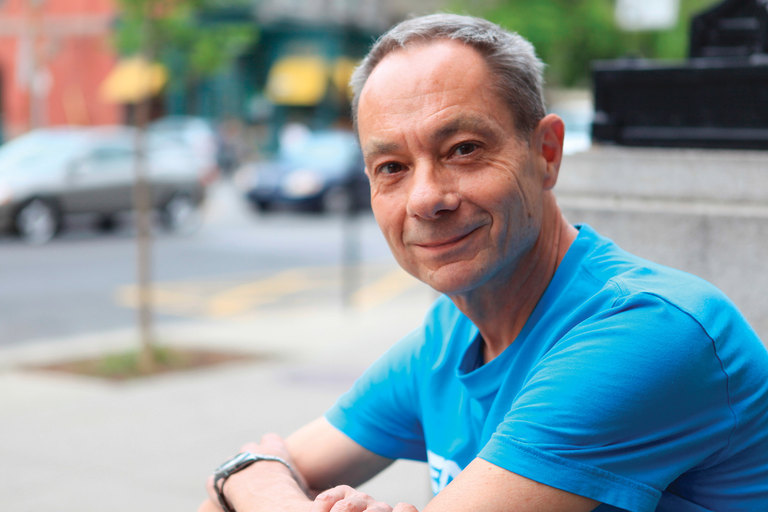
Trained with Groupe Nouvelle Aire, a collective that shaped a whole generation of Quebecois dance artists, Léveillé eventually struck out on his own.
With his unique approach to dance interpretation, deeply rooted in modern art (particularly Les Automatistes; a radical Montreal-based art movement founded in the early 1940s by Paul-Émile Borduas that championed spontaneous, non-preconceived artistic creation, influenced by Surrealism).
It was significantly shaped by his mentor, Françoise Sullivan, a visual artist, choreographer, and signatory of the Refus global; a 1948 manifesto by 15 Quebec artists (eight men and seven women, an unusually high proportion of women for the time period ).
An important document in the cultural history of Quebec, it was a declaration of artistic independence and the need for expressive freedom, challenging traditional values, which attacked the status quo of Canadian culture and the dominant role of the Catholic Church.
Léveillé considers himself a resolutely modern artist, never deviating from this movement, which emphasizes the subconscious and raw expression, a philosophy he refined during his dual career path as a choreographer and a professor at the Université du Québec à Montréal’s (UQAM) Dance department.
“I work a lot with the subconscious. I arrive at rehearsal and I don’t know what I’m going to do. Except that I’ve prepared myself enormously for not knowing what to do.” – From an interview with Voir
He worked for many years as an independent choreographer before founding Daniel Léveillé Danse in 1991. A company that quickly earned a reputation for razor-sharp choreography and an almost stubborn refusal to compromise.
He has created more than 30 works as an independent choreographer, with pieces like Solitudes Solo earning accolades, recognized as the best choreographic work by the Conseil des arts et des lettres du Québec in 2013.
Léveillé’s influence on Canadian contemporary dance was formally recognized in 2017 when he was honored with the prestigious Grand Prix de la danse de Montréal. This award celebrated not only his impact on the dance community but also the remarkable longevity and artistic integrity of his career.
Daniel Léveillé. Photo by Emilie Tournevache, Services de l’audiovisual UQAM.
Naked Truths & Punk Vivaldi: Experiencing Love, Acid and Nuts
Choreography
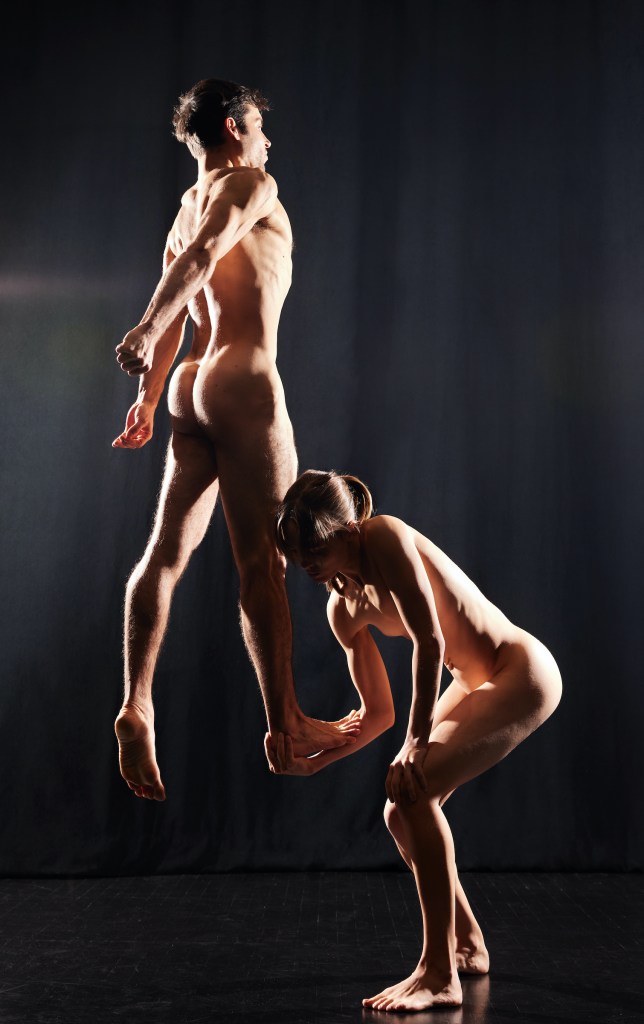
DanceHouse, Lou Amsellem and Marco Arzenton. Photo by Julie ArtachoPrimarily focusing on solitude and the intricate dance between connection and isolation. Léveillé has often explained that the work was born from a chance encounter with a "junkie". This encounter stirred within him a desire to explore the lives of young people facing difficult circumstances. The result is choreography that feels at once punishing and intimate, where every movement seems to wrestle with the question of how to exist in a difficult world. While the arrangement is not literal, the movements channel the energy and vulnerability of these experiences, not through speed as it's sometimes common in ballet but strenght & precision; presenting a heartfelt reflection on the human spirit’s resilience and fragility.Léveillé’s approach is rigorous, even obsessive. Reviewers have described his choreography as “to the millimeter,” no filler, no excess. And yet, within that precision lies vulnerability. The solos within the piece have been said to convey a sense of struggle and introspection; sharp and almost brutal. Critics at NYU’s Skirball noted how the choreography, "..both brutal and tender, and edged with surprise, features jumps that are dangerous and precise." The effort fully visible as dancers launch into the air only to land with trembling knees While the duets reveal a tender sensitivity, a natural counterweight. Hands rest on waists with quiet gentleness, torsos fold together in fragile trust, and weight is carried and exchanged without flourish. As La Bible Urbaine and Alessandra Riganofrom Voir observed, there is a sensitivity to the way dancers lean into each other, suggesting that “life might indeed be easier when shared with another”..
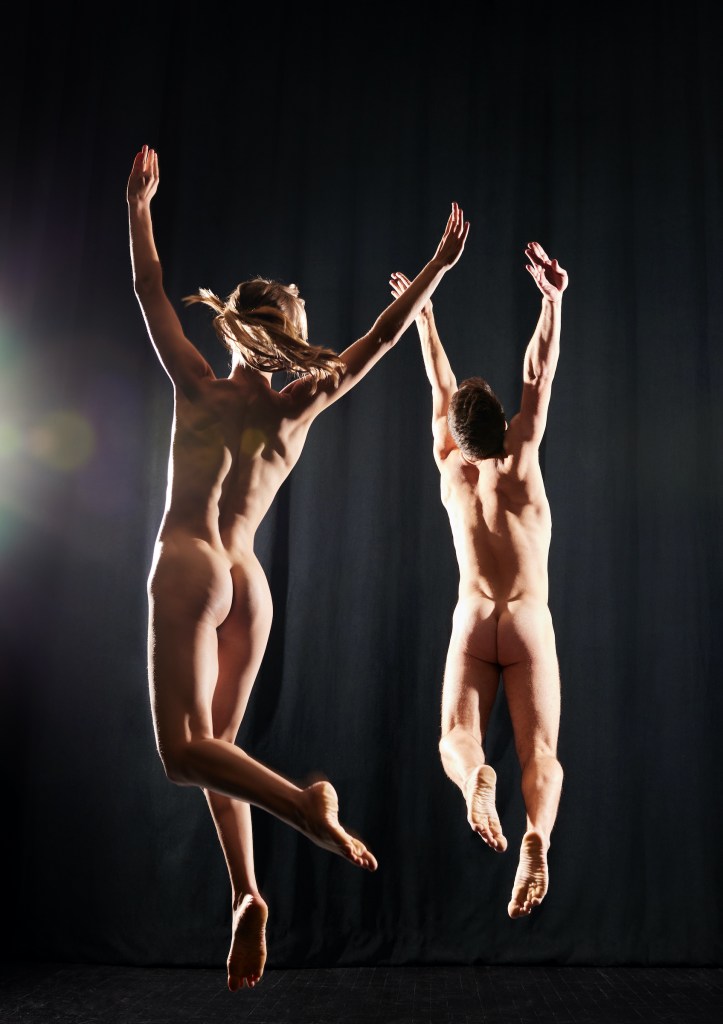
Nudity:
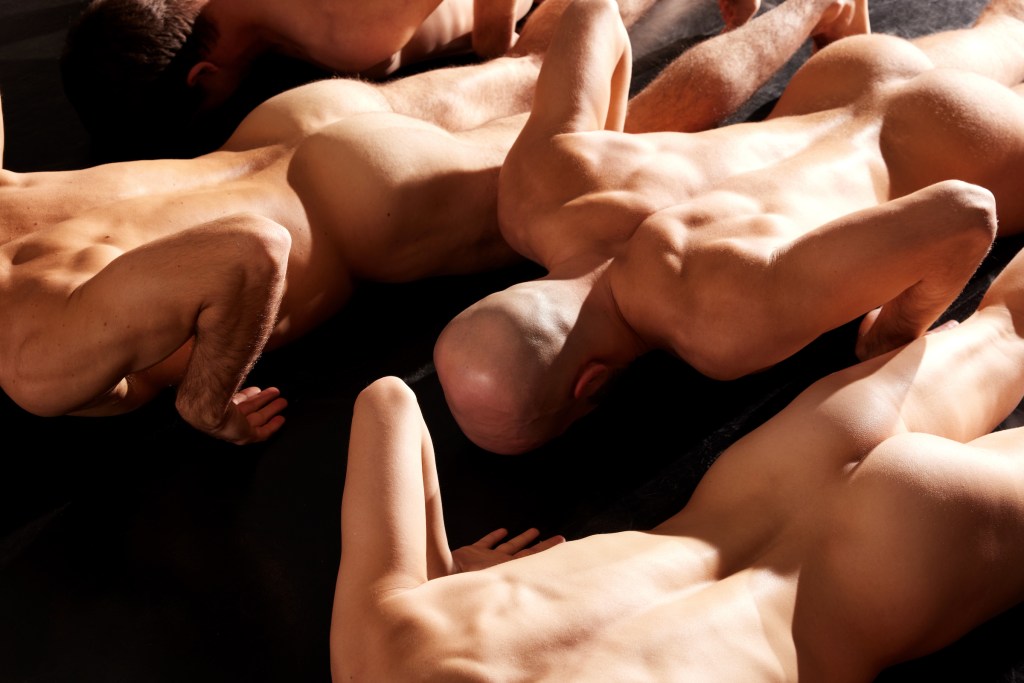
Photo by Julie ArtachoNaturally, the most striking and discussed aspect is the deliberate and profound use of complete nudity.Unafraid to explore the human condition in its rawest form, Léveillé’semploys complete nudity as a deliberate artistic choice. This is not a choice made for shock value I believe, but rather a profound artistic statement, since clothing, by its very nature, carries cultural baggage and historical markers. By viewing the naked body as a “costume,” one that strips away all pretense and societal inscriptions; explaining that if the dancers were clothed, even in simple underwear, it would place them in a specific time and context. Nudity, however, renders them timeless, allowing them to represent humanity across any century, from past to the present. This choice also forces us to confront our own relationship with nudity and to move beyond that initial discomfort; to observe the human body, as the dancers, unburdened by external garments, not as an object of desire or shame, but as a vessel becoming blank canvases upon which we can project and reflect. This, I believe fosters a deeper, more empathetic engagement with the performance, promising to reveal a vulnerability and an inherent fragility that is both universal and deeply moving. As he states, his role is to choreograph the body, not to hide it.
Music:
DanceHouse, Jimmy Gonzalez and Lou Amsellem. Photo by Julie ArtachoThis performance is crafted with meticulous attention to detail, extending beyond nudity to the careful selection of music. For this production, he chose Vivaldi, but in a "punk" version by Nigel Kennedy, which resonated with his desire for an experience that defied traditional baroque and romantic interpretations. In an interview with Bible Urbaine he mentioned: "I didn't want to take music as well-known and popular as Vivaldi's, but I happened to come across a version unlike any other: the one played by Nigel Kennedy. We don't know how Vivaldi himself played, since we don't have any recordings, and Kennedy was inspired by this idea to take liberties. His version is totally punk, without the baroque and romantic side that we usually attribute to Vivaldi, and this sound attracted me" As mentioned earlier, this piece also infuses a mix of other sounds, from heavy metal pop music, sweet birdsongs to even a John Cage silence. Catherine Tharin from The Dance Enthusiast describes it perfectly: Led Zeppelin wails, “Babe I’m Gonna Leave You,” in a voice thick with longing… German heavy metal band Rammstein plays in the background … a soothing male voice from the Audubon Society describes the songs of various bird species: “The Eastern Meadowlark whistles from fence posts... the Savannah Sparrow trills from a stalk in a wheat field.” The familiar melodies are imbued with a rebellious spirit, mirroring the dance's own exploration of vulnerability and defiance.
This thoughtful integration of various elements underscores Léveillé's commitment to challenging expectations, using a classical foundation to build something energetic and undeniably modern.
Getting Your Tickets
Vancouverites, first and foremost, mark your calendars for October 24th and 25th. Both performances are scheduled for 8:00 PM at our very own Vancouver Playhouse.
Securing your tickets is straightforward. Prices for this unparalleled experience begin from just $40.75. You can purchase your tickets directly through the DanceHouse website at dancehouse.ca.
Do not let this extraordinary opportunity pass you by. Its’s a chance to be part of a conversation that transcends time and culture, to engage with the cutting edge of global dance, right here in our own city.
The SkyTrain’s just a block away, so getting there is less of a stress, and with a runtime of 60 minutes, it fits quite neatly into our hustle & bustle as Raincouver earns its tag.
Dress comfortably, perhaps a quiet dinner at Zarak beforehand or a reflective walk afterwards in the rain (most likely, although hopefully not..) to complement the intensity of the performance.
Most importantly, arrive with an open mind and heart.
Presentation Supporter
The McGrane – Pearson Endowment Fund, held at the Vancouver Foundation
© 2025 DanceHouse/Seismic Shift Arts Society. All Rights Reserved.