

Jay Shah
DevOps\Aerospace Engineer & Journalist
Hello, hello, Bach lovers and curious minds! 🎭 Welcome back to your go-to source for all things exciting in Vancouver’s vibrant arts scene.
Remember my coverage of Bach Untamed during the Summer Festival? Well, Early Music Vancouver (EMV) is back at it again, and this time they’ve outdone themselves with
but with a twist!
Have you ever experienced a piece of music that just pulls you in, note by note, until you’re completely swept away? That’s exactly what happened to me last night at Vancouver‘s magical Christ Church Cathedral. One of Vancouver’s most stunning venues; right in the heart of downtown just across Burrard’s Skytrain station, and right opposite (in my personal & oh so humble opinion) the best shawarma cart in all of the west coast! No cap
Now, if you’ve been following my blog for a while, you know my love for Bach runs deep. But this wasn’t your typical performance of BACH’S legendary Opus—oh no! This one had a twist of the GOLDBERG kind. Instead of the usual solo keyboard version, we were treated to an ensemble of winds and strings. It was like hearing Bach through a fresh set of ears. Trust me, it was nothing short of magical.
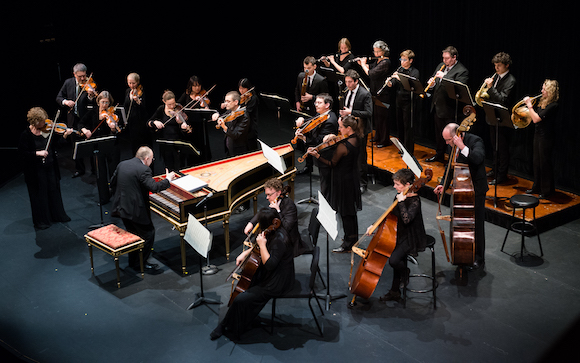
The combination of the cathedral’s incredible acoustics and the rich sound of the chamber ensemble with the Pacific Baroque Orchestra, directed by the always-brilliant Alexander Weimann:
A Night to Remember!
If there’s one thing that always stands out to me about EMV’s concerts, it’s how they manage to make every performance feel like a personal journey and the sheer talent they bring to the stage. Last night was no different.
Ready to dive in? Let’s go through this incredible evening step by step!
Doors opened at 6:45 p.m.
with a pre-concert talk kicking things off at 7:00 p.m.
where the MASTER shared his thoughts on what makes the Goldberg Variations so unique.
By 7:30 p.m., the Christ Church Cathedral was filled with anticipation, and for the next 75 minutes (plus intermission), we were immersed in Bach’s world with that signature EMV twist.
A Stellar Ensemble
For this performance, we were in for a treat with the
Pacific Baroque Orchestra!
Credit: Photo by Jan Gates
Recognized as one of Canada’s most exciting and innovative ensembles performing. PBO brings the music of the past up to date by performing with cutting edge style and enthusiasm. Formed in 1990, the orchestra quickly established itself as a force in Vancouver’s burgeoning music scene with the ongoing support of Early Music Vancouver. They regularly join forces with internationally celebrated Canadian guest artists, providing performance opportunities for Canadian musicians while exposing West Coast audiences to a spectacular variety of talent. The Orchestra has also toured BC, the northern United States and across Canada as far as the East Coast. These musicians have been at the core of many large-scale productions by Early Music Vancouver in recent years, including many Summer Festival performances
These musicians brought their A-game, and every note was filled with precision and passion.
The ensemble featured some of the finest early music performers, with Chloe Meyers and Majka Demcak on violins, Joanna Hood on viola, Elinor Frey on cello, and Soile Stratkauskas on flute. The wind section, led by Matthew Jennejohn and Lot Demeyer on oboes, with Ellis Reyes on bassoon, added such rich, vibrant tones that perfectly complemented the strings. Each performer had their moment to shine, and their collective synergy was simply unmatched.
A New Twist on a Classic Masterpiece
The program for the evening was a beautiful balance of tradition and innovation, blending Bach’s Goldberg Variations with the Trio Sonata in C Major by Johann Gottlieb Goldberg, whose name has long been connected with Bach’s masterpiece.
Explained by the maestro Weimann himself;
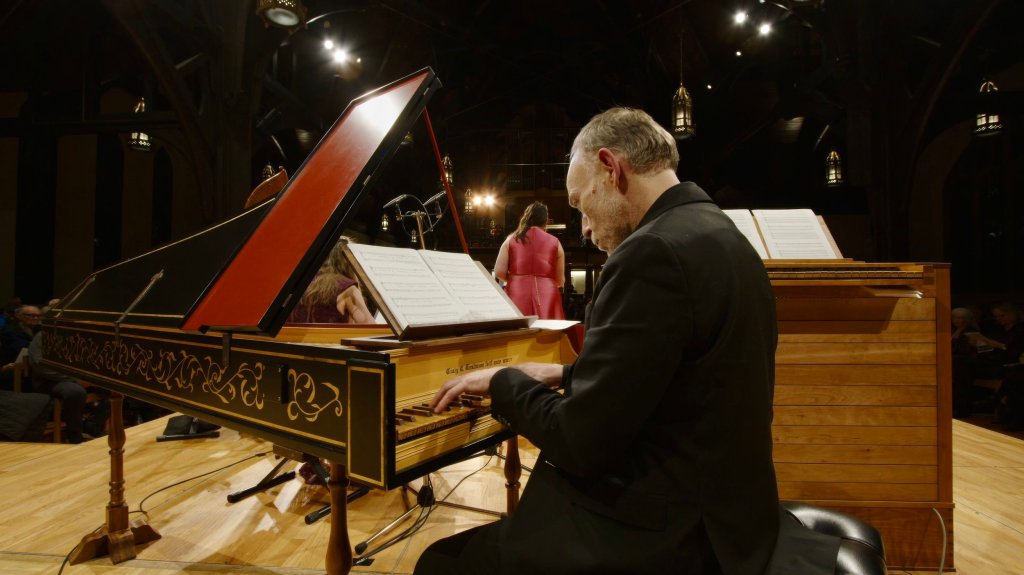
Weimann’s approach to weaving in Johann Gottlieb Goldberg’s Trio Sonata added a conversational layer between the two works, as if the music was speaking to itself across time:
To honour Goldberg, a true genius of a composer who passed far too young, and to pay tribute to his role in the Variations, I dared include one of his trio sonatas (which was long attributed to Johann Sebastian as BWV 1037) in our performance. To not break the perfect and intricate balance Bach provided while transitioning from one variation to the next, I took the only chance of quiet Bach offers, right after variation 15 which ends very openly and inconclusively. It’s a good point to insert the sonata in its entirety, take a pause, and reconvene for the second half of the variation cycle opened by no. 16, a French overture.
It reminded me of how music can transcend its original form,
Why would I try and arrange this intrinsically keyboardist piece in the first place?
The second question is quickly answered: accessibility. So many of Bach’s compositions are lost – not only sacred music, but also orchestral and chamber pieces. During his lifetime, he published very little, and essentially only keyboard music.
Think of a world where the only way to listen to the Art of the Fugue is to hear it on the organ. And while I am convinced that it is meant primarily for that instrument, I enjoy all the renditions out there, and feel they contribute to its beauty, or at least to the perception thereof. Among all composers I know, Bach’s music appears to be the most independent of instrumentation, thus lending itself openly to our imagination.
And as for the choices regarding which instruments to use;
While the majority of the variations don’t exceed three-part writing, some movements are woven in a rather dense and consistent four-part fabric. Therefore, I settled on the idea of a consort of four instruments. Given the binary structure of the theme and every variation, as well as the context of a double-manual harpsichord and the changes and shifts of colours implied, I decided to go for two consorts à four, one for strings (pretty much in form of a classical quartet), and one for woodwinds with Baroque flute, oboe d’amore, oboe da caccia, and bassoon. This allows for antiphonal use, a coupling of the two sound sources, and all sorts of ‘broken consort’ between the two bodies.
Historical Context and Significance: A Journey Through Time
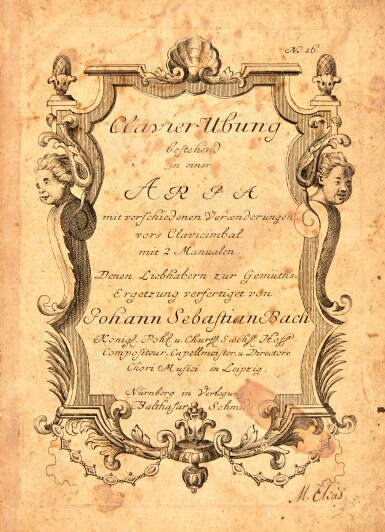
Johann Sebastian Bach published his Opus 1 surprisingly late, in 1731, while in his middle-age. He had already held the coveted position as head of church music in the city of Leipzig for many years and carved out his profile as a composer, and his uncanny fame as a keyboardist,
Printing and disseminating his music became increasingly important during the last two decades of his life. The nature and sequential order of his publications indicates that he didn’t pursue financial interests but rather a pedagogical program.
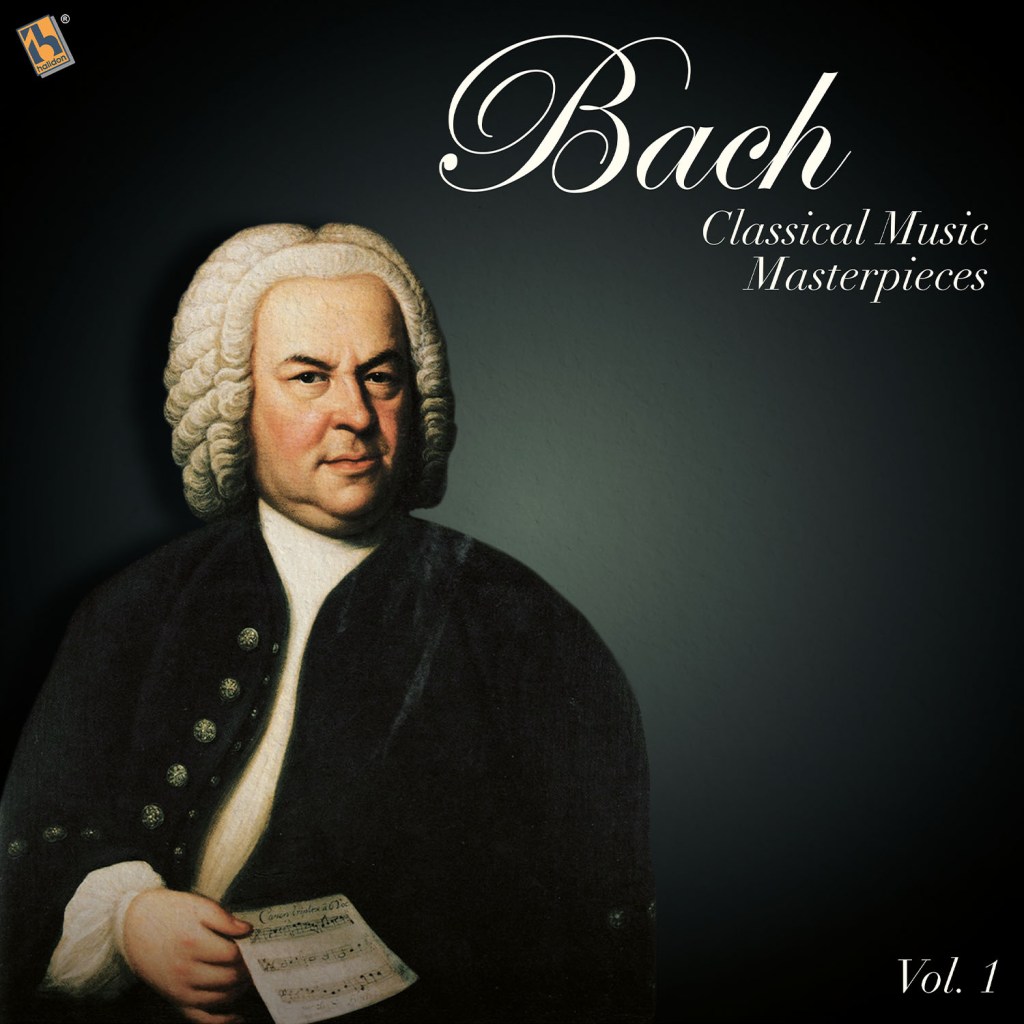
In terms of quantity, his printed compositions don’t compete with the output of most of his colleagues (some now in oblivion). Bach’s works shine and outclass through their extraordinary writing (something more apparent to posterity than to his contemporaries), and seem to follow a methodical plan: His focus is directed almost exclusively on keyboard music, and an overall objective is achieved progressively and by increments.
For all of his life, but particularly after retreating from his official duties in the 1740s, he was concerned with encyclopedic and comprehensive answers to every compositional challenge. Throughout his work, he aimed toward the integration and synthesis of diverse idioms, styles and techniques, reconciled the old with the new, and came forward with an ingenuity that defies classification.
So, what role does Goldberg play in all this?
To fully appreciate the performance of Goldberg Variations last night, it’s important to dive into the rich history behind this monumental work. Composed by Johann Sebastian Bach in 1741, the Goldberg Variations have long been regarded as one of the greatest achievements in the realm of keyboard music. Originally written for the harpsichord, this collection of 30 variations is a masterclass in counterpoint, harmonic complexity, and emotional depth.
The story behind the piece adds an intriguing layer. Legend has it that the work was commissioned by Count Keyserling, who suffered from insomnia and requested Bach to compose something that his personal harpsichordist, Johann Gottlieb Goldberg, could play during his sleepless nights. While the truth of this story remains uncertain, the association between Goldberg and this work has endured, with the piece commonly referred to by his name.
Personal reflections & Final thoughts
It wasn’t the first time I’ve attended an Early Music Vancouver (EMV) concert dedicated to the genius of Johann Sebastian Bach – but this time, with the Goldberg Variations, it felt like I was about to rediscover the same composer in a whole new light. The way Weimann and the Pacific Baroque Orchestra interpreted Bach’s Goldberg Variations with an ensemble of strings and winds brought an entirely different flavor to the work. This was the same composer whose brilliance had captivated me during the Summer Festival with Monteverdi’s Vespers of 1610, but hearing this arrangement gave the piece a fresh, vibrant feel—like hearing Bach for the first time, all over again.
The pre-concert talk with Weimann deepened my appreciation, highlighting how these variations were a testament to Bach’s creativity and technical prowess. But it wasn’t just about the technical brilliance. The entire performance, from the vibrant opening notes to the final variation, left me both emotionally moved and intellectually curious—just as Bach has always done for me.
If you’ve ever found yourself lost in the beauty of Bach’s music, you’ll know the feeling I’m talking about. The magic of rediscovering a composer you thought you knew, and feeling even more connected to the music. It’s moments like these that make me grateful to be part of Vancouver’s vibrant arts community.
So, if you’re a Bach enthusiast or just looking to dive into the world of classical music,
Their performances are not to be missed, I’ve already booked my ticket for DanteNova: Music from Dante’s Commedia and trust me, there’s always something new to discover.
For more updates and to follow my adventures, connect with me on
Let’s keep the conversation going and share our love for cultural festivals and community events!



Make a one-time donation
Make a monthly donation
Make a yearly donation
Choose an amount
Or enter a custom amount
Your contribution is appreciated and serves my coffee addiction.
Your contribution is appreciated.
Your contribution is appreciated.
DonateDonate monthlyDonate yearly

Copyright © 2024 EARLY MUSIC VANCOUVER | EMV | PHOTOS BY JESS MACALEESE, MARK MUSHET AND JAN GATES
5 responses to “Goldberg Variations with a Twist: Bach’s Masterpiece Unfolds in Vancouver”
[…] of covering some of Vancouver’s most exciting festivals — the Shakespearian Bard on the Beach, EMV’s magical journey with BACH, and the various musical acts with the Arts Club Theatre, to name a few—I can confidently say […]
[…] cultural events. From the breathtaking performances at Bard on the Beach to the magical melodies of Bach at Christ Church Cathedral, Vancouver has been my canvas for exploring the vibrant worlds of theatre, music, and now—cinema. […]
[…] dynamic cultural scene—from the glitz and glamour of cinema at VIFF 2024, the musical mastery of BACH, the rock classics in Arts Club’s Ring of Fire or the timeless appeal of Jersey Boys (which is […]
[…] feel utterly fresh, reimagined through global traditions and modern sensibilities. Similarly, the Goldberg Variations unfolded as a story told through sound, with every note offering a new layer of discovery. With […]
[…] of witnessing last year; like the joyful experimentation of Bach Untamed or the layered depth of Goldberg Variations with a Twist (as you’ll see below), have shown how Bach’s music can transcend time, speaking to […]