



Jaysuits, after diving deep into the experimental storytelling productions at the PuSh Festival earlier this year and witnessing the intimate puppet magic of Otosan at Gateway Theatre, I’m about to take you somewhere entirely different.
This summer, we’re heading to the heart of downtown Vancouver, where City Opera Vancouver is preparing to shatter everything you thought you knew about memory and healing.
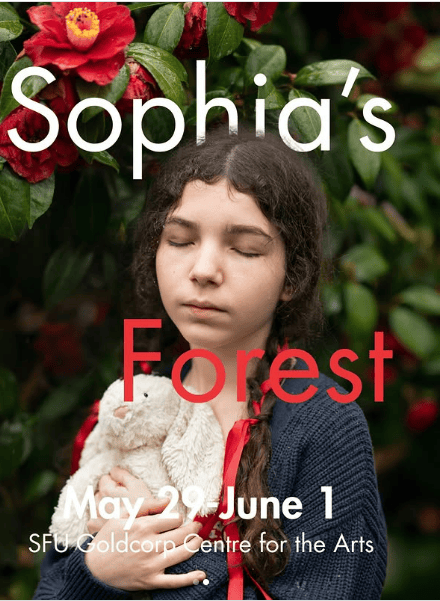
This is about Sophia, a young immigrant woman whose mother’s death cracks open a Pandora’s box of childhood trauma. We’re talking civil war, displacement, and two sisters who survived by escaping into fairy tales that slowly twisted into something darker.
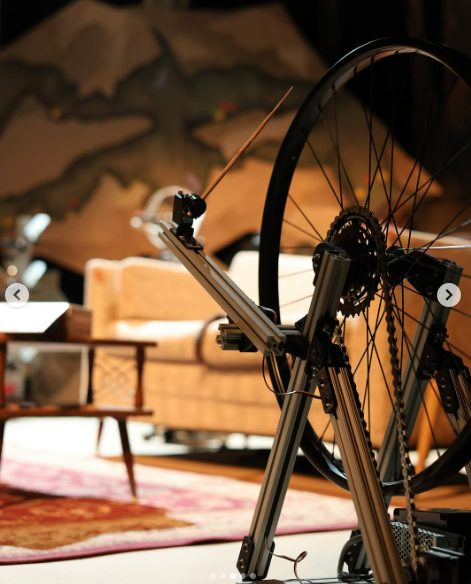
Created by Estonian-American composer Lembit Beecher and acclaimed Canadian librettist Hannah Moscovitch, this groundbreaking “chamber opera”; directed by Julie McIsaac builds a world where mechanical sound sculptures made from discarded bike parts and wine glasses become the voice of fractured memory itself.
This city has always been a place where immigrants write new chapters while honoring the ones that came before. And now, for four nights in late May and early June, we get to witness something that Conductor Gordon Gerrard, artistic and executive director of City Opera Vancouver, believes will “create a society with more empathy”
So as is tradion, here’s an in-depth breakdown of what this operatic masterpiece has to offer; from the story, to the cast, the magic behind the ground breaking sound and set design, and why this matters for us Vancouverites right now.
- 🌑When Fairy Tales Turn Dark🌑
- 🗣️The Voices That Carry Memory🗣️
- ⚙️The Sound of Broken Things: Beecher’s Mechanical Orchestra⚙️
- ✨A Forest Made of Light: Woyno’s Visual World✨
- 🌍Why This Story Matters Now🌍
- 🌳Your Journey Into the Forest🌳
- 📍VENUE📍
- 🎟️SHOWTIMES🎟️
🌑When Fairy Tales Turn Dark🌑
This story begins with death, because sometimes that’s where the most important stories have to start.
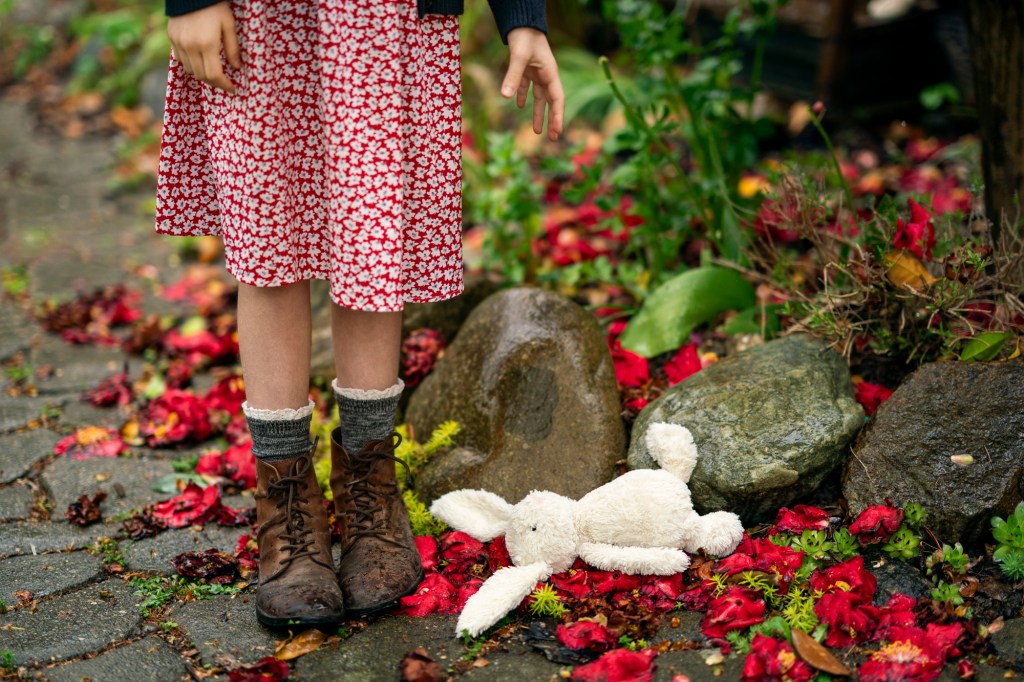
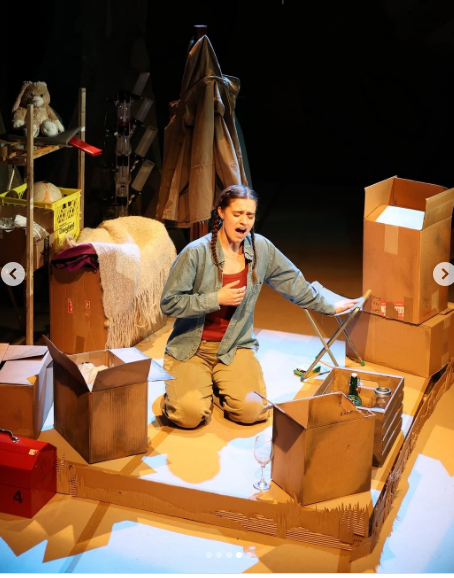
We meet two Sophias. There’s the adult woman, grappling with grief and the sudden flood of half-forgotten traumas. And there’s the child, the little girl who lived through civil war with her sister Emma, two kids who learned to survive by transforming their nightmarish reality into something that looked like the fairy tales they’d grown up reading.
As the fighting draws closer to their home, Sophia’s family is forced to flee. What should be a straightforward refugee story becomes something far more complex in the hands of a child’s imagination.
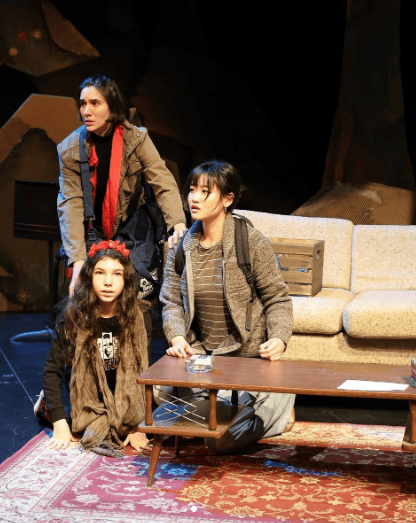
The forest they escape into becomes a place where mystical horrors lurk, where fairy tale logic governs life and death decisions, where a little girl’s desperate attempt to protect her sister leads to a fatal mistake that will haunt her for the rest of her life.
What emerges isn’t a linear narrative but something more honest and infinitely more disturbing: the way memory actually works when it’s been buried under decades of protection and denial.
🗣️The Voices That Carry Memory🗣️
In an opera where mechanical sculptures sing alongside human voices, the casting becomes crucial. Emotional archaeologists, digging through layers of trauma and memory to find the truth beneath.
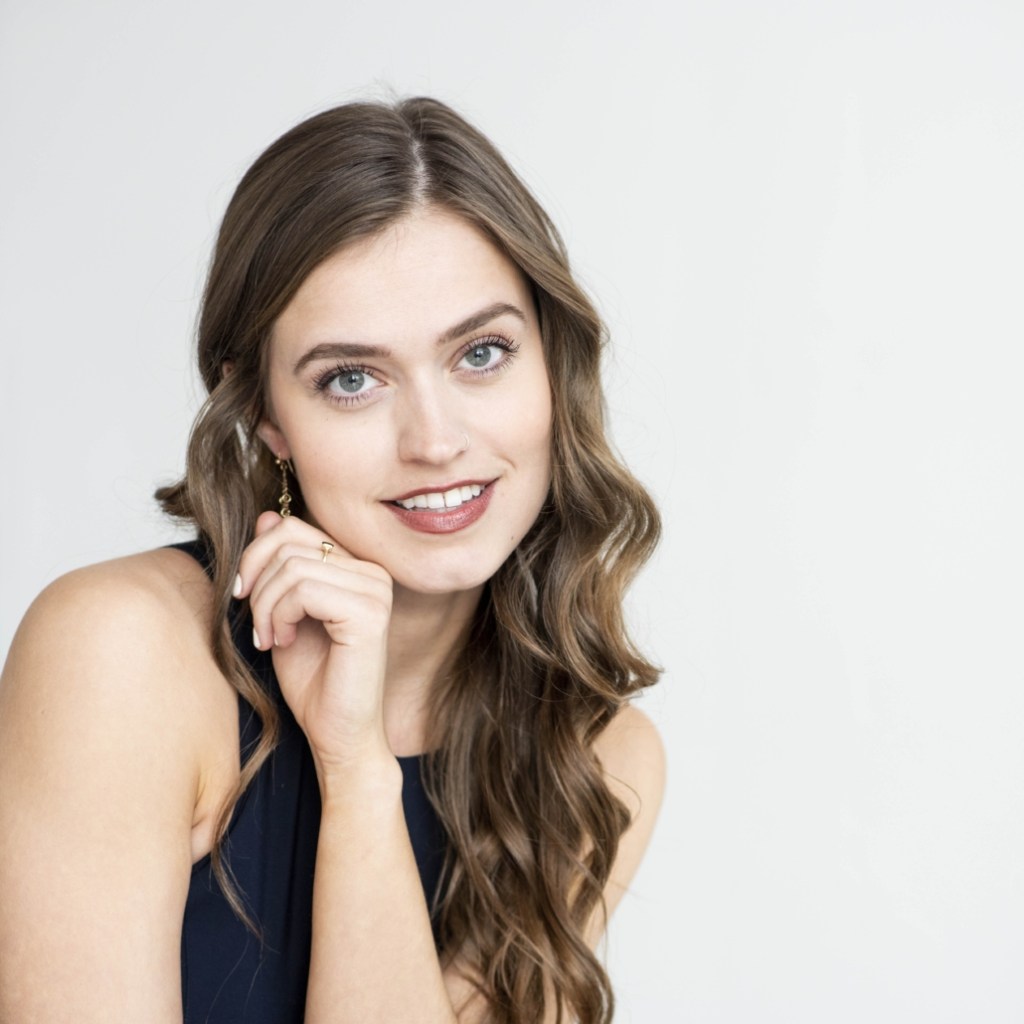
Elena Howard-Scott steps into the role of older Sophia, and Gordon Gerrard’s description of her as “incredible” barely scratches the surface. This Winnipeg-born soprano has been building a reputation as “someone to watch” according to LudwigVan Toronto, and her recent season shows why. From Sibella in Drayton Entertainment’s A Gentleman’s Guide to Love and Murder to Rapunzel in Into the Woods at Koerner Hall, from Blanche in Dialogues des Carmelites to Janine in The Handmaid’s Tale at Banff Centre, Howard-Scott has shown a remarkable ability to inhabit complex women facing impossible circumstances.
Sophia represents something different though. This is a character defined not by her circumstances, she’s defined by her “memories of circumstances”, by the way childhood trauma has shaped her understanding of love, loss, and survival. Scott’s voice vows to carry not just the adult Sophia’s grief over her mother’s death, but also the echo of that little girl who made a fatal mistake in a forest decades ago. It’s a role that demands both technical precision and emotional fearlessness, qualities she has been developing through her work with the Rebanks Family Fellowship and International Performance Residency Program at The Royal Conservatory of Music.
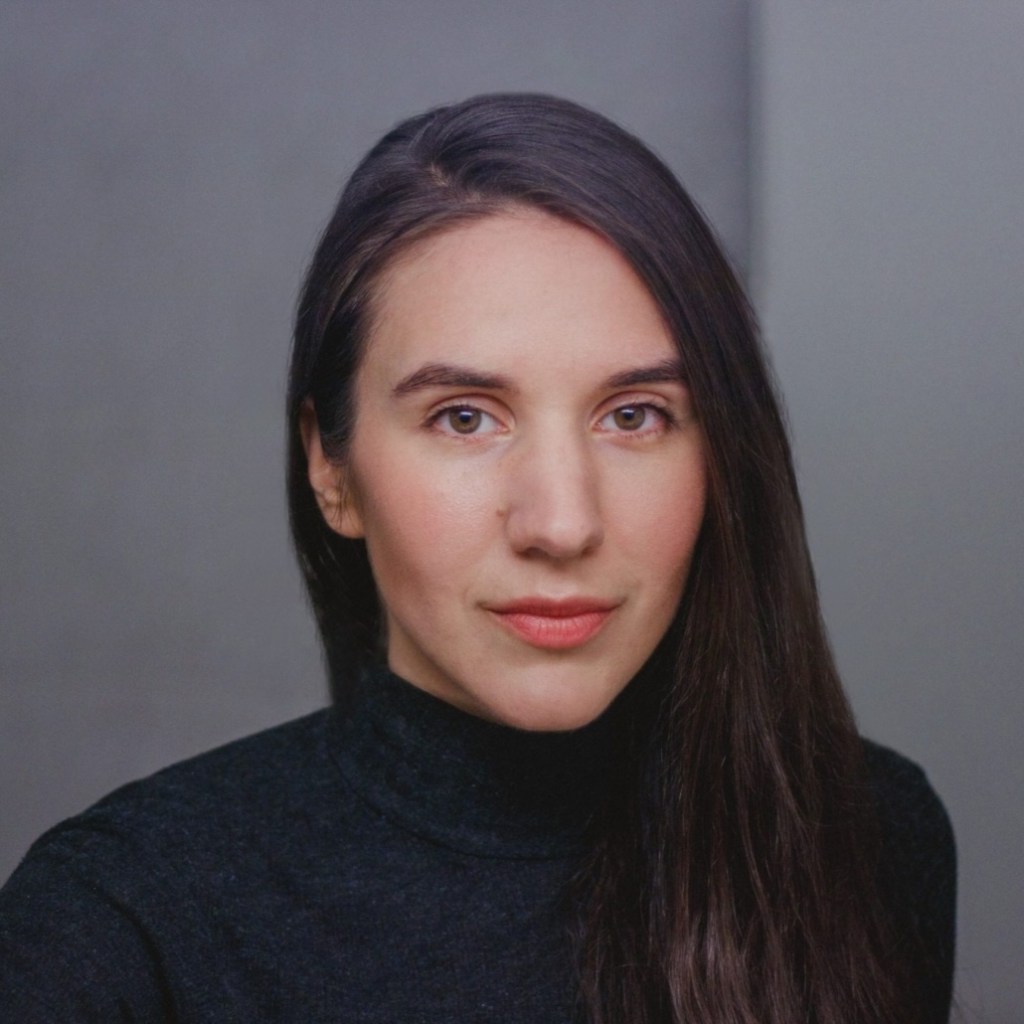
Joining her is Canadian-Bulgarian mezzo-soprano Adanya Dunn as Anna, Sophia’s mother. Dunn brings international credentials that span from her American debut as Hermia in Britten’s A Midsummer Night’s Dream at Santa Fe Opera to performances with the Orchestre philharmonique de Radio France, but more importantly, she brings an understanding of cultural displacement that resonates with Anna’s story. As someone who has navigated between Canadian and Bulgarian identities, Dunn understands the particular pain of stories that cross borders, of family histories interrupted by history itself.
Sophia’s mother; she’s the keeper of family stories, the bridge between the old country and the new life, the person whose death opens the floodgates of memory. Dunn’s voice promises to carry all of that weight, representing both loss and love, both the stories that were told and the ones that were kept hidden for protection. Her recent work with Manitoba Opera and the Canadian Opera Company shows her ability to inhabit roles that demand both vocal excellence and emotional complexity.

Baritone Luka Kawabata brings his own boundary-pushing energy to the role of Wes, Anna’s partner. As a Nikkei-Canadian artist passionate about diversifying opera representation through his ongoing HAFU Project, Kawabata understands what it means to make space for stories that haven’t traditionally been heard on opera stages. His recent work with Vancouver Opera, including roles in A Midsummer Night’s Dream, Carmen, and Madama Butterfly, demonstrates his commitment to expanding the definition of performance and highlighting languages seldom heard in classical music.
But perhaps most poignantly, the roles of young Sophia and Emma are performed by members of the Vancouver Bach Family of Choirs—Arya Yazgan as young Sophia and Audrey Gao as Emma. These young voices represent the innocence that war destroys, the childhood that gets interrupted by adult horrors. Their presence on stage creates a temporal bridge, allowing us to see and hear both versions of Sophia simultaneously.
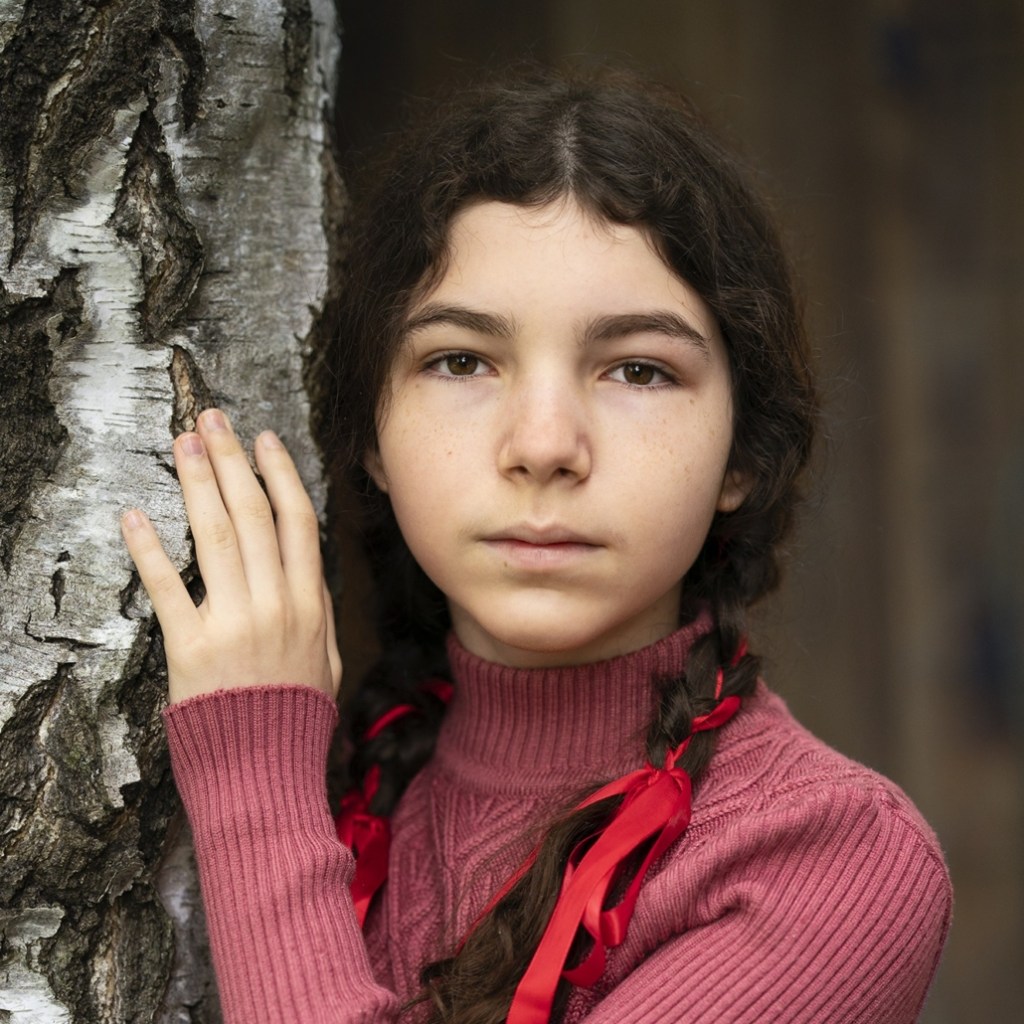
Photo by Anya Chibis

⚙️The Sound of Broken Things: Beecher’s Mechanical Orchestra⚙️
When you remember something painful, it doesn’t come back as words or even clear images. It comes back as sensations, as sounds that don’t quite make sense, as the feeling of something spinning out of control or the delicate chime of something precious breaking.
Estonian-American composer Lembit Beecher builds a world where mechanical “sound sculptures” made from discarded bike parts and wine glasses become the voice of fractured memory itself. Beecher himself sits at his laptop, controlling these ethereal contraptions in real time, making broken things sing again.
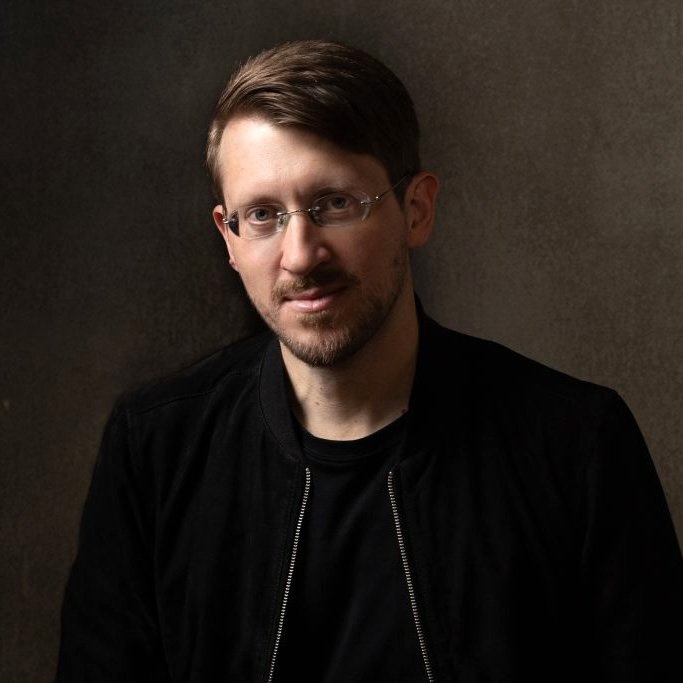
Gerrard describes it perfectly: “The combination of these very unusual sounds from the sculptures with more sort of traditional opera singing creates an experience that people won’t have had before.”
But it’s more than just novelty. These mechanical voices represent something profound about how memory works, how trauma sounds in the deepest parts of our minds where language fails.
These are the same sculptures that premiered in Philadelphia in 2017, traveling across the continent to find their way to Vancouver. They’ll carry their own history now, their own accumulated memories of performances and audiences and the countless ways Sophia’s story has moved through different spaces and touched different hearts.
The composer’s background makes this approach even more powerful. Born to Estonian immigrants, he grew up surrounded by fragments of a culture interrupted by war and displacement. His music, praised by the San Francisco Chronicle as “hauntingly lovely and deeply personal,” draws from Estonian folk traditions while exploring themes of migration and the ways our ancestors’ stories live in our bodies. He understands intimately what it means to carry broken pieces of history and try to make them whole again.
The Philadelphia Inquirer called Beecher’s musical invention “astonishing,” and they aren’t wrong. In Sophia’s Forest, the invention promise to serve a deeper purpose. Every wine glass chime will be a memory fragment. Every bicycle wheel revolution will be time spinning backwards. Every mechanically generated sound will be proof that broken things can still make music, that trauma can be transformed into something beautiful without losing its essential truth.
✨A Forest Made of Light: Woyno’s Visual World✨
While Beecher’s mechanical orchestra provides the soundtrack to Sophia’s fractured memories, it’s Wladimiro Woyno‘s projection design that creates the world where those memories come alive.

Woyno isn’t just any designer throwing some pretty pictures on a screen. This Colombian-born artist, now Assistant Professor at SFU’s School of Contemporary Arts, brings a technical background that spans lighting, video, and staging, combined with an artist’s eye for the way technology can amplify human emotion. His credits read like a who’s who of innovative theatre: The Wooster Group, Yale Repertory Theatre, Nederlands Dans Theater. This is someone who understands how to make the impossible feel viscerally real.
Working with his SFU team, Woyno has created what G Gerrard calls a “compelling visual aspect” that goes far beyond traditional stage design.
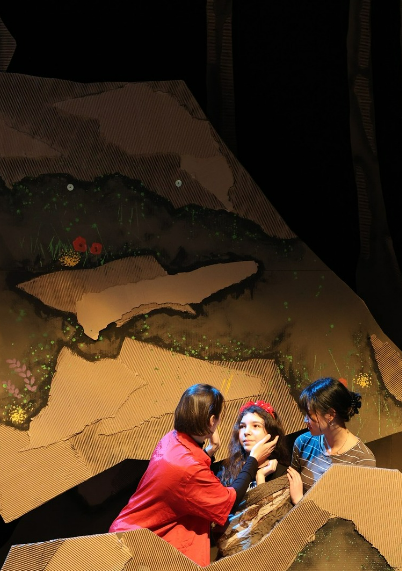
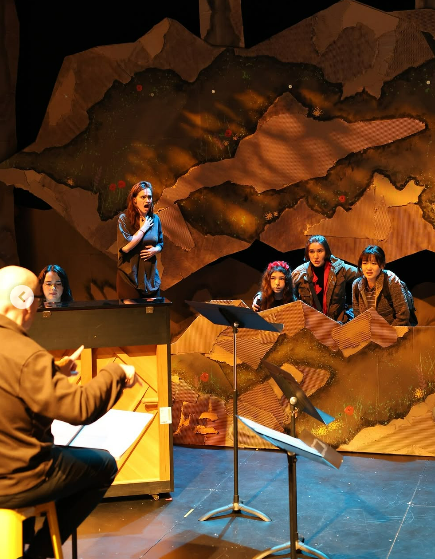
Since Sophia’s memories do not behave like a linear narrative, his background in rapid prototyping and theatrical technology serves the story perfectly. Traditional set design would be too solid, too fixed to capture this fluidity, but projection design allows for the kind of visual uncertainty that matches the emotional uncertainty of traumatic memory.
This is where comparisons to other innovative Vancouver productions become interesting. Remember how Otosan used puppetry to make us see both the artist and the creation, both the person and the story.


Well, Woyno’s work operates on the same principle, but instead of puppets, he’s using light and technology to make the intangible felt.
🌍Why This Story Matters Now🌍
Let’s get real for a moment, Jaysuits. We’re living in a world where displacement is daily news, where refugee stories scroll past us on social media, where the word “empathy” gets thrown around so much it’s almost lost its meaning. So why does one opera about one woman’s childhood trauma matter? Why should we care about Sophia’s forest when there are so many forests burning, so many families fleeing, so many stories of survival competing for our attention?
Gerrard has an answer that cuts straight to the heart of it:

“If we are more curious about what other people’s stories and experiences are, I think it helps to create a society with more empathy.”
But this isn’t just feel good rhetoric. This is about the specific power of opera to make us feel other people’s pain in our bodies, to let someone else’s memories live in our nervous systems for an hour and change how we see the world.
The opera’s treatment of fairy tales as survival mechanisms feels especially urgent in our current moment of political and social upheaval.
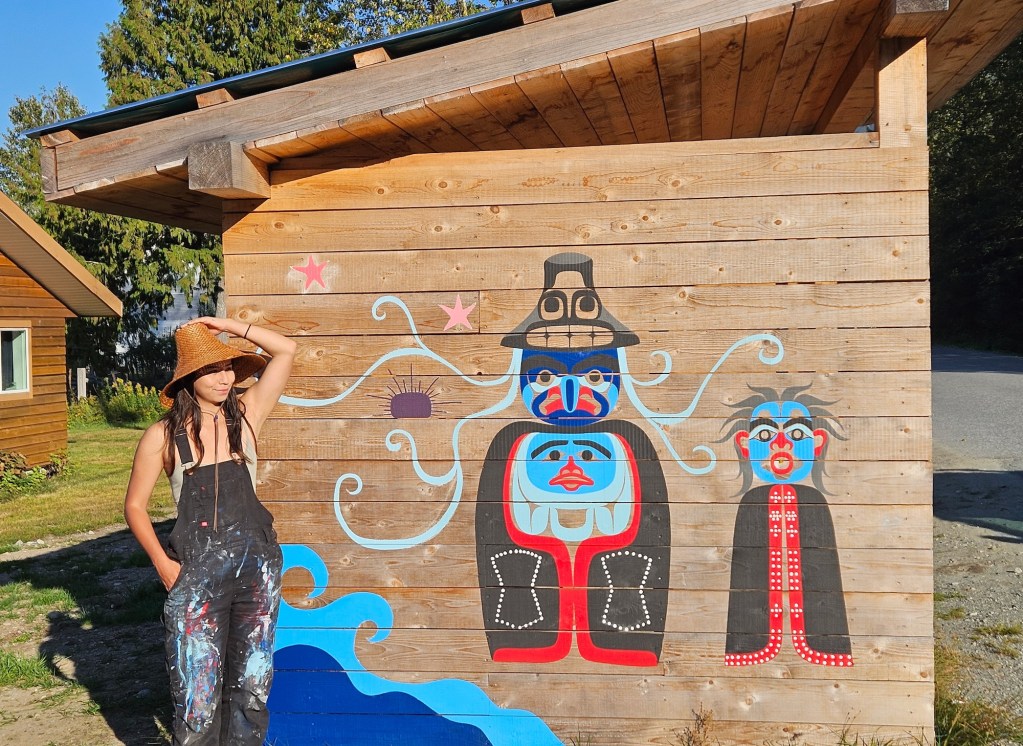
This is a city built by displacement, where over 40% of us Vancouverites are immigrants. Every family here has a story of leaving somewhere else, of carrying old worlds into new ones. Sophia’s story isn’t foreign; it’s the story underneath the story of this city, the trauma that gets passed down through generations of people who learned to survive by not talking about what they survived.
From the Chinese families who built the railway (see my posts below) to the Italian and Portuguese immigrants who shaped Commercial Drive, from the Vietnamese boat people who found refuge here in the 1970s to the Ukranian families arriving today, Vancouver is full of Sophias. People carrying childhood memories of leaving, of loss, of the moment when home became something you could never return to.
But here’s what makes this particularly relevant right now: it wont ask us to pity Sophia or to feel guilty about our own comfort. Instead, it promises to recognize the complexity of memory, the way trauma shapes not just individuals but families, communities, entire cultures. It will show us how children attempt to make sense of adult horrors by creating coping mechanisms that follow them into adulthood, affecting how they love, how they parent, how they understand safety and danger.
🌳Your Journey Into the Forest🌳
So here we are, Jaysuits, at the moment where you decide whether you’re ready to step into Sophia’s forest. This isn’t going to be a comfortable evening out. This isn’t background entertainment while you check your phone or plan tomorrow’s meetings. This is 60 minutes with no intermission, no escape from the memories unfolding on stage, no buffer between you and the raw reality of what it means to carry childhood trauma into adult life.
The choice of of this runtime isn’t arbitrary; it mirrors the way our memories actually work. The way a single moment of remembering can contain entire lifetimes of pain and understanding. Like that flood of recollection that hits when you smell something from childhood or hear a song that takes you back to a specific moment you thought you’d forgotten, Sophia’s Forest compresses decades of experience into a single, intense journey through one woman’s fractured past.
Each performance will be followed by a Q&A with the artists and special guests, giving you the chance to process what you’ve just experienced with the people who created it. It’s an essential part of the experience.
Gerrard designed it this way because he understands that this story raises more questions than it answers. You’re going to leave the theatre with your own memories stirred up, your own family stories demanding attention, your own understanding of trauma and healing challenged and expanded. The conversation with the artists gives you a chance to begin processing what you’ve just witnessed, to start the work of integration that this kind of art demands.
This is opera stripped down to its most essential elements: the human voice, the power of memory, and the way art can transform the unspeakable into something that not only can be spoken, but sung.
📍VENUE📍

Studio T at the Goldcorp Centre for the Arts provides the perfect intimate setting for this kind of storytelling. Located at 149 W Hastings Street, right in the heart of Vancouver’s cultural district. It’s just a few blocks away from Waterfront Station and the stage puts you close enough to see every expression on the performers’ faces, close enough to feel the vibrations from Beecher’s mechanical sculptures in your chest. There’s will be no hiding in the back row here, no pretending you’re watching someone else’s story. When Sophia’s memories start spilling out, you’re going to feel them as if they were your own.
🎟️SHOWTIMES🎟️
The performance schedule gives you multiple chances to experience this haunting work. Thursday, May 29 at 7:30 pm kicks things off, followed by Friday, May 30 at 7:30 pm and Saturday, May 31 at 7:30 pm. If you prefer matinee performances, Sunday, June 1 offers a 2:00 pm show that might feel more appropriate for the kind of reflection this opera demands.
Your tickets are waiting at the Goldcorp Centre box office or online, and honestly, Jaysuits, this is one of those rare opportunities to experience something truly groundbreaking in Vancouver’s arts scene. This production represents everything opera can be when it stops trying to be a museum piece and starts being a living, breathing exploration of what it means to be human in a fractured world.
The forest is waiting. The question is whether you’re ready to enter it.
© City Opera Vancouver 2025