

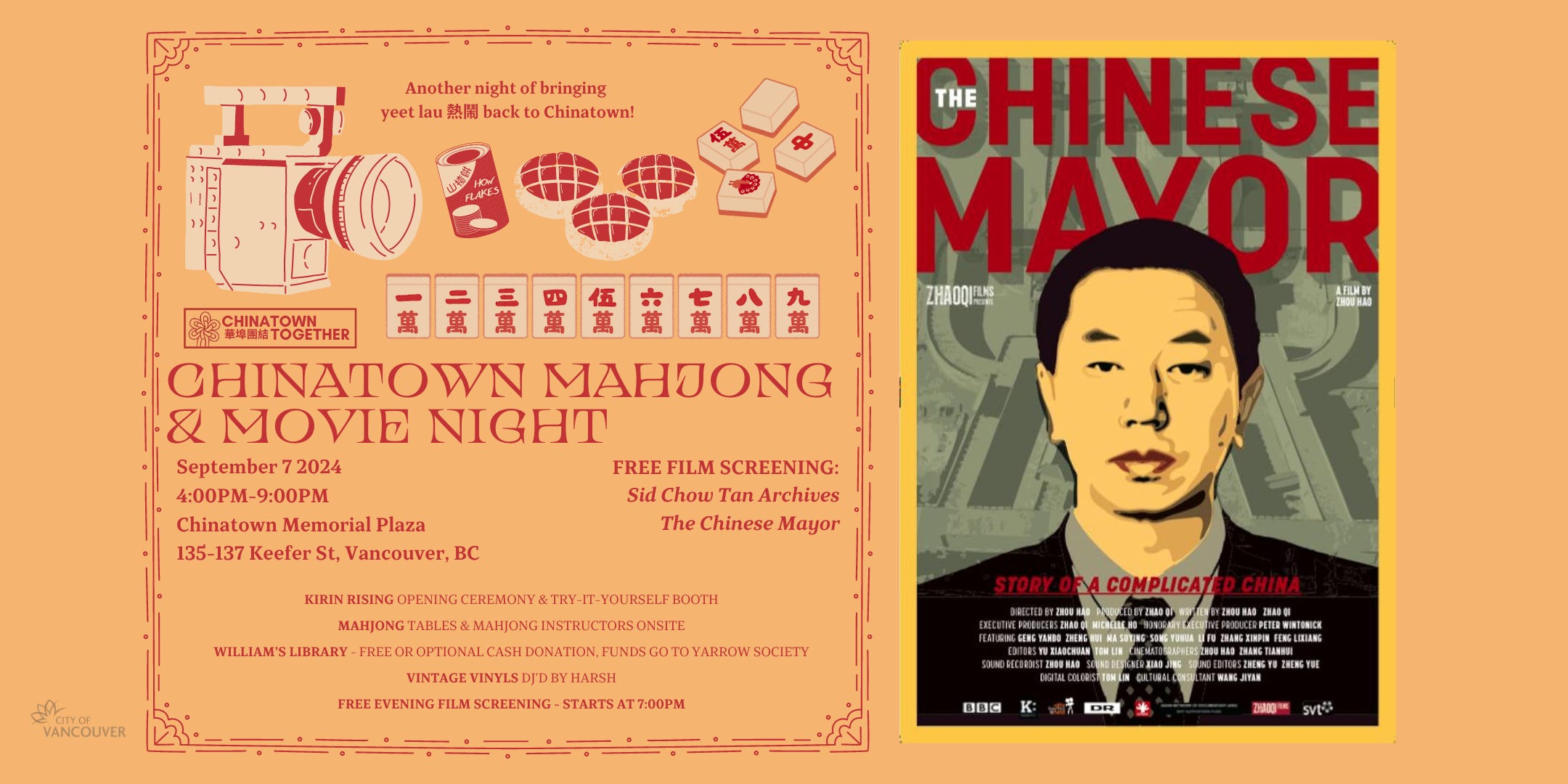
Building on the momentum from the “Chinatown Extravaganza,” the fight to preserve Vancouver’s Chinatown continued with another vibrant gathering:
Held on September 7, 2024, on a beautiful sunny Saturday,
showed us how to blend community fun with cultural pride in a way that felt both nostalgic and fresh. This was their last outdoor film night of the summer, so you could feel the excitement and sense of urgency in the air. Mahjong tables were set, the aroma of sticky buns filled the plaza, and the rhythmic sounds of the Hakka kirin dance drew people in. As the sun set, a short film series on Chinatown activism, followed by the feature film The Chinese Mayor, left the crowd reflecting on the very real challenges that neighborhoods like Chinatown faces today
Against the backdrop of Vancouver’s gentrifying landscape, this gathering served as another powerful reminder of the community’s resolve to safeguard Chinatown’s legacy while forging new bonds. Let’s dive into the highlights of the event that underscored the importance of this cultural movement.
Mahjong, Music, and Community Vibes
From tiles clattering to DJ Harsh’s vinyl beats, the event captured a moment of unity, of people coming together to celebrate and defend Chinatown. The screening of The Chinese Mayor added a powerful reminder of what’s at stake when communities face displacement. Mahjong tables were buzzing with activity, while the team performed their energetic Unicorn Dance, continuing the Hakka traditions.


For those looking to dive deeper, there was even a Dance Garden where attendees could try kirin dancing themselves.
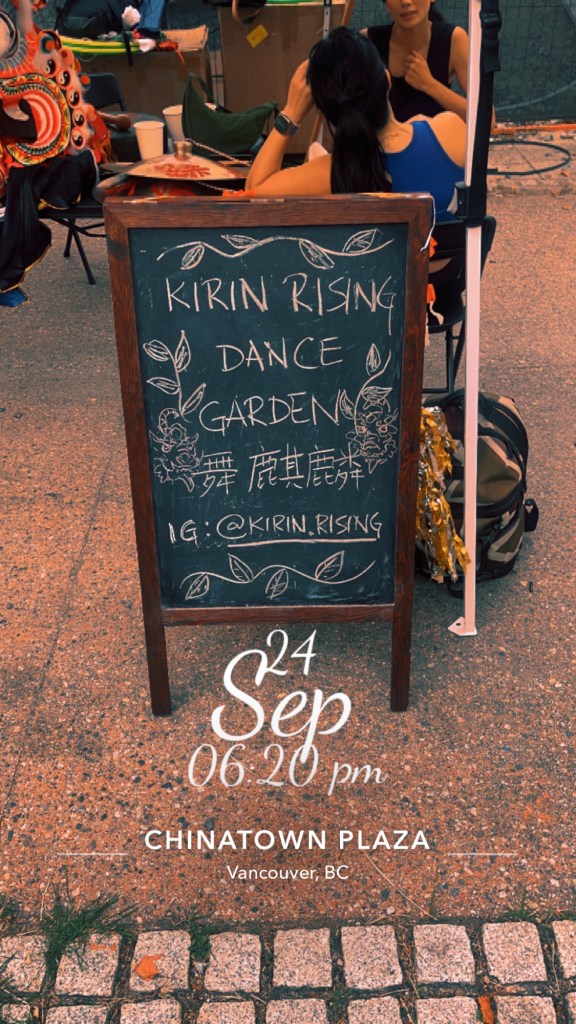
Right alongside that energy was William’s Library, a beautiful community initiative where books, vinyls, and music were shared freely, with donations going to the @yarrowsociety, a cause that deeply resonated with everyone at the event
Mahjong tables were everywhere, people laughing, and both newbies and seasoned pros getting in on the action. Whether it was a casual game or a quick lesson from one of the friendly instructors, Mahjong stole the spotlight. This game has always been a big part of Chinese culture, and seeing people connect over it at the heart of Chinatown was something special.
For many, it was a bridge back to their roots. For others? A pretty epic introduction to a cultural staple. For me, it reminded me of my own time spent playing board games at Waterfront Station.
These moments are less about the game itself and more about the connections we form, the laughter, and sometimes the friendly competition. It’s all about that sense of community that games bring; reading the room, engaging in some playful banter, and feeling that sense of connection that runs deeper than the game itself. The game’s social nature, much like poker in Western culture, made it a perfect icebreaker.
Tiles That Tell a Story
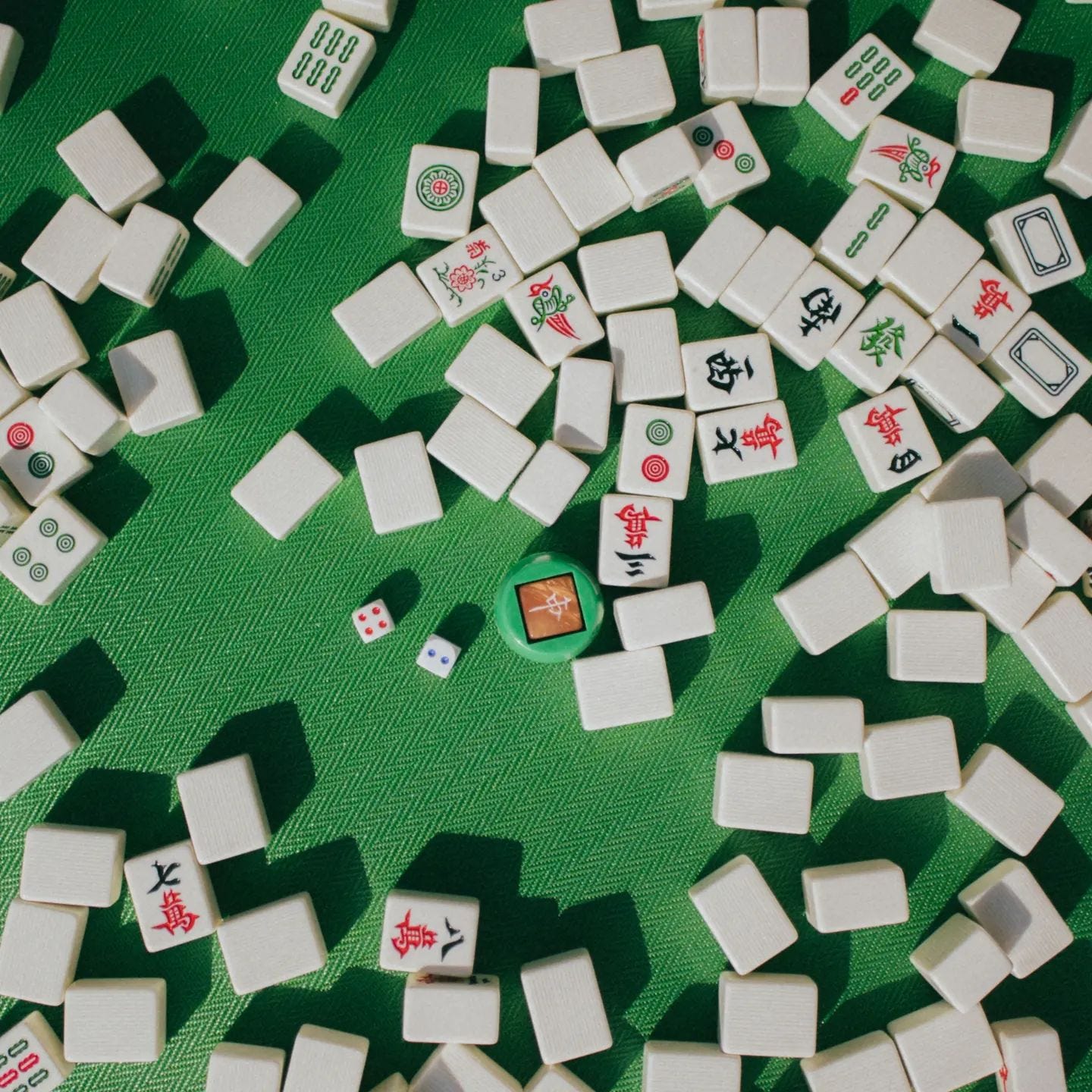
With its roots in China’s Qing Dynasty, this game has long been a staple in Chinese households, connecting generations through its mix of strategy and tradition. Whether you’re playing for fun or diving into its deeper symbolism, it’s a way to strengthen cultural ties. In fact, the game is recognized as an
“intangible cultural heritage“
by Hong Kong, highlighting its importance in preserving Chinese culture(Cold Tea Collective)(The Tyee).
Sticky Buns and Vinyl Vibes: A Taste of Chinatown
No Chinatown event would be complete without some serious eats, and this block party brought a new favorite: the famous sticky buns from Zhao Mah Bakery. These coconut and pineapple buns—sweet, fluffy, and just the right amount of sticky—were an instant hit. For those who remember the last event I covered, Cindy’s Ho Yummy served up deep-fried wontons. This time, it was all about the buns, and they didn’t last long, vanishing almost as soon as they hit the table! Prioritized for seniors, these treats were a delicious reminder of Chinatown’s beloved food culture. It’s small moments like this that capture the essence of community, tradition, and a love for food that brings people together
Meanwhile, DJ Harsh kept the vibe alive with his collection of vintage vinyl, spinning a mix of tracks that brought a nostalgic energy to the event. Whether people were playing Mahjong or just chilling with their sticky buns, the music was the perfect soundtrack to a day that blended old-school charm with modern fun.
The combination of traditional food and eclectic music was a beautiful reminder that while Chinatown is rooted in history, it’s also constantly evolving and creating new memories for the community.
The Chinese Mayor: A Story of Protest and Preservation
As the sun dipped below the skyline, the mood shifted. Games and music gave way to a sobering screening of The Chinese Mayor, a 2015 documentary that dives deep into the complexities of urban development in China. The film follows Geng Yanbo, the mayor of Datong, and his controversial mission to transform the polluted city into a cultural destination by reconstructing its ancient Ming Dynasty walls. This ambitious project, however, came with a steep price—over 500,000 residents were displaced, homes were demolished, and the city was left in turmoil(Diplomatic Courier)(Wikipedia).
Watching this story unfold in the heart of Vancouver’s Chinatown, it was hard not to draw parallels. Just like Datong, where communities were uprooted in the name of progress, Chinatown has been battling the forces of gentrification and displacement. The protests shown in the film echoed the local activism that has been part of this area’s own history—whether it was fighting the proposed freeway through the neighborhood in the 1960s or pushing back against luxury developments like 105 Keefer more recently(360 Riot Walk)(Asia Society).
“Watching the fight for Datong felt eerily familiar—Chinatown faces the same battle to protect its history from being bulldozed for the sake of ‘progress.’”
As the film concluded, the audience sat in reflective silence. It offered a cautionary tale about the cost of modernization and what happens when economic growth is prioritized over community. It was a stark reminder that the struggle to preserve Chinatown’s cultural heritage is part of a larger, global conversation
A Block Party with Purpose
Chinatown Together is doing more than just throwing epic block parties—they’re on a mission to preserve the heart and soul of this district. Mahjong tiles clicking and the sticky buns disappearing (though, let’s be honest, both were highlights), it’s part of a bigger movement to protect the area from gentrification, which threatens to erase the rich cultural history that makes Chinatown so special. The vibe was strong, but so was the message: this community isn’t going down without a fight.

Over the years, we’ve seen small businesses, historic buildings, and local culture slowly pushed out, making events like this more important than ever.
Gentrification has been intensifying for decades, with local businesses being displaced by trendy coffee shops, hipster gyms, and boutique grocery stores(Planetizen). What was once a community built on cultural food hubs and small family-owned businesses is now battling rising rents and future rapid urban development. A new wave of businesses and residents might be changing the face of Chinatown, pushing out long-standing businesses that catered to the Chinese-Canadian population.
As much as a new micro-suite condo with a cold-pressed juice bar might appeal to some, it stands in stark contrast to the traditional Hong Kong cafes and affordable green grocers that once lined the streets.
These changes have left many longtime residents feeling excluded from the places they’ve called home for generations.
This is a neighborhood that holds deep roots for so many families, and it’s clear that Chinatown Together is leading the charge to ensure those roots aren’t torn up.
A Call to Keep Chinatown Alive
As the sun set on the festivities, one thing was clear: this wasn’t just about Mahjong or music or food —it was about a community standing firm against forces that threaten its very identity.
For me, this mirrored so many movements I’ve connected with—whether it’s the fight for housing justice or the environmental advocacy I supported with SeaLegacy’s “100 for the Ocean” initiative showing that collective efforts can lead to real, impactful change—whether it’s cleaning up our oceans or standing against gentrification
Like I mentioned in my Housing Justice Now post, gentrification and housing crises aren’t just Vancouver’s struggles—they’re global issues.
As I watched the film and reflected on my experiences, it became clear how deeply interconnected these battles are. Whether it’s fighting to save Datong’s cultural heritage or pushing back against Vancouver’s housing inequality, these movements share a common thread: the preservation of spaces and stories that define who we are;
This moment also echoed what I wrote about in my post on the Gastown Townhall earlier this year. When we talked about the growing homelessness crisis and safety concerns in East Hastings, which reminded me of the similar struggles I’ve seen in my hometown back in Kenya. All these communities face the pressures of poverty, displacement, and being pushed out by economic forces beyond their control. Whether it’s fighting for affordable housing or preserving cultural heritage, these battles are rooted in the same fight for dignity and community
Just like I’ve stood with activists for housing justice and environmental protection, I stand with the defenders of Chinatown. These movements may seem distinct, but they’re deeply connected;
“HOUSING”
“CULTURAL PRESERVATION”
“ENVIRONMENTAL CONSERVATION“
At the core of each struggle is the fight for equality and the right to protect what we hold dear. My journey from Mombasa to Vancouver has shown me that when communities come together, when voices unite, real change can happen. The fight isn’t over, and neither is the call to action.
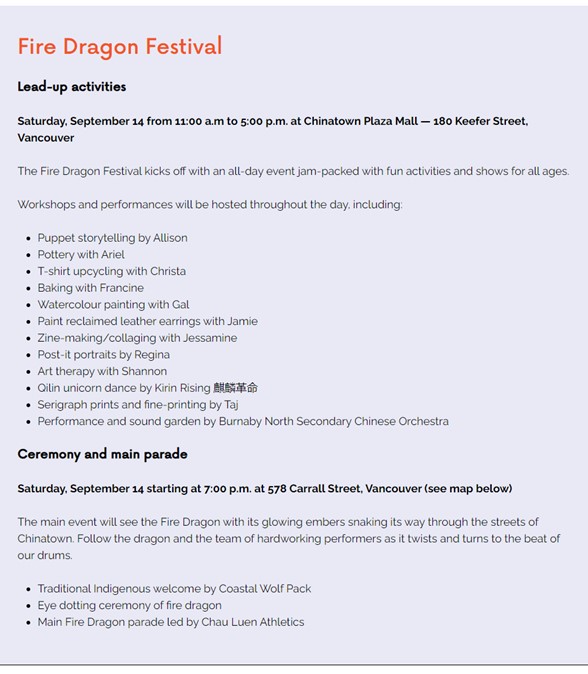
Up next is the Fire Dragon Festival on Saturday, September 14, 2024, where the community will gather again to celebrate Chinatown’s legacy. With workshops, cultural performances, and the magnificent Fire Dragon Dance, it’s another opportunity to come together and ensure that this neighborhood’s heart continues to beat
In the same way that we’ve rallied for housing justice and environmental preservation, we need to show up for Chinatown. These battles—whether fought in East Hastings or Chinatown—aren’t just about places, they’re about the people and histories that make these spaces come alive.
Let’s keep showing up, keep sharing our stories, and keep fighting for the future we believe in.
Upcoming events and initiatives will be announced through their website and social media channels, providing further opportunities to engage and support this crucial movement. Whether it’s through participating in community conversations or advocating for housing justice, there are numerous ways to get involved and make a difference.
For more updates and to follow my adventures, connect with me on

Let’s keep the conversation going!


Choose an amount
Or enter a custom amount


One response to “Saving Chinatown: A Cultural Movement Marches On”
[…] the struggles of maintaining safe spaces for the queer and trans community. Between the threat of gentrification, economic pressures, and societal bias, the effort to create these havens is […]