


Jay Shah
DevOps\Aerospace Engineer & Journalist



“ “A digital installation that bends time, merging Indigenous futurism with ancient stories?“
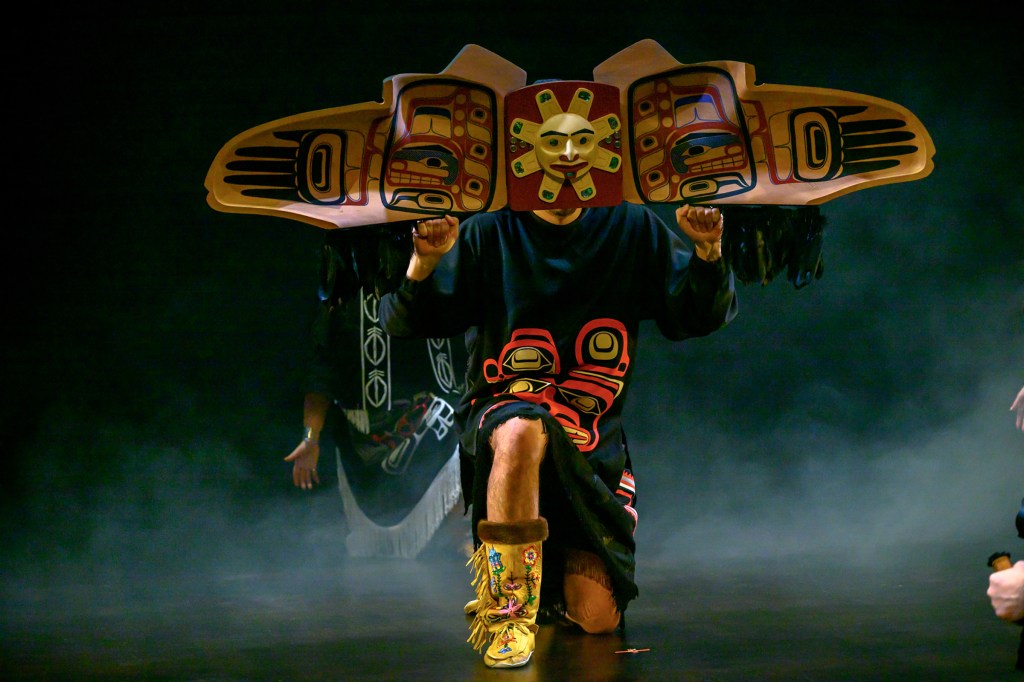
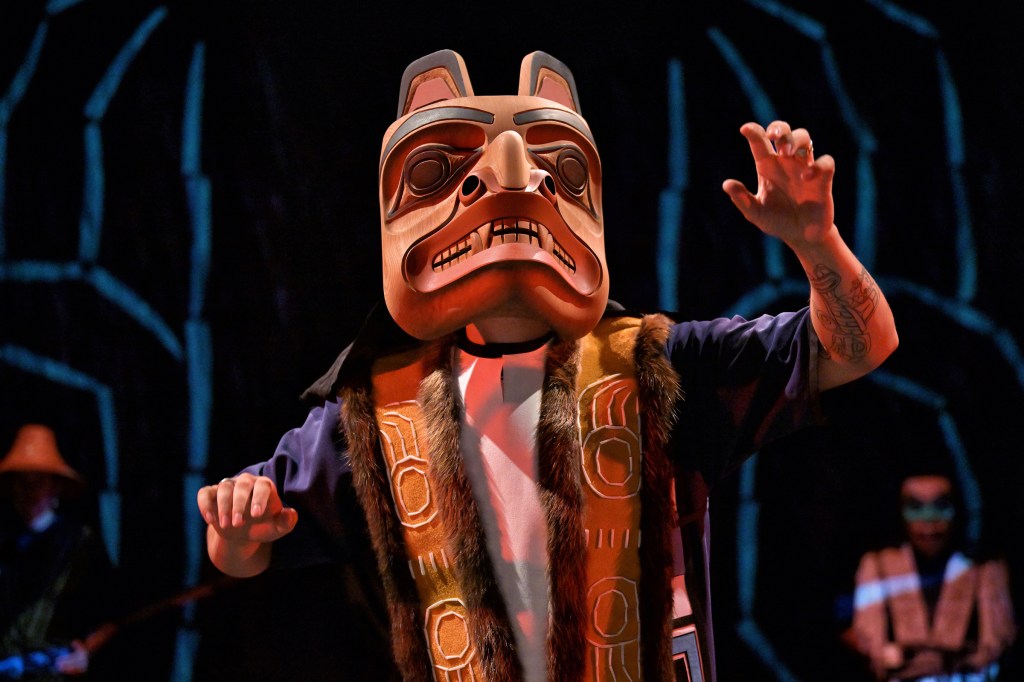
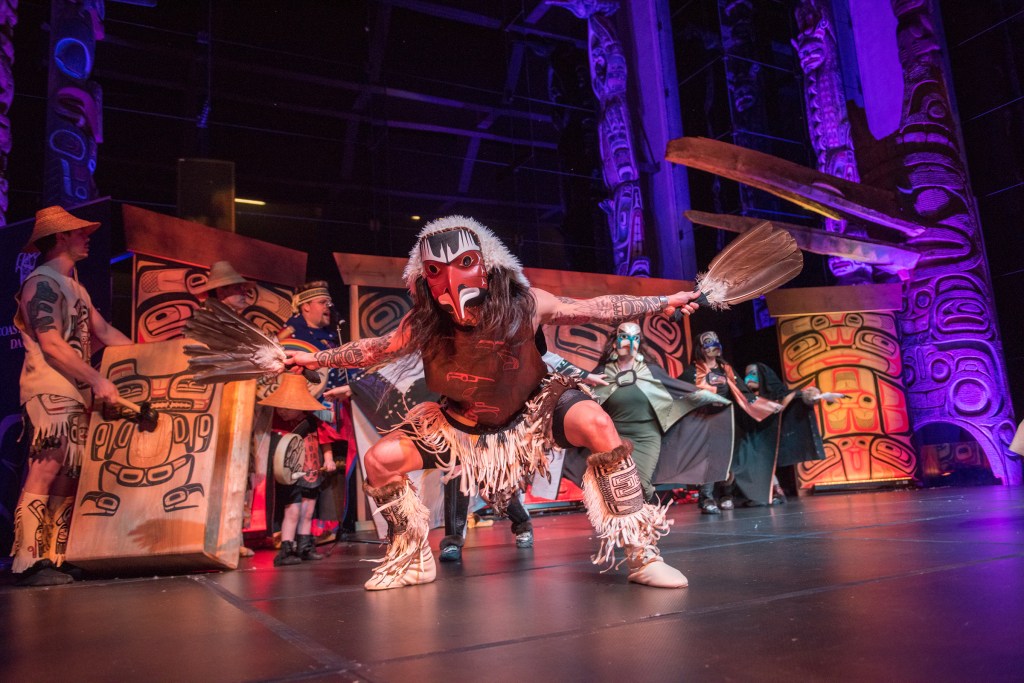
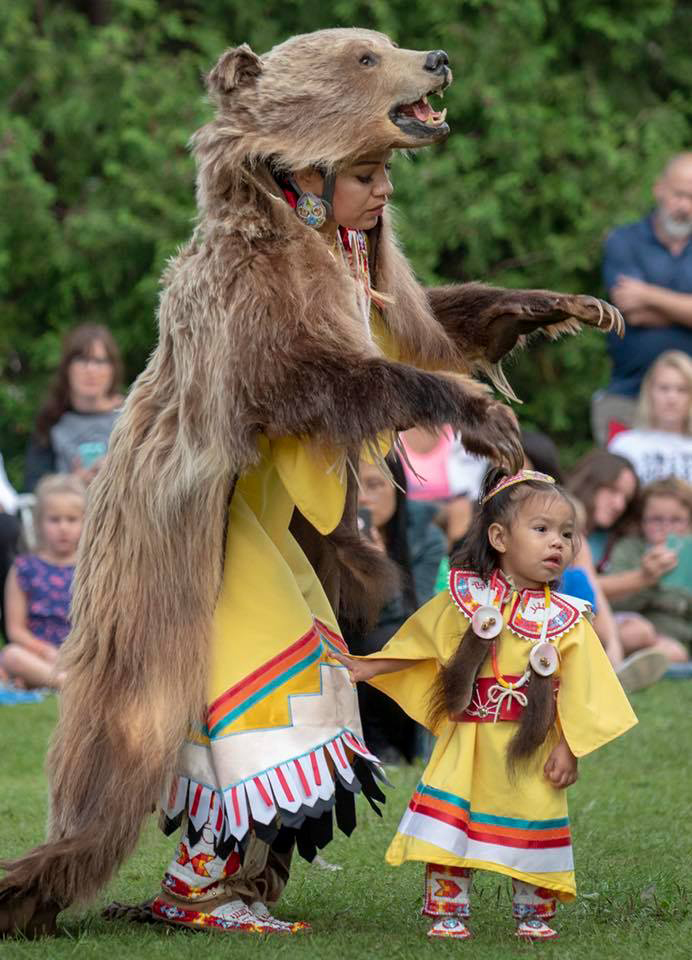
“ A masked dance that channels the voices of ancestors?“
For many of us Westernized folks up here in North America, Indigenous dance is seen mostly as just a performance, an artistic display rather than what it truly is: a living archive of history.
But for those who carry these traditions, it’s a language of survival. A rhythm passed through bloodlines and more importantly; a movement shaped by both memory and land. This is where the spirit of Vancouver’s unceded territories meets the artistry of those who have called it home for thousands of years, and this March, something powerful stirs on these lands.
Another homecoming is on the horizon.
For 18 years, this celebration has been a sanctuary for Indigenous dance, song, and storytelling; about presence. Movement as memory, dance as language, stories that refuse to be silenced.
Welcome to:
“The 18th Annual Coastal Dance Festival“
Hosted by the renowned:

For over 50 years, this Indigenous dance company from the Northwest Coast has been a force of cultural preservation and renewal. In the vibrant cultural landscape of Vancouver, they’ve been instrumental in the resurgence of Indigenous dance. Their unwavering commitment to cultural preservation has not only enriched our region’s artistic tapestry but has also provided a space for Indigenous voices to be heard, stories to be shared, and traditions to flourish.
Through their innovative performances and educational outreach, they continue to inspire a deeper understanding and appreciation of Indigenous cultures, ensuring that these rich traditions remain a vital part of not only our beautiful city’s cultural identity but Canada as a whole.


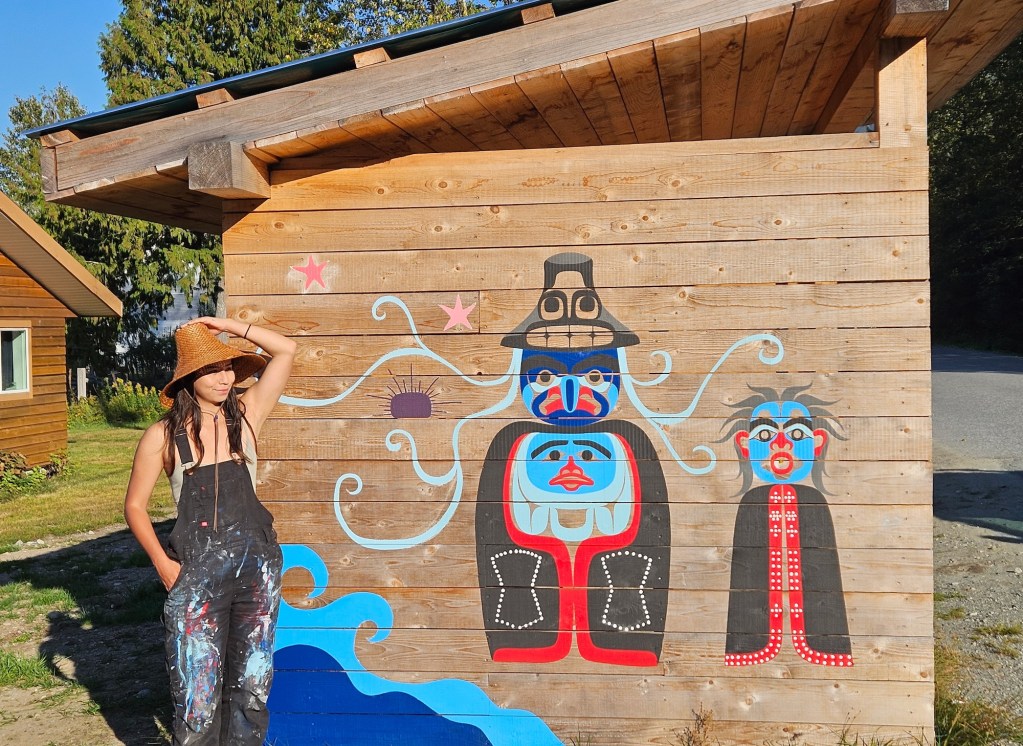
Jaysuits, you already know I cover the moments that demand to be felt, not just described.
You could scroll through my recap after the festival’s over.
You could watch a few clips online.
But nothing, nothing, will compare to being there as the first drumbeat lands and the first dancer steps forward Some performances fade as soon as the curtain falls.
This festival will stay with you long after you leave. The question isn’t “why should you go?”, it’s:
“How could you possibly miss it?”
Below, you’ll find the story behind this festival, the breakdown of the events at each venue, guiding you through an unmissable journey into Indigenous storytelling through movement.
And because I know the attention span of this TIkTOk era (we’re all guilty, bless our hearts), I’ve laid this out in bite-sized chunks for you. Whether you’re here for the festival highlights( debutant Nyla Bedard, Laura Grizzlypaws among many others), a deep dive into this celebration’s history and importance to Vancouver, peeks into Ko Te Ākau & Wolverine (no no not that one…but something much more etheral Jaysuits), or just skimming for the ticket deets, this is your cheat sheet.
- 🔥 Dancers of Damelahamid: A Lineage of Movement, A Legacy of Resurgence 🔥
- 🌎 Two Stages, One Living Story🌎
- ✨ March 8 | Signature Evening Performance | 7:30 PM
🔥 Dancers of Damelahamid: A Lineage of Movement, A Legacy of Resurgence 🔥
Vancouver, we often celebrate the arts as a form of expression, but for Indigenous communities, dance is something much deeper
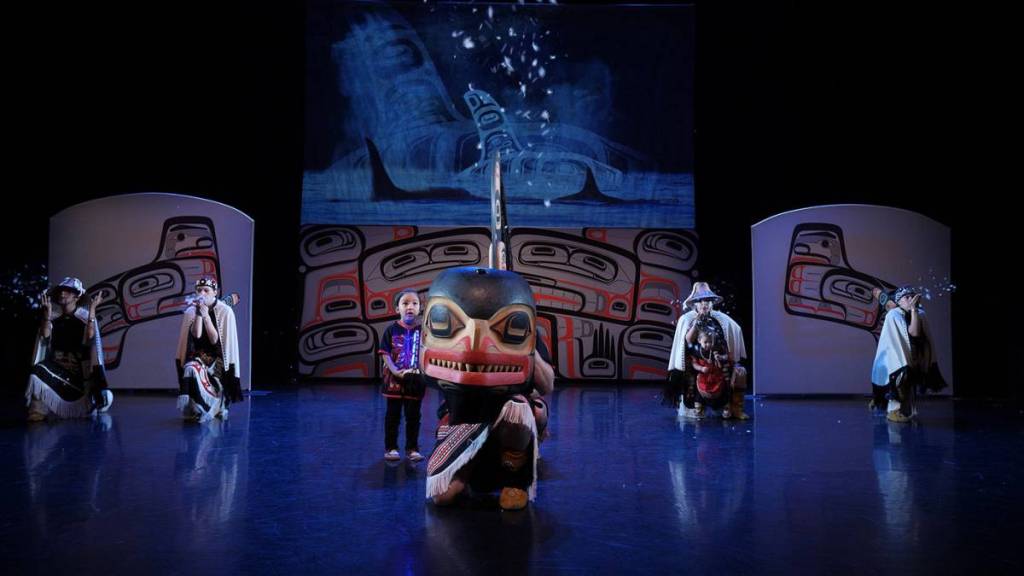
This Indigenous dance company (now led by Margaret Grenier the company’s Executive and Artistic Director; and her husband Andrew Grenier, who serves as the company’s Creative Producer and Production Manager) rooted in the Gitxsan Nation of the Northwest Coast, emerged at a pivotal moment in Canadian history, when Indigenous artistic expressions were struggling to rise again after nearly seven decades under the Potlatch Ban.
For generations, the potlatch was not only a ceremonial practice but also a cultural foundation, a space where songs, dances, and oral histories were passed down. The Potlatch Ban (1885–1951) sought to erase that knowledge; to silence the drums, the footfalls, the voices that had carried these stories for thousands of years. An effort at assimilation by the federal government.
But stories don’t disappear; they wait.
Margaret, describes the early years as a slow awakening; one that required dedication, patience, and the unwavering commitment of her parents, Chief Kenneth Harris and Margaret Harris, who founded the company in the 1960s.
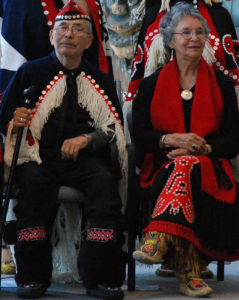
“My grandmother described the practice as being asleep,” Grenier recalls. “It wasn’t lost to us. But it took decades of work to bring it back to life.“
And when the ban was lifted, Ken and Margaret took on the responsibility of rekindling what had been forced into dormancy. The songs, the regalia, the choreography; it all had to be rebuilt, relearned, and reclaimed. For instance, during the ban, Harris says, she had to watch old reels (no no, not Instagram Jaysuits, actual film stock reels) of dances and use pots and pans instead of drums.
Every step of their journey was a quiet act of defiance against colonial erasure.
Through their work, a new generation was able to grow up knowing these dances, hearing these songs;not as echoes of the past, but as part of their lived reality.
“I came to realize it wasn’t my responsibility to simply repeat what the previous generation had done. I had to offer my voice to that conversation.”
This is where the Dancers of Damelahamid stepped into the present. Movement, regalia, digital media, and contemporary storytelling merged with ancestral knowledge to create something entirely new, yet deeply rooted in tradition.
Margaret, Andrew, and their family see their work not just as a career, but as a responsibility.
“For our company, it’s important that we not only have the opportunity to share our work but also to engage in dialogue,” Margaret explains.
“This is a lived practice,” Margaret says. “It defines us as Indigenous artists. It carries the stories and history of our ancestors, and it allows us to embody that—to move it forward.”
For their family, this responsibility means ensuring that nothing is lost.
“We were taught that you can’t just go buy what you need. You have to know how to make it yourself. You have to understand how to remake something if it’s ever lost to fire or flood.”
This ethos applies to more than regalia, it applies to dance itself. If a performance is lost, they will rebuild it. If a song fades, they will sing it again. If knowledge is threatened, they will ensure it survives.
One of the company’s greatest legacies is this festival, which was founded in 2008 as a gathering space for Indigenous artists from the Northwest Coast and beyond.
“There’s been such a gap in understanding, and these spaces allow people to step deeper into Indigenous artistic traditions—not just as spectators, but as active participants in learning, in feeling, in recognizing the weight of these histories.”
To step inside a Dancers of Damelahamid performance is to step inside a world where every element has meaning.
The regalia, the masks, the projected imagery; nothing is ornamental.
🔹 Regalia is woven into the narrative : Each piece is handcrafted with precision and carries deep significance, from the button blankets to the carved masks that embody transformation.
🔹 Music is more than accompaniment : The songs performed are not just for performance’s sake; they are history, carried through melody and voice.
🔹 Movement is story : The dances unfold in sequences that mirror the natural world, the cycles of life, the relationships between land, sea, and spirit.
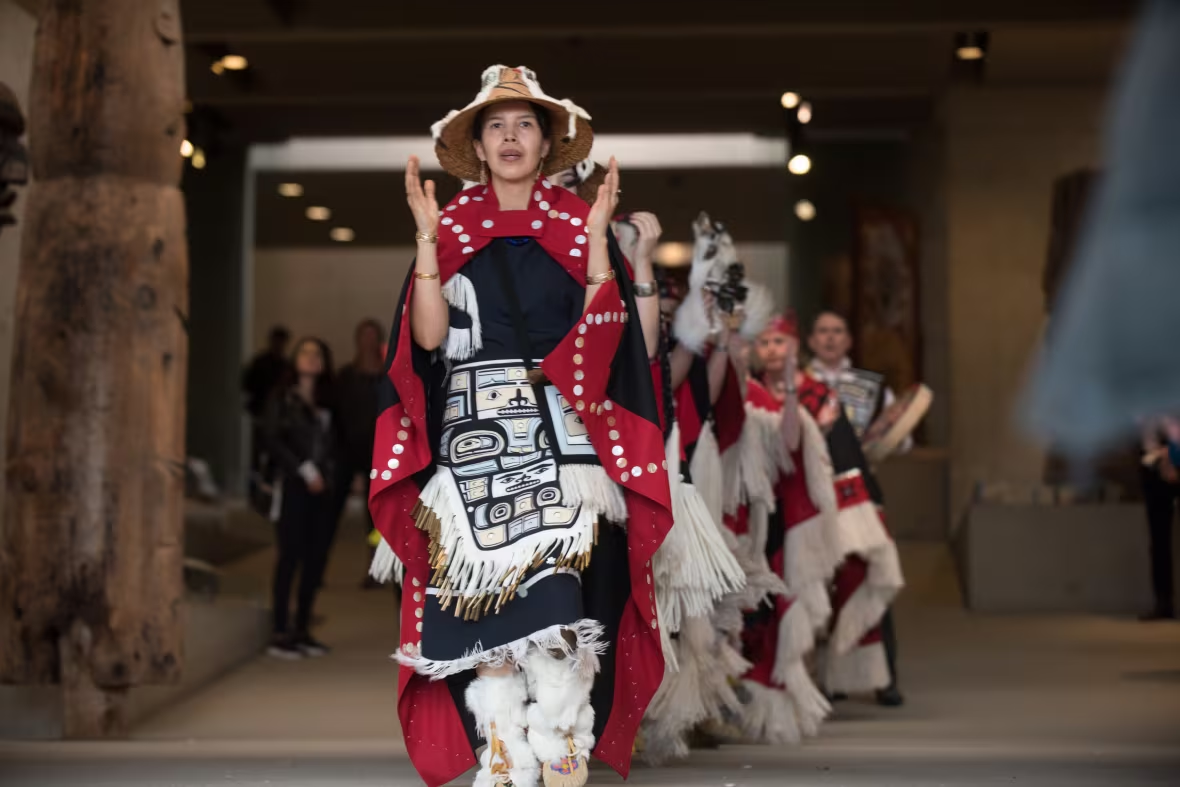
Margaret Grenier leads Damelahamid dancers into the Great Hall at UBC’s Museum of Anthropology. (Chris Randle) 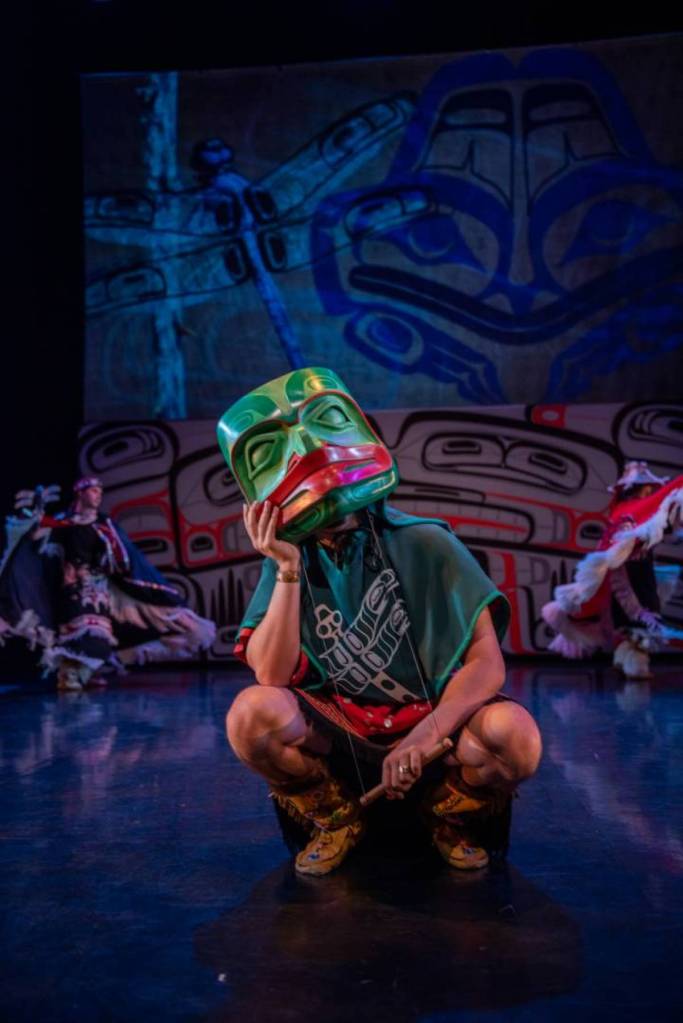
Margaret Harris taught her children the significance of different masks. Chris Randle 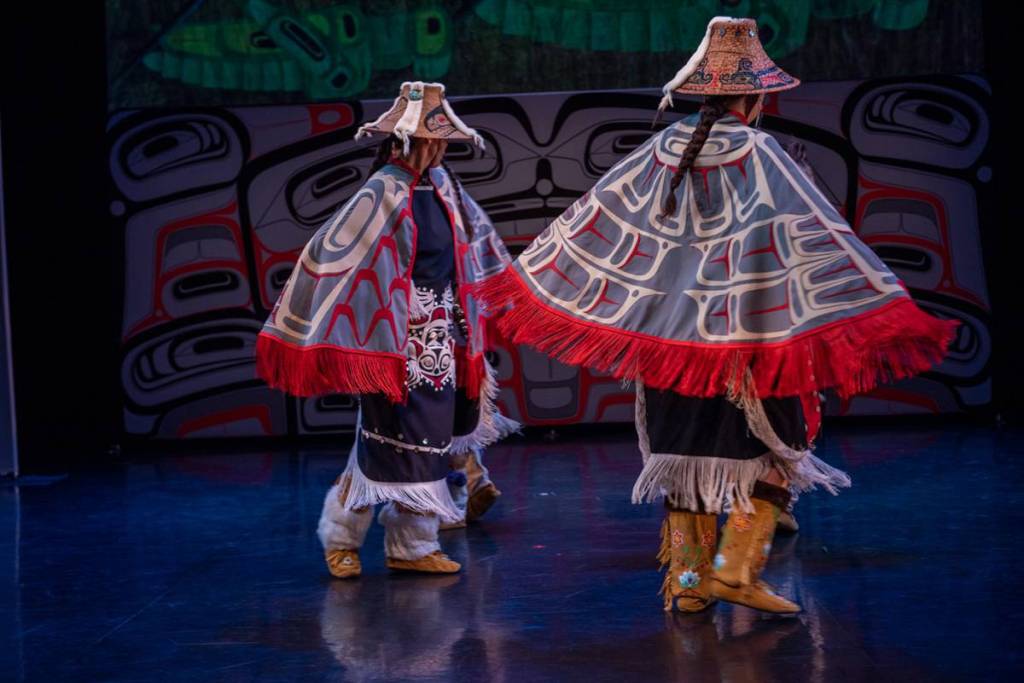
Stories are a central component of Northwest Coast singing and dancing traditions. Chris Randle 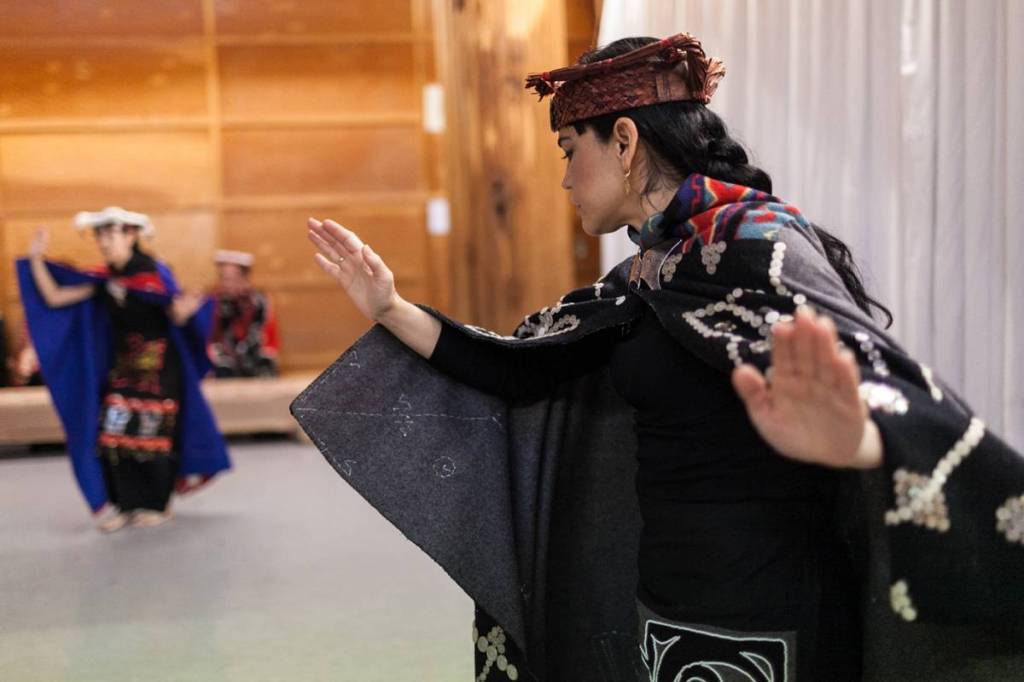
‘Yisya̱’winux̱w Dancers are among those performing at the Coastal Dance Festival Amanda Laliberte 
Casey James and Demetrius Paul recently recorded a CD. Casey James/Demetrius Paul
This is why the company does not separate choreography from storytelling. Every aspect of production; lighting, projection, sound, and set design, is woven into a single narrative.
“We don’t start with movement and then add everything else at the end,” Andrew explains. “From the very beginning, every choice—lighting, regalia, digital media—is shaped by the story we are telling.”
This approach has led to groundbreaking productions that push the boundaries of Indigenous performance, such as:
🔥 Spirit and Tradition – A visually stunning piece that blends multimedia projections with movement, immersing audiences in Gitxsan cosmology.
🔥 Flicker – A collaboration that explores light, transformation, and the power of ancestral guidance.
🔥 Raven Mother – A deeply personal work honoring the matriarchs who have carried these traditions forward, tracing the lineage of knowledge passed from mother to daughter.
This engagement extends far beyond the festival stage. Through workshops, artist panels, and mentorship programs, the Dancers of Damelahamid ensure that the next generation is not just watching but learning, carrying the knowledge forward, and shaping it into something new.
🌎 Two Stages, One Living Story🌎
This year, the festival expands across two powerful locations—MOA at UBC and Anvil Centre in New Westminster—each offering a stage where history and future collide.
🏛️ MOA: A Homecoming Six Years in the Making🏛️
Jaysuits, we’ve walked these halls before. Not long ago, I stood inside its walls, surrounded by the spirits of 71 Nuxalk treasures, finally returned home after decades in exile. Nuxalk Strong was a reclamation, a reminder that belongings aren’t just objects, and history doesn’t live behind glass.
For the first time in six years, the Great Hall at MOA reopens to welcome the pulse of movement, song, and memory back into its walls.
Schedule:
- March 4 + 5: Signature Performances (ticketed events)
- March 4 – 6: Artist Sharing Series (free with museum admission)
- March 2, 4 – 9: Ko Te Ākau (free with museum admission)
🔥 Signature Performances 🔥
For two nights, the festival’s most electrifying performers will step onto a stage surrounded by the towering poles and carvings that have borne witness to centuries of Indigenous presence.
💃 March 4 | 7:30 PM
🔹 Xwelmexw Shxwexwo:s (Stó:lō, Musqueam, Sts’ailes, Snuneymuxw, Nuu-chah-nulth, Sḵwx̱wú7mesh) – A family dance group whose very name translates to Salish Thunderbird, carrying the power of intertribal songs passed down through generations.
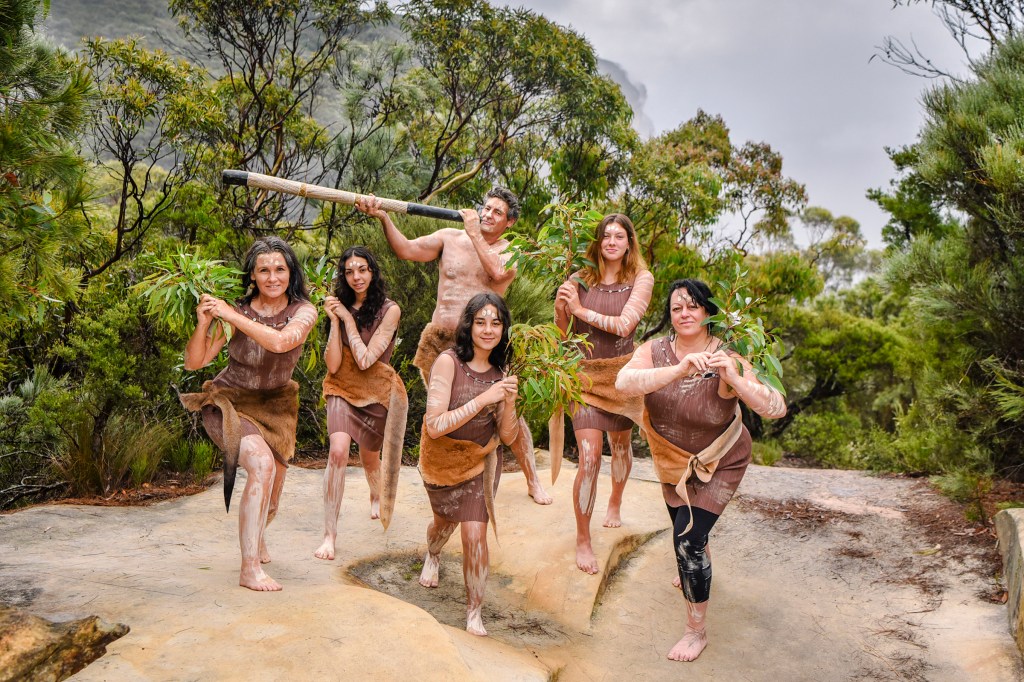
🔹 Wagana Aboriginal Dancers (Australia) – A fierce, all-women ensemble that blends traditional Aboriginal movement with contemporary fire, honoring the spirits of the Blue Mountains.
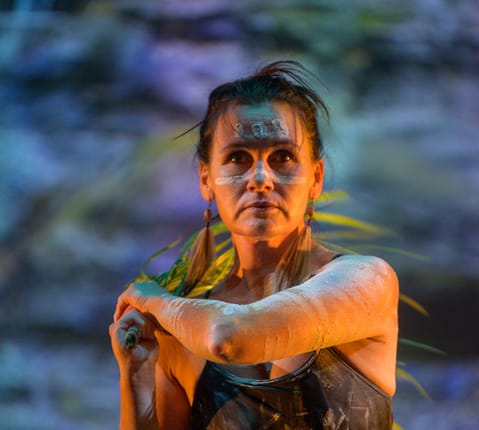
🔹 Dancers of Damelahamid – Hosting the festival, they will perform an excerpt from Raven Mother, a sweeping narrative of matriarchal power and transformation, featuring breathtaking regalia, intricate masks, and movement that bridges the physical and the spiritual.
💃 March 5 | 7:30 PM
🔹 Spakwus Slolem (Eagle Song Dancers) – Representing the Sḵwx̱wú7mesh people, this group embodies the power of their ancestors through soaring vocals and deeply rooted dances that channel the forces of nature.
🔹 Laura Grizzlypaws (St’át’imc Nation) – One of the only women in the world who performs the sacred Grizzly Bear Dance, she does not just move—she becomes. A force of nature, carrying the wisdom and presence of the bear into every motion.
🔹 Dancers of Damelahamid – Returning to the stage with a second, spellbinding excerpt from Raven Mother, shaping shadows, breath, and movement into something you feel in your bones.

🗣️ Artist Sharing Series: Radical Re-Shifting of Imbalances🗣️
March 4 – 6
Jaysuits, these aren’t talks,these are transmissions. This is where knowledge is handed down, where dance is decoded, where artists unravel the weight of what they carry.
🔥 March 4 | 3:00 PM
Jo Clancy (Wagana, Australia) & Starr Muranko (Raven Spirit Dance, Canada)
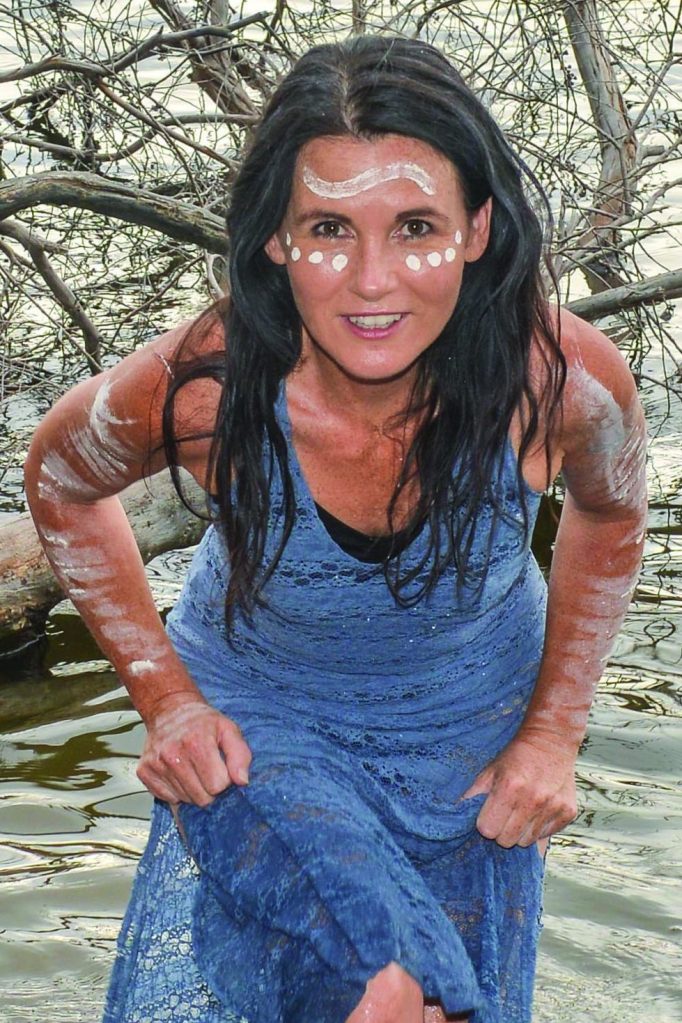
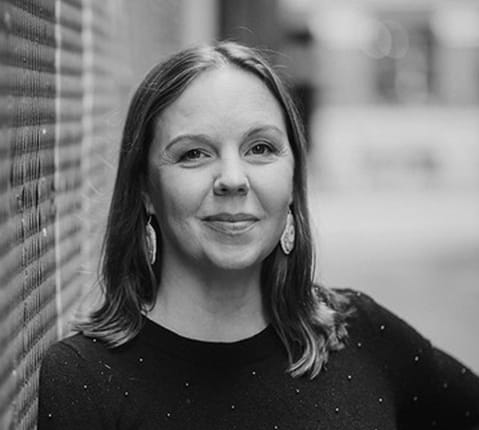
- Two artists. Two continents. One shared pulse.
- A conversation about the role of matriarchs in Indigenous dance, how movement can be a form of healing, and what it means to carry knowledge forward in the body.
🔥 March 5 | 3:00 PM
Laura Grizzlypaws & Tasha Faye Evans

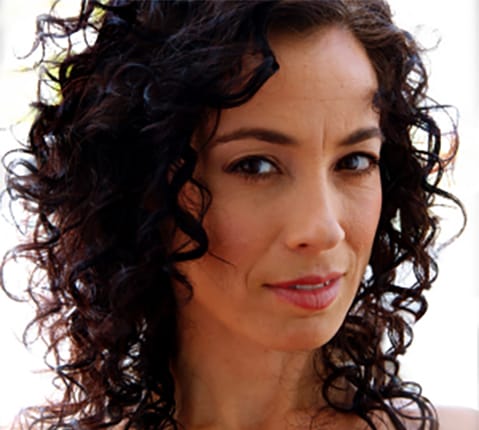
- Dance as sovereignty. Resistance. Survival.
- What does it mean to perform movements that were once outlawed?
- Laura, a keeper of the St’át’imc Grizzly Bear Dance, speaks to embodying animal spirits in dance, the balance between movement and ceremony, and the fight to keep these traditions alive.Tasha, a theatre artist and choreographer, explores how Indigenous performance exists beyond the stage—how it weaves into daily life, land, and storytelling.
🔥 March 6 | 3:00 PM
Charles Koroneho (New Zealand), Natasha Kanapé Fontaine (Quebec), & Raven Grenier

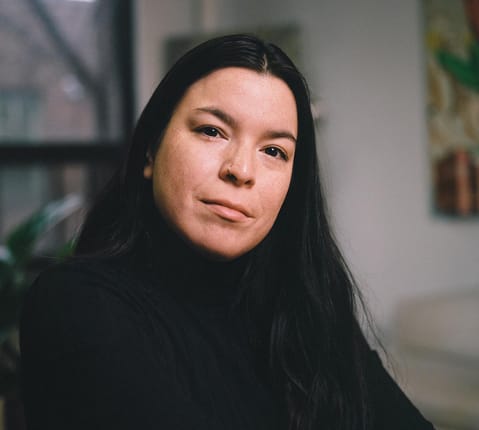
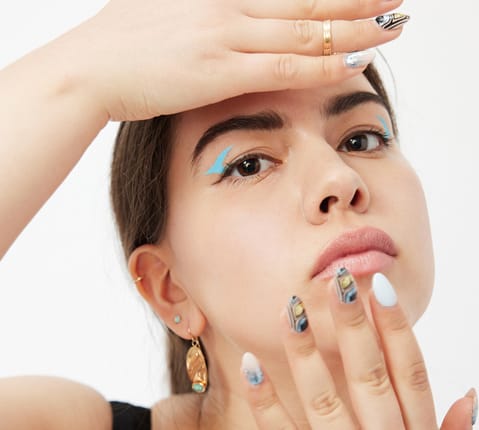
- A journey into Indigenous futurism, where ancestral wisdom collides with digital landscapes.
🔥 March 6 | 7:00 PM |
Special Performance of :
“Wolverine“
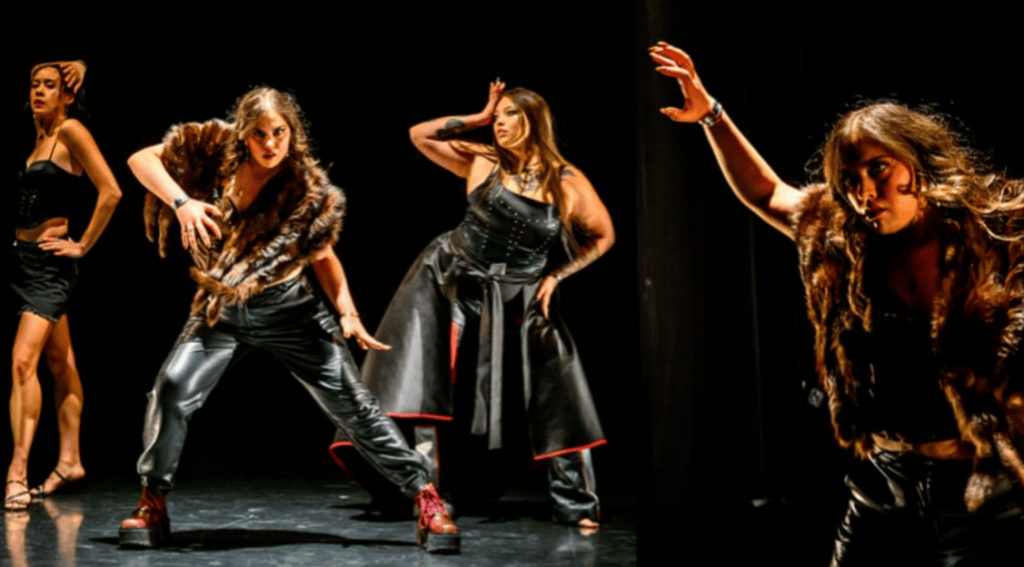
A visceral, boundary-breaking performance by Raven Grenier and collaborators. This piece is a shapeshifter’s story, rooted in the Gitxsan concept of
“nochnoch Wee sim no sik“
The being that moves between realms, never just one thing, never just one form. It’s about the notion of transforming between realms as the shapeshifter being that lives in the house beneath the waters. It is about celebrating all gender identities that identity with the concept of the Gitxsan nochnoch Wee sim no sik, and femme power through the context of prince hood.
Wolverine is queer.
Wolverine is water.
Wolverine is resistance.
🎭 Ko Te Ākau: A Performance That Stretches Time🎭
March 2 – 9
Imagine stepping into a space where past, present, and future merge.

That is Ko Te Ākau, a durational performance and installation by Māori artist Charles Koroneho that reshapes space through dance, language, and poetry.
The live digital performance installation explores the concepts of digital artifacts and Indigenous futurism, in partnership the Vancouver International Dance Festival, and is in collaboration with Montreal-based multidisciplinary artist, Natasha Kanapé Fontaine.
🌿 March 2
🔹 Performance | 1:00 – 3:00 PM
🔹 Artist Talk | 4:00 – 5:00 PM
🌊 March 4 – 9
🔹 Performances | 1:00 – 3:00 PM & 3:00 – 5:00 PM
A performance that lingers long after you’ve left.
🌉 Bridging Stories: A Second Stage in New Westminster🌉
📍 Anvil Centre, New Westminster (March 7-9)📍
For the first time, the festival will also take place at the Anvil Centre in New Westminster. A bridge between the past and future, the festival expands, hopefully drawing more Vancouverites into the history and the movement.


🔥 March 7 | Matinee Performance | 11:00 AM
The Anvil Centre matinee offers an intimate yet high energy introduction to Indigenous dance, featuring two dynamic artists who bring their own unique storytelling through movement.

🔹 Nyla Bedard (Skwxwu7mesh, Cree, Métis) – Making her festival debut, this theatre artist and powwow dancer will bring the vibrant Fancy Shawl Dance to the stage. Often described as the “butterfly dance,” this fast-paced, graceful style captures the essence of transformation and resilience, as the dancer moves like a butterfly emerging from its cocoon. Bedard’s performance is a celebration of strength, beauty, and the dynamic energy of powwow traditions.
🔹 Dancers of Damelahamid (Gitxsan Nation) – Returning to Anvil Centre, they will perform a special selection of pieces that merge ancestral dance forms with contemporary innovation.
This midday program offers a rare opportunity to experience both powwow and coastal Indigenous dance traditions on the same stage. An almalgamation of cultural expressions, all carrying generations of history within them.
🌊 March 8 & 9 | Midday Festival Stage Performances | 1:00 – 4:00 PM
✨ Performing Artists Include:
🔹 Chinook Song Catchers (Skwxwu7mesh, Nisga’a) – A dynamic family group whose performances weave together the vocal and dance traditions of their Squamish and Nisga’a heritage. Their work is deeply community-based, ensuring that songs, languages, and movements continue to thrive.

🔹 Dakhká Khwáan Dancers (Inland Tlingit, Yukon) – An award-winning group whose performances are known for their breathtaking regalia, powerful drumming, and deeply rooted Tlingit storytelling traditions. Their performances are a bridge between coastal and inland Indigenous traditions, reinforcing the shared histories and evolving expressions of their culture.
🔹Git Hayetsk (Nisga’a & Tsimshian Nations, Canada)
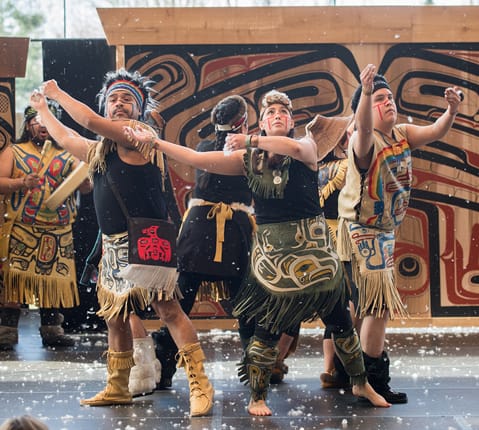
- Led by Mike and Mique’l Dangeli, this internationally acclaimed group is bringing masks, song, and dance back to life.
- “Git Hayetsk” means “people of the copper shield”, and their performances embody the strength, resilience, and artistry of their ancestors.
- Expect bold, striking regalia, powerful vocals, and intricate choreography that feels like stepping into a story centuries in the making.
🔹 Git Hoan (Tsimshian, Alaska)
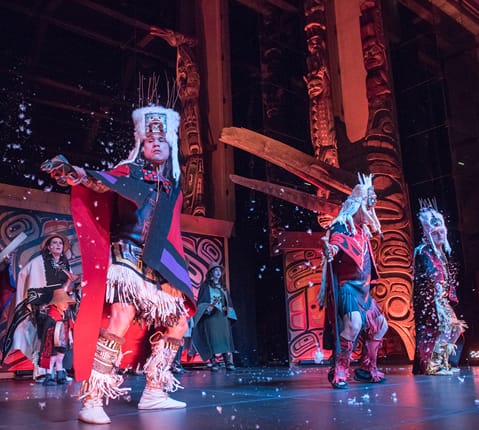
- Founded by master carver David Boxley, this dance group specializes in masked performances that bring legends to life.
- This legendary group is deeply tied to Tsimshian cosmology, bringing supernatural beings and ancestral figures into motion through their masked performances. Their name, meaning “People of the Salmon,” reflects their deep connection to the natural world that sustains them.
🔹 Chesha7 iy lha mens (Skwxwu7mesh, Stó:lō, Tsimsian) – A multi-generational family group made up of grandmothers, mothers, and daughters. Their performances embody the resilience of matriarchal teachings, the passing of knowledge through movement, and the strength of women in Indigenous cultural revitalization.

🔹 Yisya̱’winux̱w (Kwakwa̱ka̱’wakw) – A powerful representation of the 18 tribes of the Kwakwa̱ka̱’wakw people from Northern Vancouver Island, their performances bring forward the bold, rhythmic, and highly visual dance forms that have been carried through generations.

🔹 Rainbow Creek Dancers (Haida Nation) – Founded in 1980 by master carvers and cultural leaders Robert and Reg Davidson, this group is renowned for their breathtaking performances of Haida dance, combining carved masks, elaborate regalia, and song to bring their stories to life. Rainbow Creek Dancers derives its name from a creek that runs behind the village of Massett, Haida Gwaii (Queen Charlotte Islands). The creek only runs in the winter, the ceremonial season and traditional time of the year for songs and dances to be revealed
Each of these groups carries a distinct lineage, yet together they form a shared legacy of Indigenous storytelling through movement. Their presence at the festival represents a convergence of histories, a resurgence of voices, and a celebration of artistic excellence.
✨ March 8 | Signature Evening Performance | 7:30 PM
One of the most striking visual elements of this performance will be a Raven transformation mask that opens to reveal the faces of five generations of women in their family. A powerful image that promises to embody the endurance of matriarchal knowledge, the unbroken line of cultural revitalization.
🌿 Featured Performers:
🔹 Git Hoan (Tsimshian) – The power and spirit of Tsimshian masked dance will unfold onstage, as supernatural beings and ancestral figures take form before our eyes.
🔹 Yisya̱’winux̱w (Kwakwa̱ka̱’wakw) – Representing the many nations of Northern Vancouver Island, their performances are bold, hypnotic, and deeply connected to the rhythms of their ancestors.
🔹 Dancers of Damelahamid | Raven Mother – A special excerpt from their newest production, Raven Mother, will be presented; a work that is deeply personal and profoundly interwoven with their family’s matrilineal teachings.
This closing performance at the Anvil Centre will be a statement of the boundless strength of Indigenous dance as both a cultural practice and a contemporary art form. Something fellow Jaysuits, I do not want to miss.
✨ The drumbeats are rolling. The stories are waiting. Step into the movement.✨
🔗 Secure your spot: Official Coastal Dance Festival Website
For more updates and to follow my adventures, connect with me on:

Make a one-time donation
Make a monthly donation
Make a yearly donation
Choose an amount
Or enter a custom amount
Your contribution is appreciated and serves my coffee addiction.
Your contribution is appreciated.
Your contribution is appreciated.


© 2025 Copyright Dancers of Damelahamid