


Jay Shah
DevOps\Aerospace Engineer & Journalist

Welcome back, film lovers and VIFF explorers! 🎥✨ If you’ve been keeping up with my coverage of Vancouver’s incredible film festival, you’ve already journeyed through emotional highs with ANORA, a delicate yet powerful narrative that took the festival by storm, the cinematic wonders like ENO, a generative masterpiece that pushed the boundaries of creativity, and CONCLAVE, a gripping tale of ambition inside the Vatican. Today, we take an exciting leap into a genre-bending epic that’s shaking up the festival—and sparking awards season chatter, lying at the heart of an already stellar

At Cannes, it captivated audiences, walking away with the Jury Prize and Best Actress award, marking a historic win for Karla Sofía Gascón as the first trans woman to receive the award. The film’s reception was electric, earning an 11-minute standing ovation and firmly establishing its place in the awards season race.
🏆
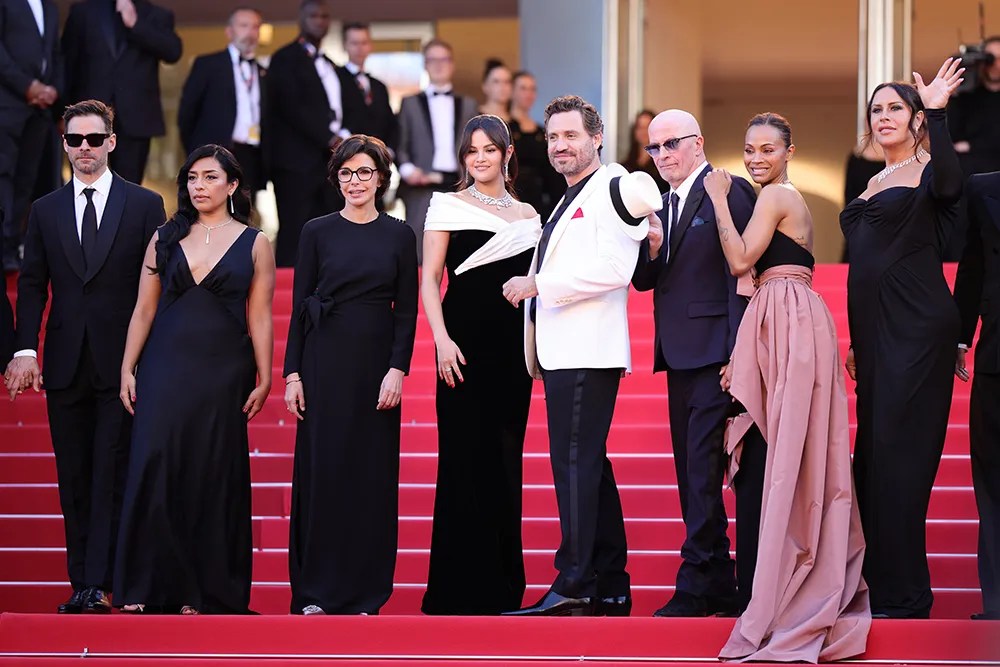

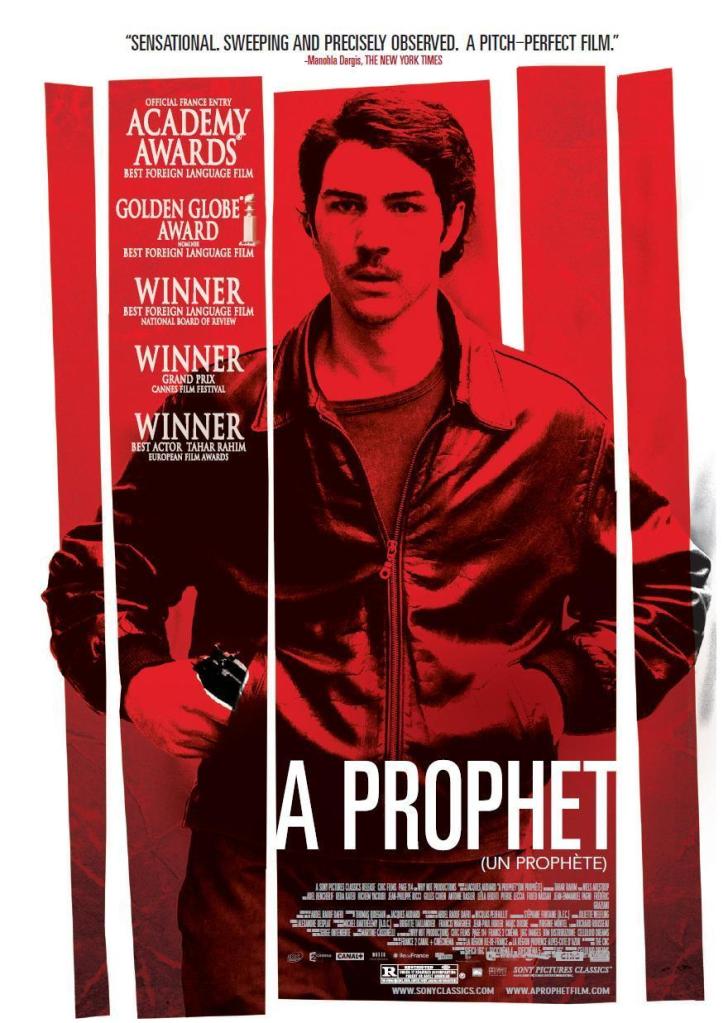
Directed by Jacques Audiard, this film defies categorization. It’s part musical, part thriller, part redemption arc—unlike anything else seen at this year’s festival. Audiard, known for his deeply evocative films: A PROPHET and DHEEPAN (2015’s Palme d’Or), tackles themes of transformation, gender identity, and moral reckoning in ways few filmmakers have dared.

It presents a cinematic spectacle that feels like a blend of Sicario and Mrs. Doubtfire, peppered with operatic flair. But rather than dwelling on conventional crime-thrillers, the film subverts expectations at every turn.
Now, since this is a deep deep thematic dive into the movie and with our lovely attention span these days, I’ve broken down this piece into the relevant subsections so that you can dive straight into the aspects of kino you find interesting, so…… let’s dive in!
Criminal Roots, Family Bonds: Identity and Redemption Amidst Chaos
Transformation and redemption are at the very heart of this narrative. Audiard masterfully weaves a tale that delves deep into Emilia’s (formerly Manitas) life, balancing her past as a feared cartel leader with her present as a woman seeking absolution. The film navigates this duality, showing that redemption, while deeply desired, is not something easily attained.
What sets this exploration apart from conventional crime thrillers is its focus on the emotional and psychological implications of Emilia’s gender transition. Rather than portraying the transition as a simple plot device, Audiard uses it to confront larger questions of identity and morality.
Can one truly change, not just in body but in soul? And more importantly, can a violent past ever truly be left behind?
These questions hang over the film, infusing each scene with a palpable tension that mirrors Emilia’s internal struggles.


Emilia’s journey to self-actualization is framed by her turbulent past as Manitas, a feared cartel leader. Her transformation is not merely physical but deeply emotional, as she grapples with the weight of her former life’s misdeeds while striving to reclaim some semblance of innocence. It’s this internal struggle that drives much of the film’s narrative tension, and it’s brilliantly captured through Karla Sofía Gascón’s nuanced performance. Gascón channels Emilia’s violent past while imbuing her with a tenderness and vulnerability that make her quest for redemption all the more poignant.
Family plays a crucial role in this arc. Emilia’s attempt to reintegrate herself into the lives of her estranged wife, Jessi, and their children reflects the broader theme of reconciliation—not just with others, but with oneself. As Emilia navigates this delicate terrain, the film invites audiences to reflect on the idea of personal transformation in the face of immense guilt and the near-impossible task of atoning for past violence.

Yet the film never offers simple answers. Much like in A Prophet, Audiard leaves room for ambiguity. Emilia’s attempts to atone—through her work with an NGO to help families find the disappeared—feel genuine, but they’re haunted by the specter of her past. Her efforts to bring closure to the families of cartel victims, while noble, are fraught with the lingering question:
Can she ever truly be forgiven? And can the new identity she has embraced ever fully erase the sins of her previous one?
In this sense, it feels like a meditation on the power and limits of personal transformation. The film does not shy away from the fact that some wounds cannot be healed, and some actions cannot be undone. It’s a bold narrative choice that adds depth to the film’s portrayal of redemption, grounding it in a reality that acknowledges the complexity of human nature.
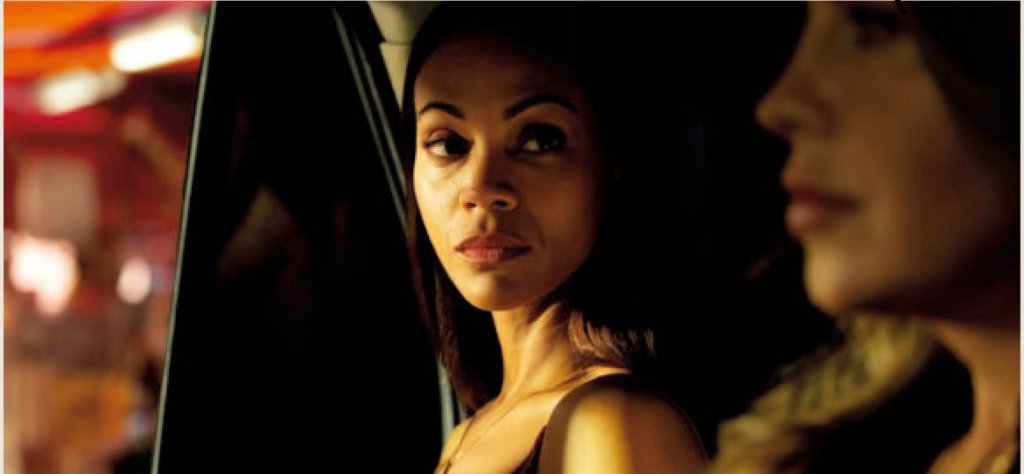
The film’s tonal shifts can be jarring—one moment; it’s a gangster movie, the next it’s a full-fledged musical number set in the heart of Mexico City. And yet, these transitions feel purposeful, much like how Hustwitz’s Generative Documentary in ENO. evolves with each screening. Here too, there is no fixed narrative; the story morphs, shifts, and reinvents itself just as Emilia does, keeping the audience on their toes and immersed in this unusual spectacle.
The Rhythm of Reinvention: Music as a Narrative Force
While musicals often lean into grandiosity and spectacle, here, the musical sequences serve as a reflection of Emilia’s internal conflict, adding layers to the already complex narrative of transformation and identity. It’s a rare fusion of musicality with crime drama, one that elevates the storytelling rather than overshadowing it.
They do not feel like traditional, polished Broadway productions. Instead, there’s a rawness—an almost unrefined, chaotic quality that mirrors the turbulent journey of Emilia’s self-discovery. The choreography may feel rough around the edges, but this imperfection lends authenticity to the emotions that drive the story forward. Much like Emilia’s own quest for self-acceptance, these numbers are about expression, catharsis, and emotional release.
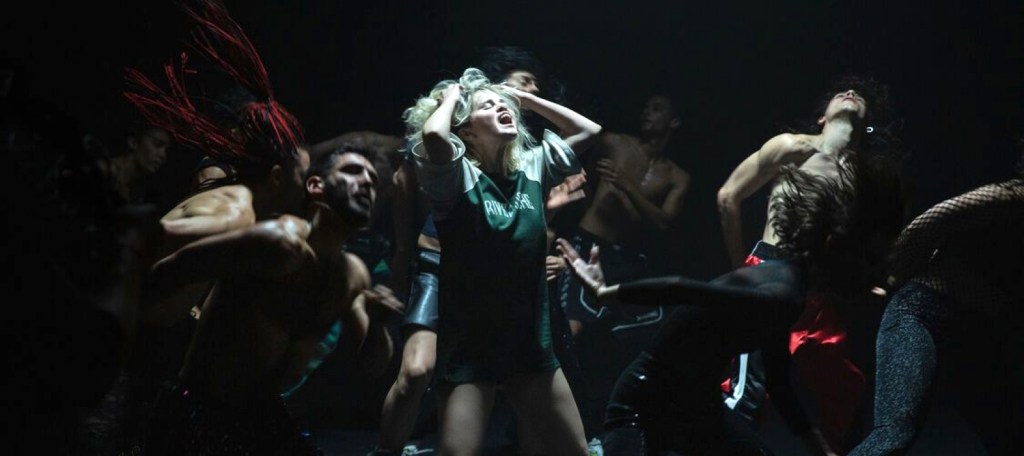
Audiard’s decision to embrace this messiness adds a layer of realism to the film, making the musical sequences feel like an extension of the characters’ emotional states rather than mere interludes.
The music itself; a blend of pop, reggaeton, and operatic influences—complements the film’s diverse tonal shifts. Whether it’s a tension-filled scene between Emilia and Jessi or a moment of introspection as Emilia grapples with her past, the music carries the weight of the story forward.
These shifts in musical style reflect the film’s genre-bending nature, enhancing the emotional complexity of each scene.
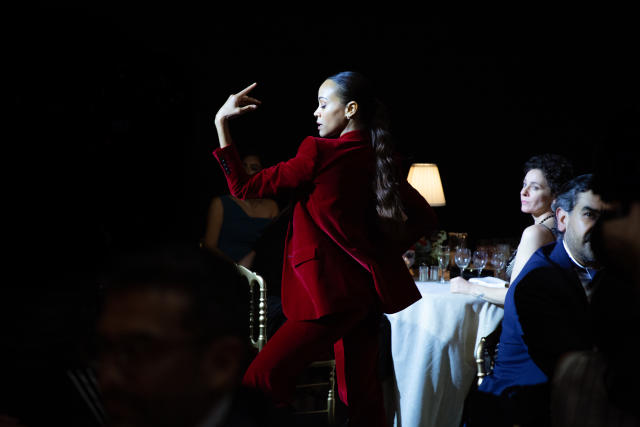
For instance, a pivotal gala sequence features Zoe Saldaña’s Rita performing a high-energy dance routine, exposing the corruption of the figures around her. This scene captures Rita’s internal conflict and her disdain for the world she operates within, all while delivering a biting critique of power and privilege.
On the other end of the spectrum, Gascón’s Emilia is given quieter, more introspective ballads. These moments allow the audience to peer into Emilia’s soul, revealing her inner turmoil as she grapples with her past and her hopes for the future. These songs are not grand or show-stopping in the traditional sense, but they resonate deeply, mirroring Emilia’s journey of transformation and redemption. The rawness of these performances aligns perfectly with the character’s vulnerability, and Gascón’s delivery only adds to the emotional weight of these scenes.
Selena Gomez’s Jessi also has her moments to shine, particularly in scenes where she confronts the emotional fallout of Emilia’s return. Her musical numbers blend heartache with defiance, offering a powerful portrayal of a woman torn between the life she once knew and the reality she now faces. Gomez’s voice brings a pop sensibility to the soundtrack, yet her performances are deeply rooted in the character’s emotional journey, making them feel authentic and grounded.
The songs serve as an outlet for emotions that words alone can’t fully capture. It’s in these moments that Audiard’s direction shines, as the music and choreography become extensions of the characters’ internal landscapes.
In this regard, the film’s approach to musical storytelling is reminiscent of La La Land and Moulin Rouge!, but with a distinctly edgier, grittier undercurrent. The songs do not offer easy resolutions or neatly tied bows—they offer glimpses into the characters’ hearts, revealing the messy, often contradictory emotions that define their journeys.
Cinematography: Visual Storytelling in a World of Contrasts
Audiard’s cinematic vision brings this turbulent narrative to life with stunning, often stark visual contrasts. From the bustling streets of Mexico City to the opulent spaces where Emilia now resides, the film’s cinematography serves as a metaphor for the duality of Emilia’s life. Cinematographer Yves Cape, who worked with Audiard on Rust and Bone, employs a gritty, handheld style in many scenes, grounding the film in a raw, almost documentary-like realism.
This is juxtaposed with moments of lush, operatic grandeur, particularly during the film’s musical sequences. These scenes burst to life with vibrant colors and sweeping camera movements that contrast sharply with the otherwise gritty world Emilia inhabits. The visual style mirrors the film’s thematic exploration of transformation, where beauty and brutality coexist in every frame.

One of the film’s most visually arresting sequences occurs during a climactic confrontation between Emilia and her estranged wife, Jessi. The scene is set against a backdrop of shifting lights, with the camera lingering on the characters’ faces, capturing every flicker of emotion. The use of shadow and light throughout the film further underscores its themes, with Emilia often framed in partial darkness, symbolizing her constant battle between her past and present selves.


The film also makes extensive use of wide shots to capture the vast, empty spaces that Emilia now finds herself in—spaces that reflect both her physical isolation from her family and her emotional distance from the world she once dominated. These shots are often contrasted with claustrophobic close-ups during moments of intense emotional conflict, reinforcing the sense that Emilia’s past is always closing in on them, no matter how far they try to escape.

A masterclass in visual storytelling, where every shot serves to deepen the film’s exploration of identity, transformation, and redemption. Audiard’s use of contrasting visual styles not only heightens the film’s emotional stakes but also reinforces its central themes, creating a cinematic experience that is as visually striking as it is narratively compelling.
The Performances: A Triumphant Cast of Power and Emotion
One of the undeniable highlights of Emilia Pérez is its ensemble cast, led by Karla Sofía Gascón, Zoe Saldaña, and Selena Gomez. Each of these actresses delivers a performance that not only brings their respective characters to life but also deepens the film’s exploration of identity, redemption, and the shifting dynamics of power.

(Jason Armond / Los Angeles Times)
Speaking of conversations and hot topics, 2024 has been a fascinating year for pop stars trying their hand at acting. While Lady Gaga’s Joker 2 (currently as of writing this…Philips and the curse of his sequels amirite…*cough The Hangover *cough) struggles to find its footing, Selena Gomez rises as a breakout star in this genre-bending musical-crime epic. The comparison between these two icons adds a fascinating layer to the ongoing conversation about pop stars crossing over into Hollywood. Gomez, however, seems to have struck gold, trading her star persona for something more grounded with a performance that is being hailed as one of the best of her career.

Gascón’s portrayal of Emilia is nothing short of transformative. Playing a former cartel boss who has undergone gender affirmation surgery, Gascón navigates the complexities of her character with a commanding presence. She captures Emilia’s evolution from ruthless leader to a woman who, despite her violent past, seeks redemption and a chance to reconnect with her family. What makes Gascón’s performance stand out is her ability to maintain Emilia’s innate menace while infusing her with a newfound tenderness. It’s a delicate balancing act that Gascón handles with remarkable precision, making Emilia one of the most complex characters in Audiard’s oeuvre.
Zoe Saldaña’s portrayal of the fierce attorney, Rita, offers a compelling contrast to Gascón’s Emilia. Rita is both Emilia’s legal guide and emotional anchor, tasked with facilitating her transition while grappling with her own moral dilemmas. Saldaña’s performance is grounded in strength, but she also brings a vulnerability to the role, particularly in scenes where Rita questions her involvement in Emilia’s transformation. The tension between Saldaña and Gascón is palpable, particularly in the scenes where their characters face off, their interactions filled with a mix of admiration, fear, and emotional complexity. Saldaña’s ability to convey internal conflict while maintaining an exterior of professionalism makes her character a crucial counterpart to Emilia’s more dramatic arc.


Then there’s Selena Gomez, who, in many ways, offers the heart of the film as Jessi, Emilia’s estranged wife. Gomez, often seen in lighter roles or as a pop icon, delivers a performance filled with raw emotion and gravitas. Jessi’s struggle to come to terms with Emilia’s new identity, as well as her own feelings of abandonment and betrayal, is portrayed with a quiet intensity that anchors the film’s emotional stakes. Gomez’s portrayal of Jessi is both empathetic and complex, as she must navigate the tensions between love, loyalty, and self-preservation. Her performance in this film marks a significant departure from her previous roles, showcasing her range as an actress and solidifying her status as a formidable force in the film industry.
Together, this trio of actresses elevates the movie from a standard crime-thriller to an emotionally charged exploration of power dynamics, transformation, and the human capacity for change. Their collective performances create a layered, nuanced narrative that lingers long after the credits roll, making a character-driven drama that probes the depths of identity and personal evolution.
Cultural and Social Relevance: A Reflection on Identity and Societal Change
In an era marked by increasing dialogue around gender identity and representation, Emilia Pérez couldn’t have arrived at a more relevant moment. The film places gender affirmation and identity at its core, offering audiences a bold narrative that doesn’t shy away from confronting these complex and often controversial issues head-on.
The film speaks to the universal struggle for self-actualization, but it does so through the lens of Mexican culture and its deeply embedded social hierarchies. Audiard’s decision to explore the world of Mexican cartels, combined with the story of a feared drug lord transitioning into a woman, provides an audacious platform for discussions around identity, transformation, and redemption. By weaving gender transition into the life of someone previously entrenched in a hyper-masculine and violent profession, he challenges not only traditional views of gender but also the often rigid frameworks that define criminality and morality. Gascón’s performance as Emilia gives voice to the journey many transgender individuals face:
The duality of becoming who you are while grappling with the weight of your past.
Emilia’s character arc humanizes the emotional complexity of such transitions while refusing to let her past as a violent cartel leader overshadow her attempt to reconcile her identity. In doing so, it moves away from a reductive portrayal of transgender individuals and offers a narrative where gender identity is not the sole defining feature, but one element of a multi-layered person navigating life.
Moreover, it shines a spotlight on the broader issue of gender affirmation surgery, which remains a point of contention in many parts of the world. The film’s portrayal of this process is sensitive and respectful, showing the physical, emotional, and societal complexities of such a transition without resorting to cliché or sensationalism. By grounding the narrative in a deeply personal journey, Audiard ensures that the audience feels empathy and understanding, rather than distancing themselves from the subject matter.
Final Verdict
🌟🌟🌟🌟
Audiard has crafted a movie that defies easy categorization, weaving together elements of crime thrillers, musicals, and character-driven drama to create something entirely unique.
What’s particularly interesting is the competition this movie faces this year, especially from another VIFF showcase I covered in Anora, which won the Palme d’Or at Cannes. Both films, though radically different in tone and subject matter, have dominated the conversation.

The film’s exploration of Mexico’s political and social landscape adds yet another layer of cultural relevance. The musical sequences, though unconventional, serve as emotional anchors that elevate the story telling Audiard’s decision to incorporate rough, almost unpolished choreography and music adds a layer of authenticity to the narrative. Rather than being flashy showpieces, these sequences feel like genuine extensions of the characters’ inner worlds, adding depth and resonance to their journeys.
While it may not be for everyone—its genre-defying nature and tonal shifts might alienate some viewers—those willing to engage with its bold vision will find a richly rewarding experience. It asks us to reconsider what makes a hero, what makes a villain, and whether anyone can truly escape their past.
🌟🌟🌟🌟
And with that, we wrap up yet another chapter of VIFF 2024! 🎬✨ As always, it’s been a thrill to dive into the world of cinematic wonder. Stay tuned, as there’s still much more to come from my journey through VIFF 2024. Expect deeper dives, surprise reviews, and of course, my thoughts on the festival’s most talked-about moments. Until then, make sure to follow my blog for live updates, exclusive behind-the-scenes insights, and more. Trust me—you won’t want to miss what’s next!
🎥🍿
For more updates and to follow my adventures, connect with me on

Let’s keep the conversation going!




Choose an amount
Or enter a custom amount


© VIFF 2024
2 responses to “Emilia Pérez: Melody, Mayhem, and Transformation at VIFF 2024”
[…] years’ already impressive lineup, standing tall alongside awards season heavyweights like EMILIA PEREZ and ANORA. A film that is both intimate and expansive—a delicate balance of personal narratives […]
[…] on my kino journey—especially VIFF 2024, where we delved into masterpieces like ANORA , CONCLAVE, EMILIA PEREZ and ALL WE IMAGINE AS LIGHT, to the groundbreaking realms of generative cinema with ENO, you know […]