

Jay Shah
DevOps\Aerospace Engineer & Journalist
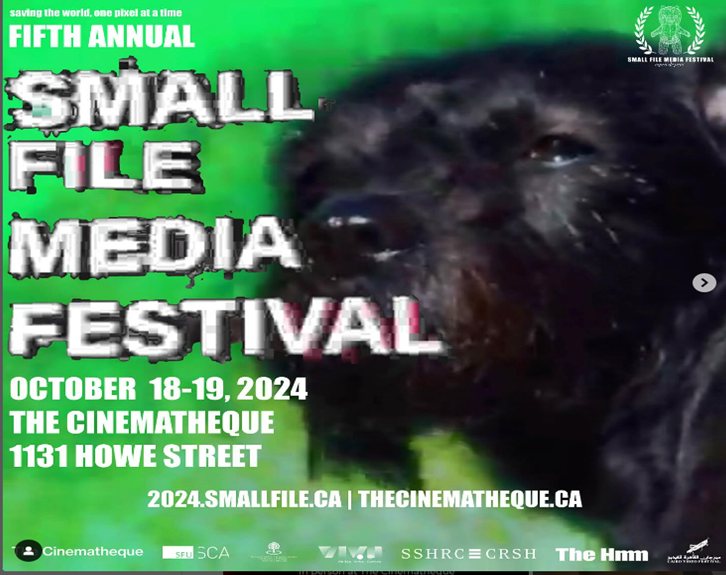
Hey there, cinephiles and fellow Jaysuits! 🎥✨ As Vancouver’s self-anointed “Chosen One” I’m back again (just finished attending the Vancouver Horror Show Film Festival that just happened in Burnaby among other things…tis the season after -all) to spread the word and share with you lovely disciples on a “SMALL” MAGICAL journey through the Small File Media Festival at The Cinematheque. Yes, you read that right—
SMALL FILES, BIG IMPACT!
If you’ve been tagging along on my kino journey—especially VIFF 2024, where we delved into masterpieces like ANORA , CONCLAVE, EMILIA PEREZ and ALL WE IMAGINE AS LIGHT, to the groundbreaking realms of generative cinema with ENO, you know I’m all about diving deep into the unexpected, the innovative, and the downright extraordinary. From the surreal wanderings of the GAME PROJECT to the thought-provoking narratives that challenge our perceptions, this medium never ceases to amaze me.
While streaming high-definition content has become second nature, this festival flips the script, reminding us that less can indeed be more.
But what exactly is this, and why should you be as excited as I am? It’s a cinematic playground where filmmakers from around the globe craft compelling stories within the tiny confines of “1.44 megabytes per minute“—the size of an old-school floppy disk.

Sustainability, creativity under constraint, and redefining the boundaries of visual storytelling; the anti-thesis of current modern day cinema (seriously…how did Joker 2 cost $200 million..ah well)
Over the next few sections, we’ll delve into the heart (Monique Motul-Firth) of this festival, engage in eco- friendly activities (including making your own SMALL FILE MEDIA for FREE!, and discover how The Cinematheque continues to champion indie cinema that challenges conventions and sparks vital conversations by exploring standout films like “Exodus“ and “Lyana Patrick: People of the Land”.
So grab your eco-friendly popcorn and settle in (once again fellow Jaysuits, I’ve taken your attention span into consideration and broken down this into bite sized chunks; you can click below to whatever catches your eye, or…. maybe read the entire thing through your commute). We’re about to embark on an eye-opening exploration of how small files are making a colossal impact in the world of cinema. Let’s get started! 🌟
From Floppy Disks to Silver Screens: The Essence of the Small File Media Festival
Imagine a world where the size of a file doesn’t limit creativity but ignites it. Welcome to the Small File Media Festival, celebrating its fifth anniversary at The Cinematheque.
Since 2020, the festival has been raising awareness about the digital carbon footprint left by streaming media. The current trend where high-definition streaming is the norm—think 8K videos, endless TikToks and Instagram reels, not to mention the current fad of energy-sucking AI applications—we often overlook the significant chunk of global carbon emissions this entails (luckily the crypto-currency fad seems to have died down from it’s earlier peak). The festival poses a bold question:
Can we enjoy compelling, high-quality content without contributing to environmental degradation?
The Challenge: Creativity Within 1.44 MB per Minute
Participants are tasked with creating original films that are no more than 1.44 megabytes per minute—the storage size of a classic floppy disk. Talk about a throwback
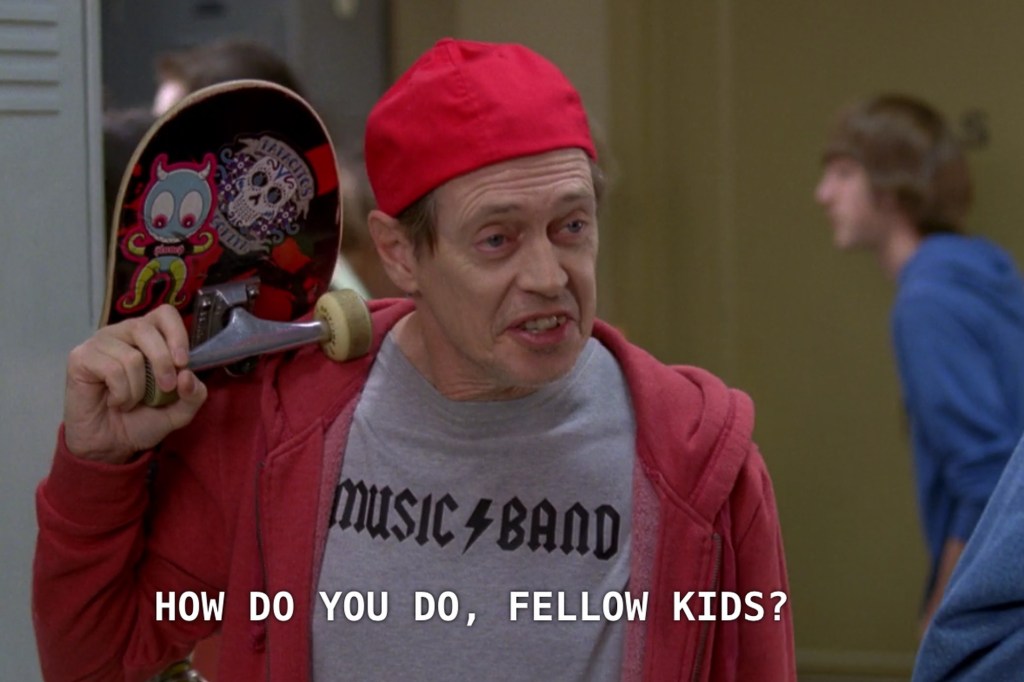
(Yes, fellow kids, a coaster like hardware component us old peeps used back in the day!)
This limitation isn’t a hindrance but a catalyst for innovation. Filmmakers employ ingenious techniques to craft visually stunning and emotionally resonant pieces within these tight constraints.
This constraint fosters a kind of creativity that’s both daring and disciplined. An approach that somehow aligns with the complex yet impactful storytelling witnessed in projects like ENO, where technology and art merge to create ever-evolving narratives (unfortunately in this case at the cost of enormous power consumption). It‘s about embracing unpredictability and finding freedom within boundaries—a philosophy that resonates deeply with me as a DevOps/Aerospace Engineer and Journalist.
Filmmakers seemed to employ a variety of techniques to maximize impact:
- Compression Aesthetics: Embracing the artifacts of compression—pixelation, glitches, and noise—as stylistic elements rather than flaws. This transforms potential drawbacks into unique visual signatures that enhance the storytelling.
- Layered Soundscapes: With limited visual fidelity, sound becomes even more critical. Carefully crafted audio can convey atmosphere, emotion, and context, filling in gaps left by minimal visuals.
- Abstract Storytelling: Many films leverage symbolism and metaphor, allowing viewers to project their interpretations onto the work. This invites deeper engagement and personal connection.
The result is a body of work that’s refreshingly original. It strips away the distractions of high-definition spectacle, focusing instead on the raw power of ideas and emotions; about storytelling and human connection.
Laura U. Marks, one of the festival’s founders, aptly describes these small-file movies as:
“ SUSTAINABLE CINEMATIC AVANT-GARDE “
She leads research on the carbon footprint of streaming media and founded the Small File Media Festival in 2020, Alongside Azadeh Emadi, she also co-founded the Substantial Motion Research Network, a collective of artists and scholars focusing on non-Western approaches to media. She also curates experimental media art for venues worldwide.
A 2024 Fellow in Fine Arts Research, awarded in the US & Canada competition. She specializes in media ecology, non-Western media histories, experimental cinema, Islamic philosophy, Arab cinema, aesthetics, and embodiment. Her notable books include:
The Fold: From Your Body to the Cosmos (Duke University Press, 2024)
Hanan al-Cinema: Affections for the Moving Image (MIT Press, 2015)
Enfoldment and Infinity: An Islamic Genealogy of New Media Art (MIT Press, 2010)
Touch: Sensuous Theory and Multisensory Media (University of Minnesota Press, 2002)
The Skin of the Film: Intercultural Cinema, Embodiment, and the Senses (Duke University Press, 2000)
A Fellow of the Royal Society of Canada, she teaches at the School for the Contemporary Arts at Simon Fraser University in Vancouver.

They embrace the aesthetics of compression—glitchiness, noise, pixelation—to create a new experimental film movement in the digital age.
Curated Programs: A Feast for the Senses
Over the next two days, the festival showcased 60 films from local and international filmmakers, thoughtfully curated into thematic series. Each program was a journey, inviting us to explore different facets of human experience through the lens of minimalism.
Series 1: Never Gonna Fall for (Modern Love)
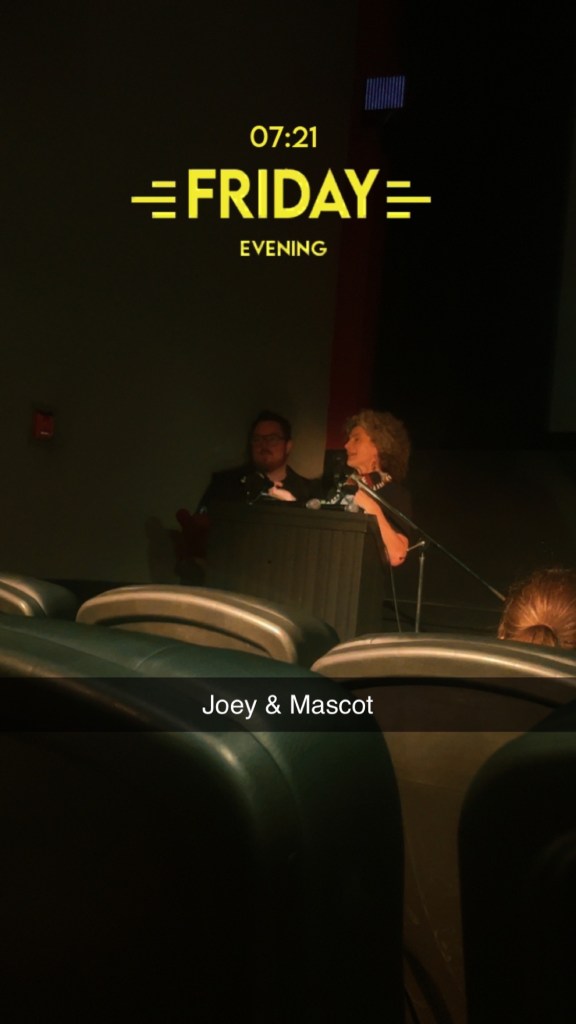
Curated by Joey Malbon, this series dives into the complexities of modern communication and identity. Twelve short films explore everything from the endless feed of stray thoughts to the analog connections that stretch out before collapsing into infinity.
Squint and it’s a teddy bear
Highlights:
- “Playpausesong“ by Valentin Sismann: A frustrated keystroke execution extracting an endless feed of stray thoughts.
- “Jesus’ Blood Never Failed Me Yet“ by Aryo Khakpour: Yes, the same Aryo from GAME PROJECT!, MUD as well as EMPTY-HANDED. A crown of crayons and a confrontation in the park between Tom Waits and Jesus Christ (*ahem* very relatable).
And for comparison, here’s the uncompressed version in its original form that was uploaded way back in 2020!
- “Self” by Akira Mikoshiba: A hand touches a screen in a mediated attempt at navigating resilience in fraught times.
Series 2: Its Tail, Placed in Its Own Mouth
Curated by Dr. Yani Kong, this selection embraces the concept of the ouroboros—a snake biting its own tail—as a symbol of cycles of renewal and rebirth. These films explore methods that sustain by way of one’s own endlessly regenerating body.
Highlights:
- “Hormone Rejection Therapy“ by Dev Petrovic: An intimate look into personal transformation and identity.
- “Restore“ by Minoo Iranpour Mobarekeh: An Iranian artist offering a meditative exploration of healing and self-discovery.
- “In Spirit“ by Mozhdeh Bashirian: A 1-minute journey into spiritual introspection.
Series 3: Spacetime Revolution
Curated by Mena El Shazly, these works are memories migrating in cyclical harmony with the sun. They evoke peripheral visions, sacred distortions, and supernatural intimacies of the everyday.

Highlights:
- “Is Every Republic Constructed on Flat Earth?“ by Clint Sleeper: A film that challenges our perceptions of reality and governance.
- “Chance of Rain“ by Benett Holgerson: Drifting off into space but longing for the earth.
- “Panyen Banbou“ by Laïssa Alexis: A 12-minute piece that delves into cultural identity and ancestral connections.
“App 666”: A Contemporary Reflection on Cinema
Inspired by Wim Wenders’s “Room 666” “App 666” is a collaborative project where 17 filmmakers offered selfie-style confessionals about the current state of cinema. Directed by William Brown, this 42-minute film delves into the divides in today’s media landscape—from the powerful small-scale images emerging from conflict zones to the distorted escapism of Hollywood blockbusters.
The screening was followed by a compelling Q&A session with William Brown, Jill Daniels, and Will Wapeemukwa, moderated by Dr. Laura U. Marks. The dialogue explored whether there’s still a place for independent filmmaking in an industry dominated by big budgets and even bigger egos.
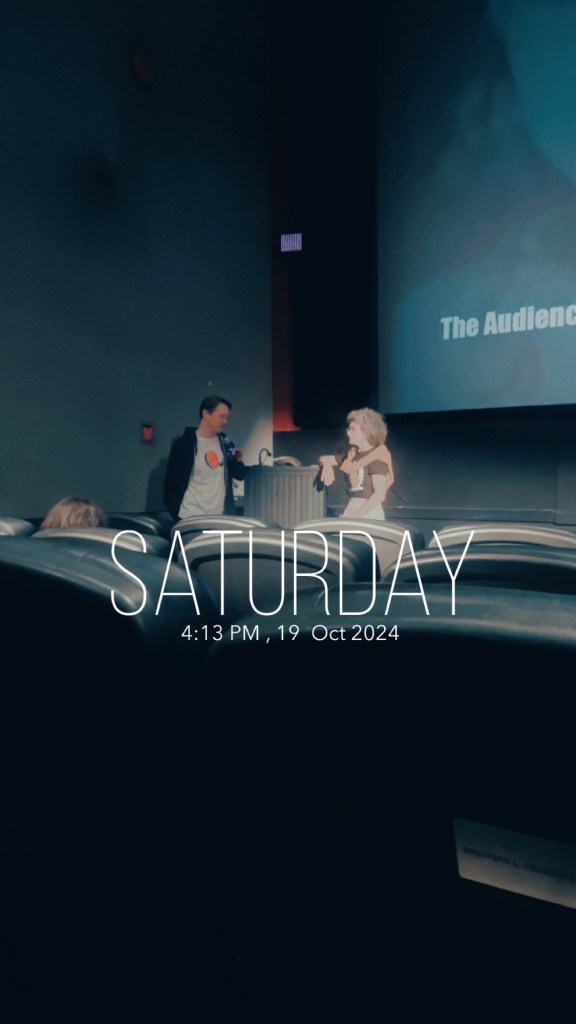
Monique Motut-Firth : DON’T FORGET THE CREAM
Weaving Visual Poetry Through Lo-Fi Animation
While each film brought something unique to the table, ONE particularly left an especially deep imprint on my mind and heart….
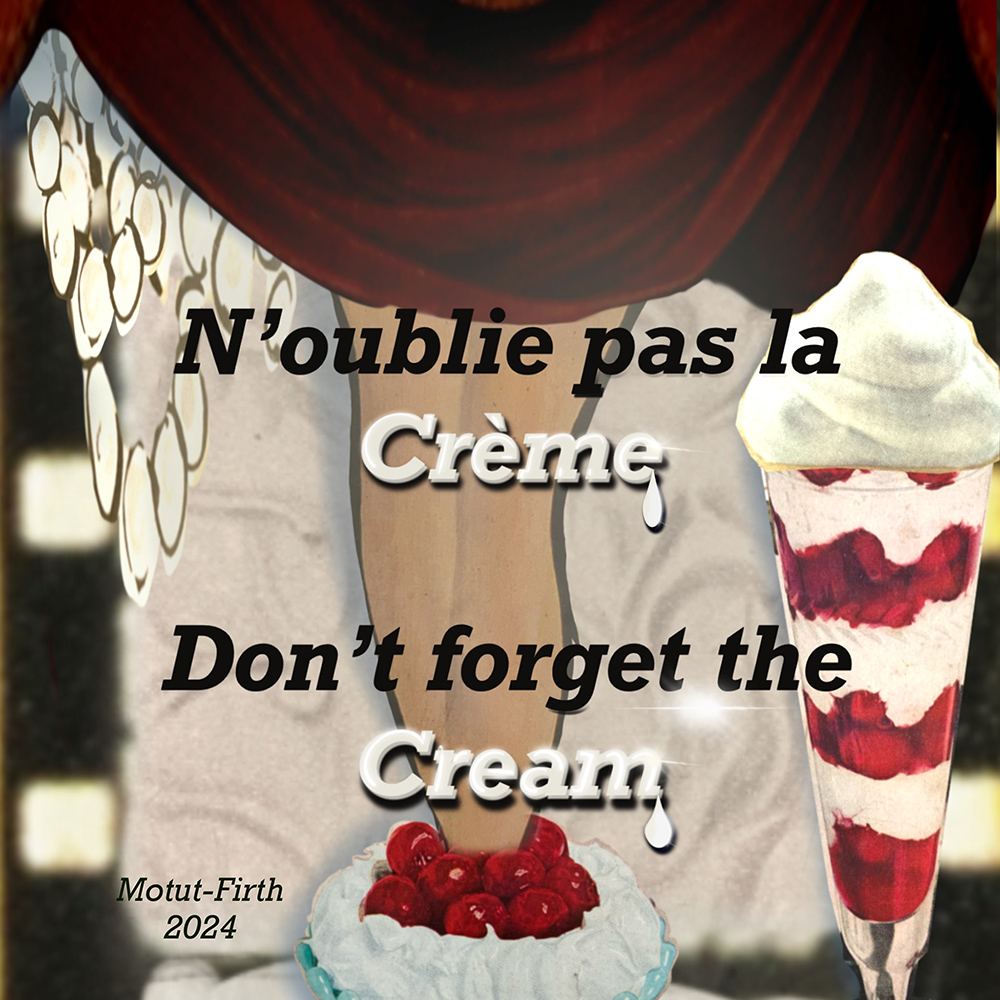
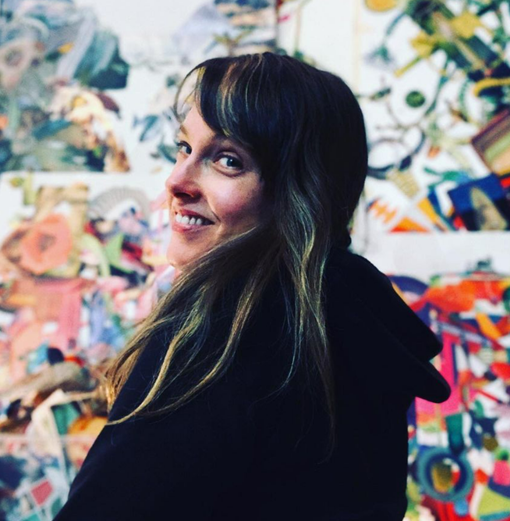
A mesmerizing piece by multidisciplinary visual artist Monique Motut-Firth. If you’ve been tagging along on my cinematic escapades, you know I’m a sucker for innovative storytelling that pushes boundaries, and Monique’s work does just that. Blending collage, photomontage, and lo-fi stop-motion animation, she creates visual symphonies that are as thought-provoking as they are aesthetically captivating.
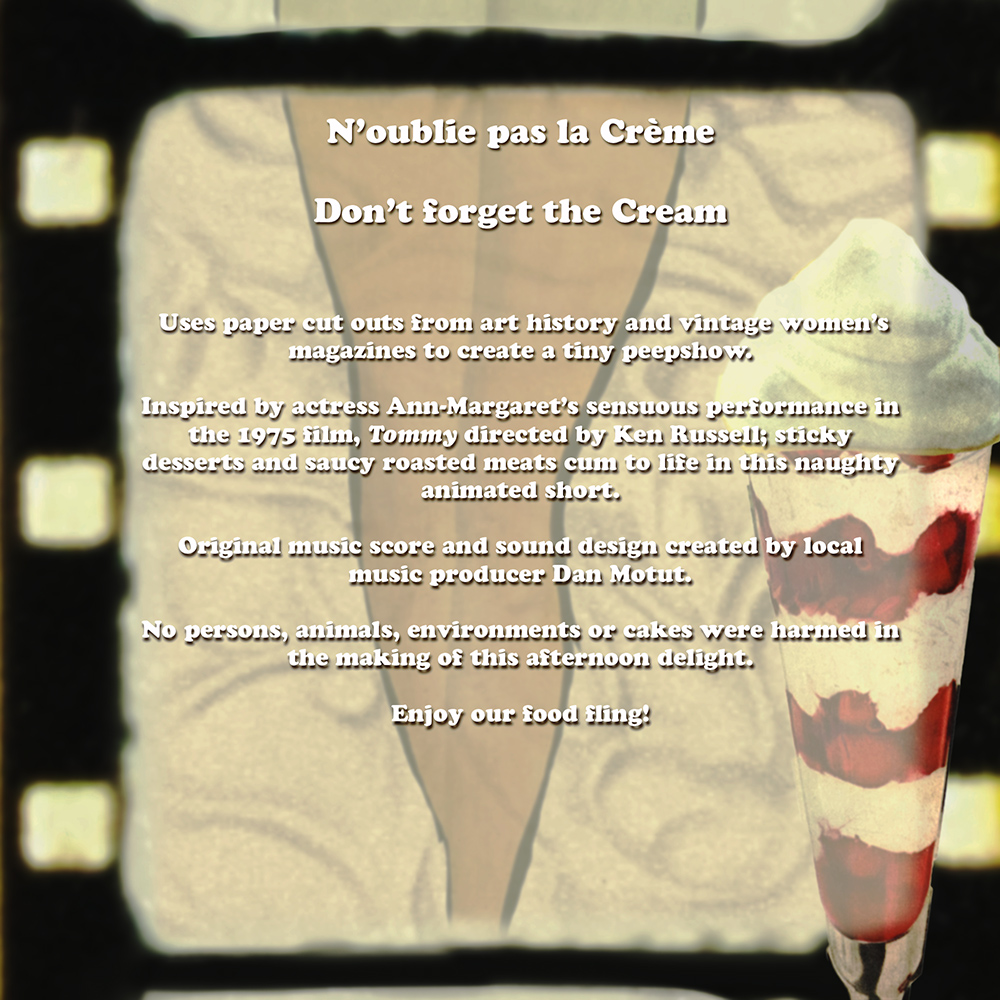
“ This 2D video short was inspired by the Small Media File Festival’s call to action. SFMF draws attention to the high environmental cost of streaming – including pornography. I wanted to see if I could produce a lo-fi, 2D, stop-motion sexy animation that was aesthetically pleasing on both a phone or theatre screen. This animation is just under 3 min and is compressed to 2.2 MB. That’s tiny!
It was created by cutting and scanning the sumptuous food images found in vintage women’s magazines, snippets of art history and inspired by a famous movie scene in Ken Russell’s Tommy, where actress Ann-Margaret rolls around in some canned beans.
I am hoping that the audience feels titillated, humoured and a little bit uncomfortable.
No persons, animals, environments or cakes were harmed in the making of this afternoon delight. ”
Monique
What I love about her approach—and what had inspired me during my own collage journey (as you’ll see below) —is the embrace of that “punk rock, DIY, indie, low-file, experimental vibe” she mentioned. It’s about breaking the rules, making a mess, and finding beauty in the unexpected. There’s no pressure to create a masterpiece; the value lies in the zen like process, the experimentation, and the sheer fun of it.
Her solo exhibition “CONSUMED” at Gallery 1515 was a featured exhibition in the Capture Photography Festival 2017.
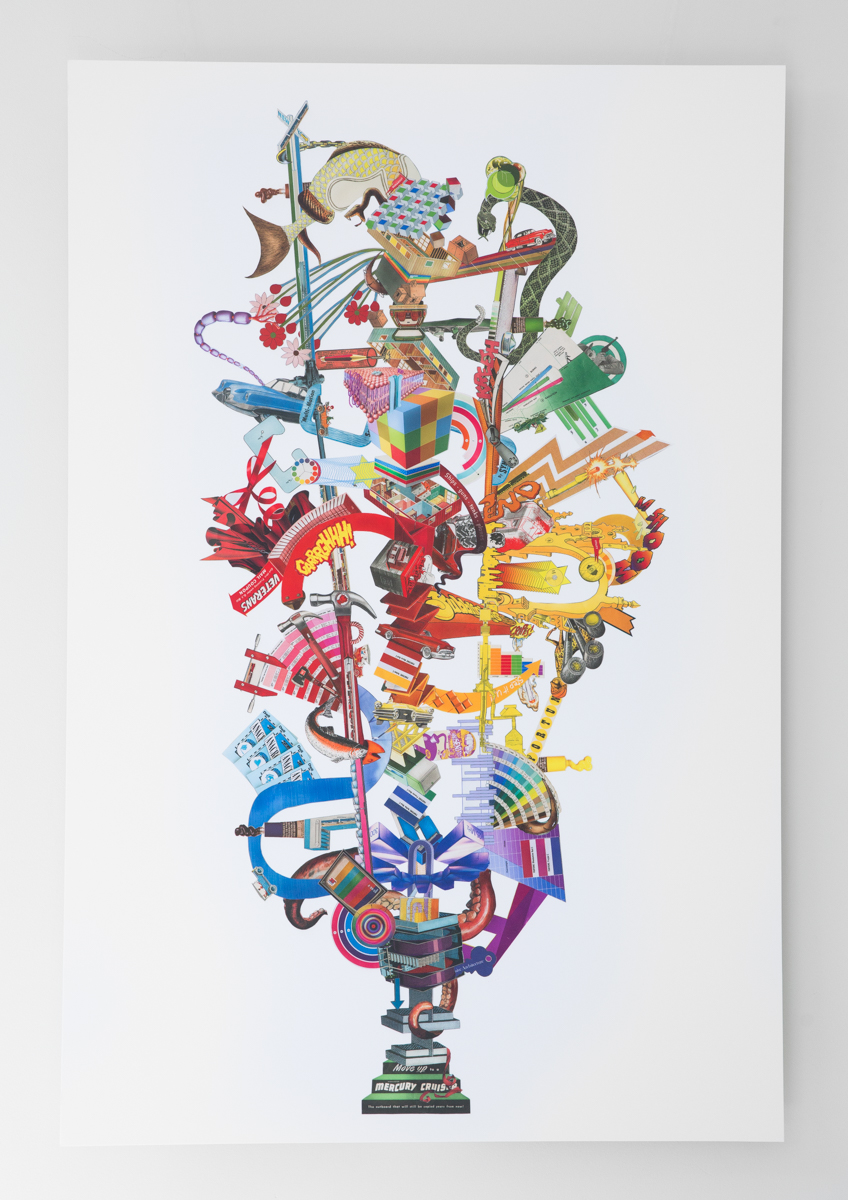
Many multi-motion electronic items probably safe unless downwind, 2015. 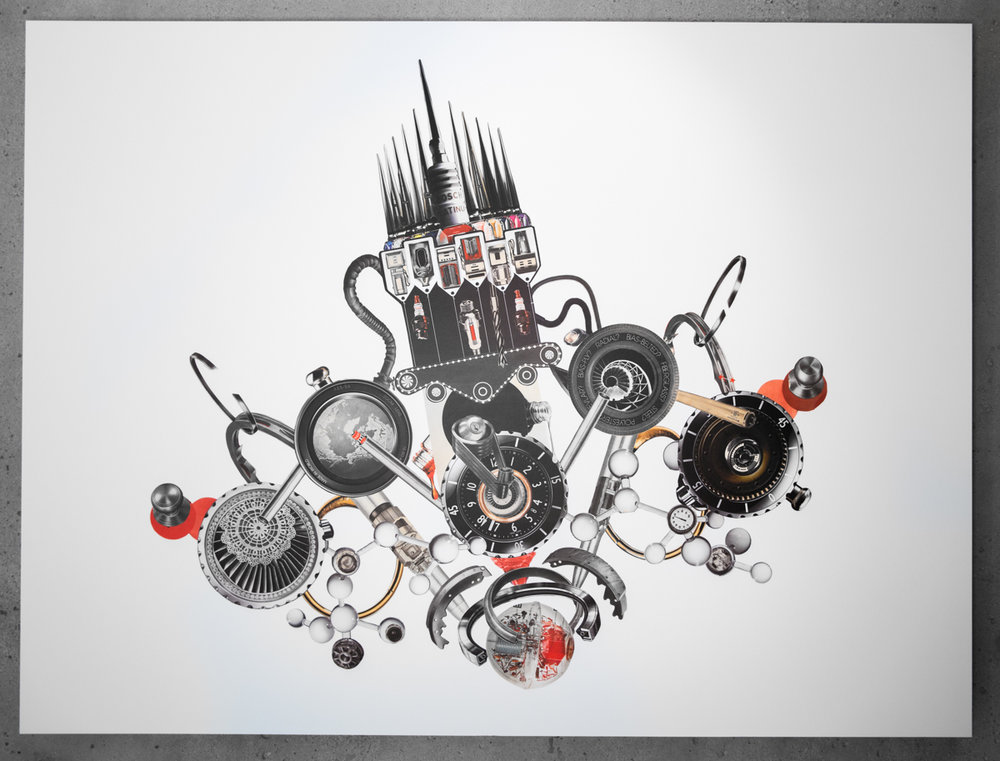
Swiss made radial bias-belted motor minder, 2016. 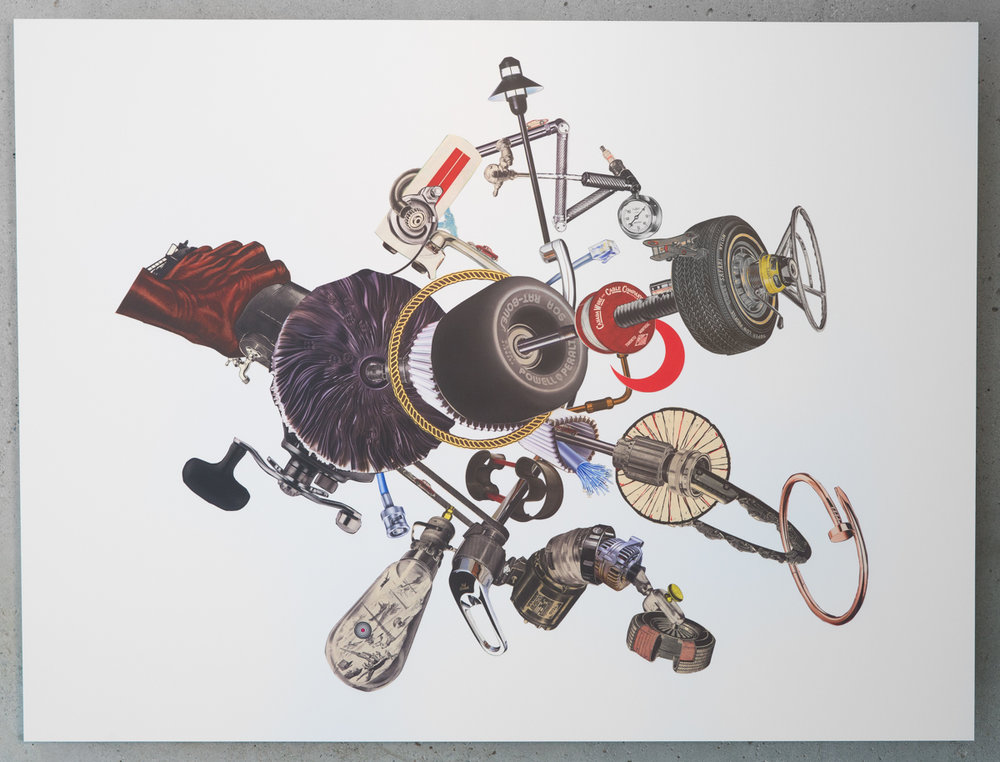
Standard super low profile wire and cable, 2016. 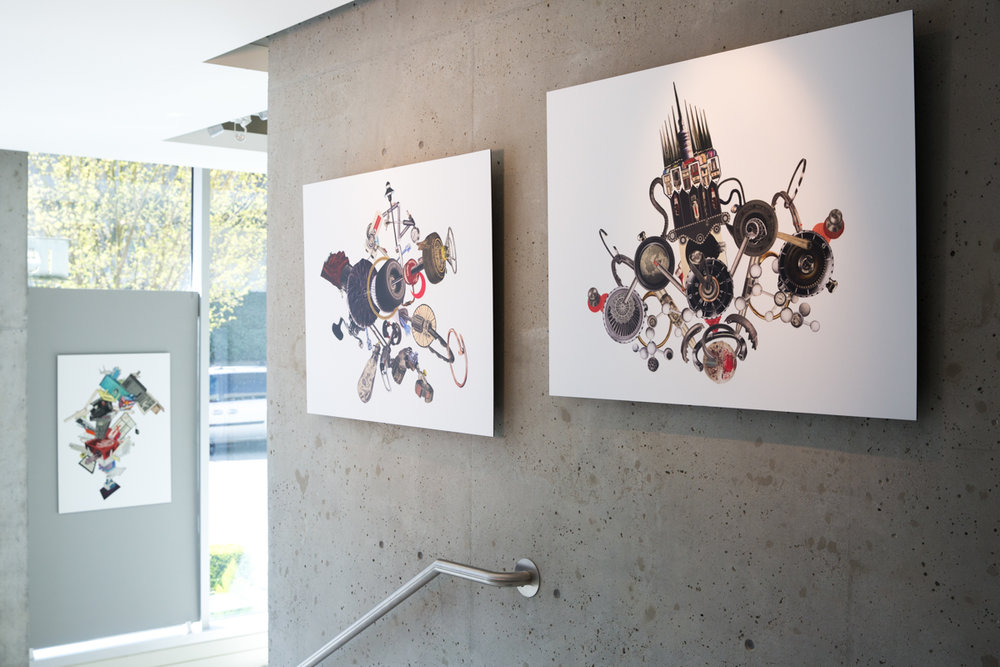
Consumed, 2017. Installation view. Gallery 1515, Vancouver, BC 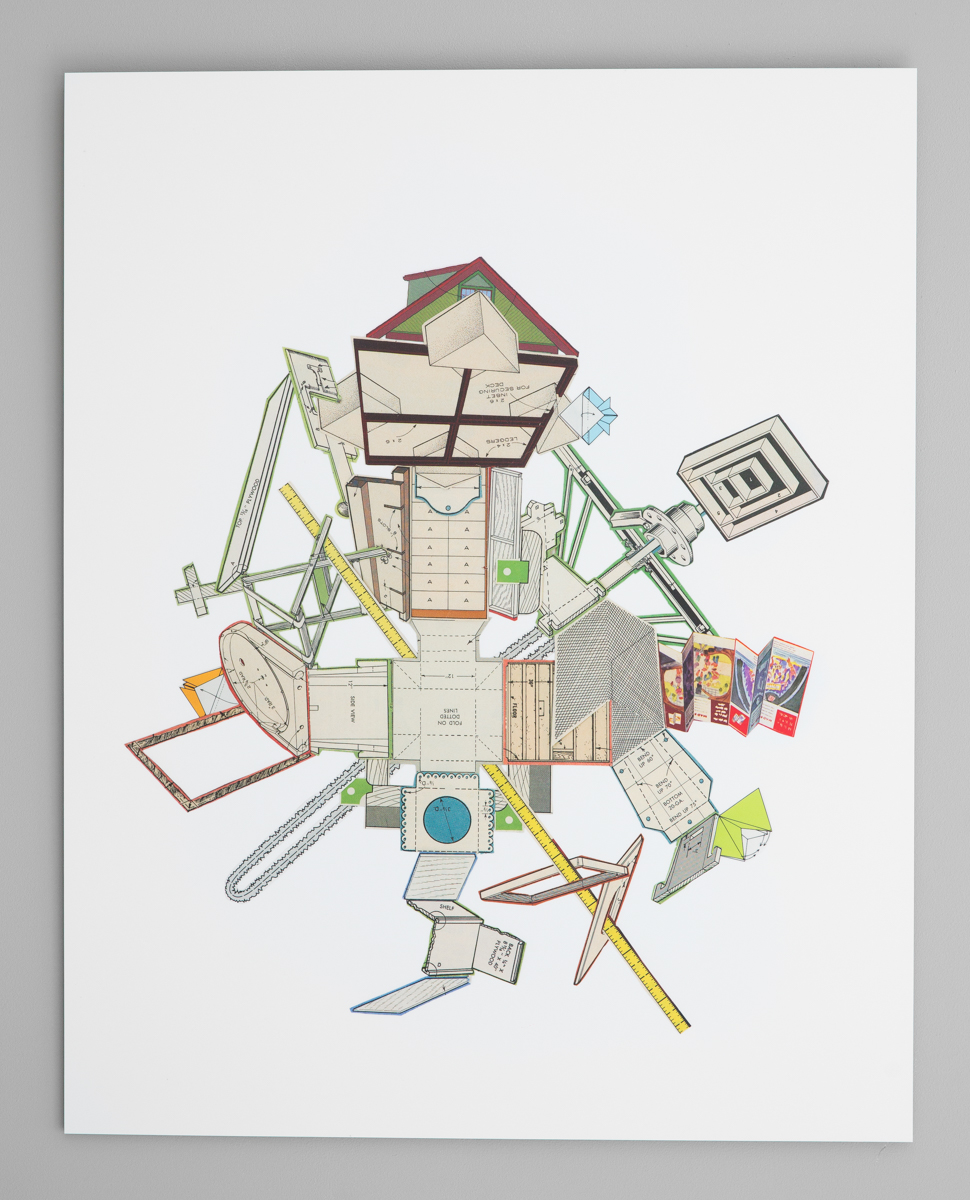
Bend fold insert on dotted lines, 2016. 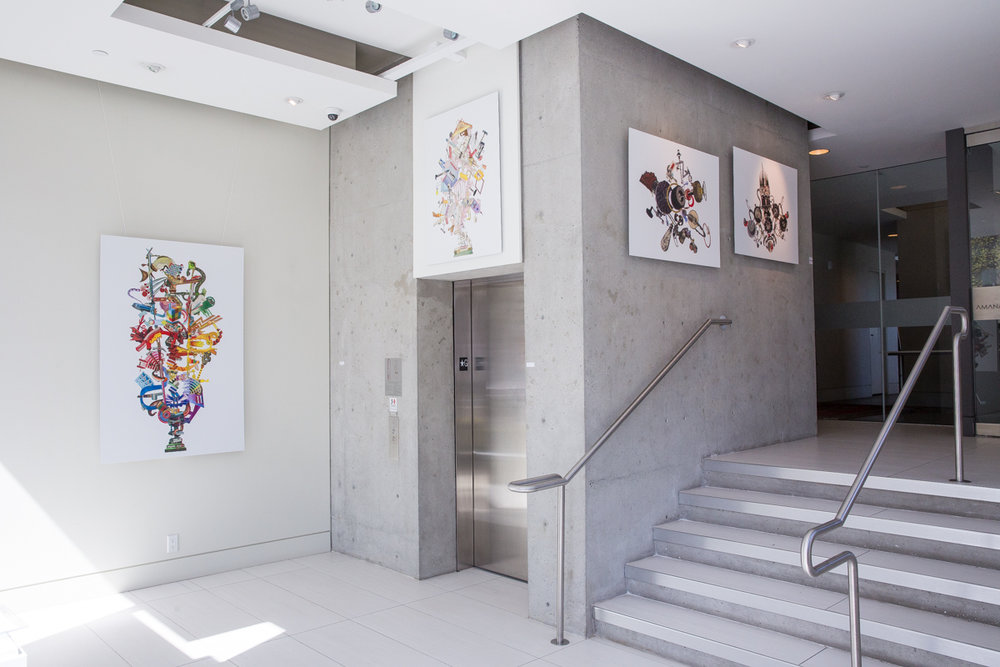
Installation view. 
Installation view.
Photo credits: Kirsten Aubrey
Working primarily in paper, paint, and animation, she delves into the realms of collage and photomontage to explore how technical images influence knowledge production and cultural representation. Her art is all about linking, layering, and weaving together disparate image cultures, eras, and visual signifiers into what she calls “scrap-systems.“
But what truly sets her apart is her rich, multicultural heritage and her deep-rooted connection to the land. A third-generation settler of mixed French Roman Catholic and Russian Doukhobor descent, Monique grew up in the shadow of St. Mary’s Mission Indian Residential School on the ancestral and shared territory of the Stopeople. This unique background fuels her critical curiosity about pop culture’s influence on cultural identity—a theme that resonates powerfully in her work.
A recipient of numerous Canada Council for the Arts grants, Monique has gained both national and international recognition for her animation shorts. In 2019, she was a finalist for the Georgia Straight & Capture Photography Festival Canada Line Competition and the Vancouver Arts Society Emerging Artist Award in 2016.
Collage, Creativity, and a Summer of Scissors :A Shared Journey of Expression
This summer, I stumbled into the world of collage, and it all began at a fantastic event at the Polygon Gallery in North Vancouver. They host these rad parties every month, and on August 15, 2024, they had a Collage Party with Maya Beaudry, a contemporary textile artist based right here in Vancouver. I thought,
“Why not?”
and decided to check it out. Little did I know, I’d be bitten by the collage bug—hard.
I sat down with a pile of pamphlets, comics and fashion mags, and before I knew it, I was lost in a world of images, textures, and endless possibilities. Snip here, glue there—suddenly, I was creating something entirely new from fragments of the old. Wanna see the magic? Follow me below…
Step 1: Make yourself comfy and soak up the view:
Step 2: Follow GIANT INSTRUCTIONS
Step 3 : Let the universe guide you to the inevitable…
Step 4 : Set base
Step 5: Get inspired!
Step 6 : JUST VIBE!
Fast forward to the festival, and seeing Monique’s film felt like fate. Her approach to collage and animation resonated with my own fledgling experiments. Sure, she’s operating on a whole different level, but the core passion is the same—exploring the pliability of images and the stories they can tell when rearranged.
So, in the spirit of fun and creative camaraderie, I thought it’d be cool to showcase some of my collages escapdes as a magical detour alongside the stills & films from Monique’s work.
Think of it as a visual dialogue between a seasoned artist and a guy who just discovered the magic of Mod Podge.
If you’ve ever felt the itch to create, I wholeheartedly encourage you to grab some scissors and dive in. Whether you consider yourself “artistic” or not, there’s something incredibly satisfying about turning everyday materials into something uniquely yours. Who knows? You might discover a new passion or, at the very least, have a blast making a glorious mess.
P.S. If you happen to try your hand at collage, I’d love to see your creations! Tag me on social media, and let’s build a community of cut-and-paste connoisseurs. 🎨✂️
Sustainability and the Future of Digital Consumption
In our hyper-connected world, it’s easy to overlook the environmental impact of our digital habits. High-definition streaming, cloud storage, and data-intensive applications contribute significantly to energy consumption and carbon emissions.
This shines a spotlight on this often-overlooked issue:
Advocating for a more sustainable approach to media consumption. By demonstrating that compelling narratives can thrive within minimal data footprints, the festival challenges us to reconsider our digital behaviors.
Key Considerations:
- Environmental Impact: Recognizing the tangible effects of our online activities empowers us to make conscious choices. Opting for lower-resolution streaming or supporting platforms that prioritize sustainability can make a significant difference.
- Accessibility: Smaller file sizes make content more accessible in regions with limited bandwidth or connectivity issues, promoting inclusivity and bridging digital divides.
- Innovation Through Limitation: Embracing constraints can lead to groundbreaking creativity. The festival proves that quality and impact don’t have to be sacrificed for sustainability.
This movement aligns with broader efforts to address climate change and encourages a holistic approach that balances technological advancement with ecological responsibility. It’s a call to action that resonates with the environmental themes explored in Lyana Patrick’s “People of the Land” as you’ll see below.
Join the Movement and Make a Difference
Feeling inspired? Here’s how you can be part of this exciting journey:
Experience the Festival Online
From October 21 to 27, the festival will be streaming online.
Access Options:
- $25 CAD – Friend of the Festival: Support the festival’s mission and help sustain future initiatives with a generous donation.
- $15 CAD – Lo-Barrier Pass: Perfect for students or those on a budget, this pass provides full access to the festival’s online programming.
- NOTAFLOF (No One Turned Away For Lack Of Funds): If you’re unable to purchase a pass, email info@smallfile.ca for a unique code to access the festival.
CREATE YOUR OWN SMALL FILE FILM
FOR FREE!
YES! YOU READ THAT RIGHT! The lovely team behind this have developed a bespoke small-file player called HANDBRAKE, a free, open source utility designed to deliver the films sustainably and authentically, without the heavy data demands of traditional streaming platforms.
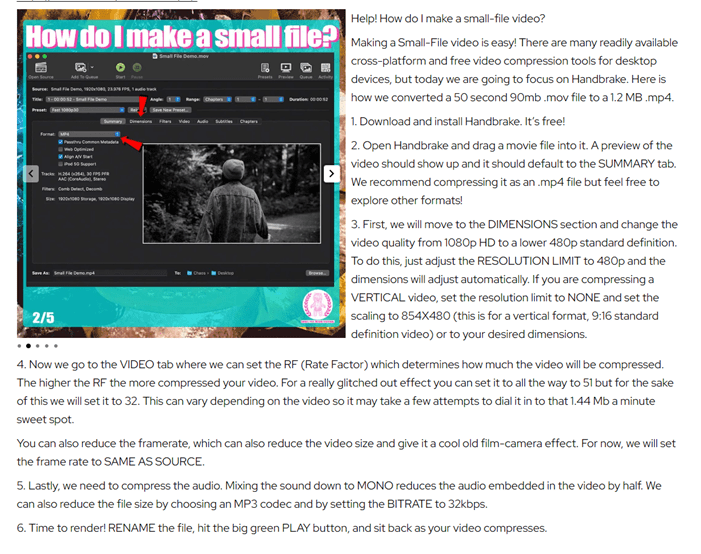
A more in-depth guide and process behind it all can be found on their WEBSITE
The Cinematheque: A Sanctuary for Indie Cinema
My journey with this iconic venue has been nothing short of transformative. From the immersive performances of the GAME PROJECT, which blurred the lines between audience and performer, leaving an indelible mark on how I perceive storytelling.
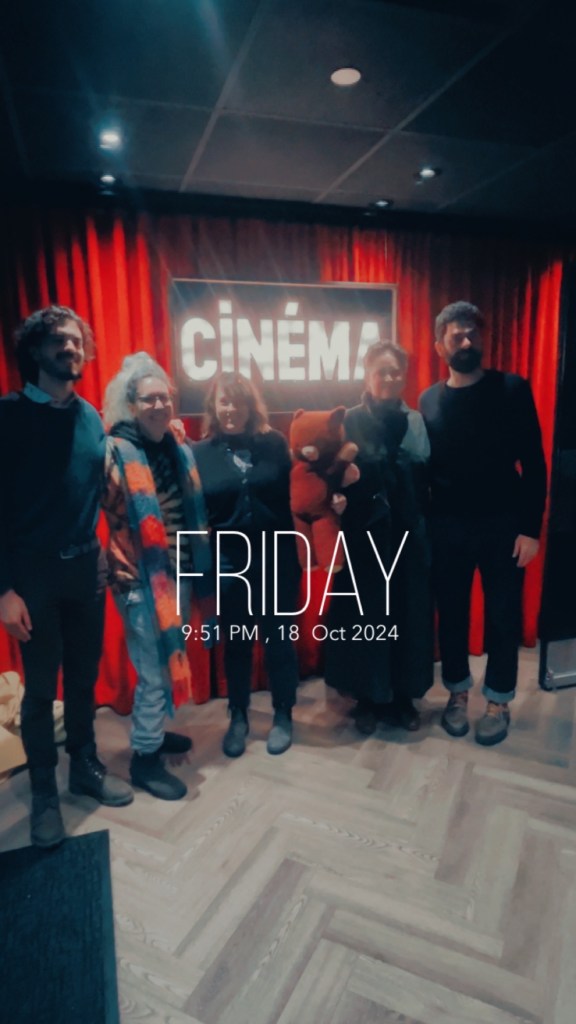
Contributions of The Cinematheque:
- Educational Initiatives: Offering workshops, lectures, and discussions that foster film literacy and critical thinking. It’s a nurturing ground for both seasoned professionals and budding artists to learn, grow, and collaborate.
- Championing Independent Voices: By providing a platform for festivals like the Small File Media Festival, The Cinematheque supports underrepresented voices and innovative ideas that might not find space in mainstream venues.
- Community Engagement: Hosting events that bring together diverse audiences, The Cinematheque encourages dialogue, collaboration, and mutual appreciation. It’s a place where connections are forged, and ideas are exchanged, enriching Vancouver’s cultural tapestry.
Recently, I had the privilege of attending screenings of two profoundly impactful films at this iconic venue: “Exodus“ by Bahman Kiarostami and “People of the Land”, a collection featuring works by Indigenous filmmaker Lyana Patrick. Both films delve deep into themes of displacement, identity, and the relentless pursuit of hope—resonating powerfully in today’s turbulent times.
Screening Spotlight: “Exodus” and Lyana Patrick’s “People of the Land”
“Exodus”
اکسدوس
Iran | 2019 | 77 minutes | DCP | In Farsi with English subtitles
Directed by the visionary Bahman Kiarostami (yes, the son of the legendary Abbas Kiarostami, another Palme D’or winner for his film Taste of Cherry), “Exodus” is a riveting documentary that captures the bureaucratic limbo faced by Afghan migrants attempting to leave Iran amidst economic collapse.
Set in an immigrant processing center, the film offers a Wiseman-esque fly-on-the-wall observation of a reality that is both absurd and deeply human. Over 2.5 million Afghans have sought refuge in Iran since the Soviet–Afghan War, but renewed U.S. sanctions in 2018 plunged Iran into recession, compelling many migrants to return home. Kiarostami’s lens captures the Kafkaesque exit interviews, where migrants share desperate yet hopeful narratives, revealing the stark impact of geopolitical decisions on individual lives.
Watching it on the silver screen was an immersive experience since the theater’s intimate setting amplified the film’s nuanced portrayal of migration—a topic that, let’s face it, hits close to home (especially in Canada right now, amidst the ongoing election season) in our globally connected yet divided world. The meticulous cinematography draws you into the migrants’ stories, making you feel the weight of every stamped document and every uncertain gaze.
What struck me was how the film resonates with current global contexts, especially here in North America as I mentioned earlier and even in Europe, where immigration policies are tightening, and economic sanctions often exacerbate humanitarian crises.
Lyana Patrick’s “People of the Land”
To mark one year of Our Stories to Tell, The Cinematheque celebrated series advisor Lyana Patrick on October 23rd. Patrick, an Indigenous filmmaker of Acadian/Scottish and Stellat’en First Nation heritage, curated a program titled “People of the Land”, featuring three of her own films alongside “DƏNE YI’INJETL – The Scattering of Man” by Luke Gleeson.
“A Place to Belong”, co-directed with Rosemary Georgeson (Coast Salish and Sahtu Dene), documents a Vancouver Aboriginal Friendship Centre event, tracing the origin of the friendship center movement. The film is a heartfelt exploration of community, resilience, and the importance of safe spaces for Indigenous peoples in urban settings.
“The Tomahawk“ profiles the oldest family-run restaurant in British Columbia, blurring the line between appropriation and appreciation. Through candid interviews and rich storytelling, Patrick examines how cultural symbols are commodified, prompting us to reflect on our own perceptions and biases.
“The Train Station“ is perhaps the most personal of the trio. It delves into Patrick’s family history at Lejac Indian Residential School, unearthing stories of survivance—survival and resistance—amidst the harrowing legacy of residential schools in Canada. The film intertwines archival footage with personal narratives, creating a tapestry that’s both intimate and universally resonant.
The program also featured “DƏNE YI’INJETL – The Scattering of Man“ by Luke Gleeson (Tsay Keh Dene). This powerful documentary recounts the displacement of the Tsay Keh Dene people due to the construction of the W.A.C. Bennett Dam and the subsequent flooding of their ancestral lands. The film connects to Patrick’s upcoming feature documentary “Nechako”, further emphasizing the ongoing struggles and resilience of Indigenous communities.
The post-screening Q&A with Lyana Patrick was an illuminating conversation. She spoke passionately about the power of storytelling as a tool for healing and advocacy. Her insights into the complexities of cultural identity and the importance of reclaiming narratives were both profound and inspiring.
This especially reminded me of the thematic richness in “All We Imagine as Light“, where personal journeys intertwine with broader cultural and societal themes. Patrick’s films, much like Kapadia’s, offer a lens into experiences often marginalized, urging us to confront uncomfortable truths and embrace the depth of human resilience.
Support The Cinematheque
Consider attending future events, participating in workshops, or becoming a member. Your involvement helps sustain a vital institution that champions independent voices and fosters cultural enrichment in our community.
Closing Thoughts: Embracing the Power of SMALL Steps
As I reflect on the journey through this year’s cinematic celebration, I’m struck by the profound impact that can emerge from the most modest of means; a showcase of what’s achievable within a 1.44 MB per minute constraint. It’s a testament to the boundless creativity that flourishes when artists are challenged to think differently.
We sometimes tend to associate bigger with better—ultra-high-definition streaming, blockbuster budgets, and limitless data. This reminds us that less can indeed be more, that limitations can ignite innovation rather than stifle it.
What truly sets this movement apart is its commitment to sustainability without sacrificing artistic integrity. It’s a call to action, urging us to reconsider our digital consumption habits and recognize the environmental footprint of our online lives. In a way, it’s akin to the revolutionary approach of “ENO.” (although completely in the opposite scale when it comes to sustainability, with its AI electricity chugging machine) where technology and art converge to redefine what’s possible in cinema.
It’s initiatives like this that invigorate the cinematic landscape, pushing us to question norms and embrace new perspectives by foster spaces where innovation thrives, and where the love for the craft is palpable in every frame, every pixel.
So here’s to the filmmakers who turned constraints into canvases, to the organizers who championed a cause greater than themselves, and to the audiences (you my fellow Jaysuits) who open their hearts and minds to new ways of seeing the world.
As we move forward, let’s carry the spirit of this gathering with us. Let’s continue to seek out and support ventures that align with values of sustainability, inclusivity, and innovation. After all, every big change starts with a small step (alright, I’ll stop with the puns), and every profound journey begins with a single moment of inspiration.
Until next time, keep exploring, keep questioning, and remember—sometimes, the most impactful stories come in the smallest of packages.
🎥✨
For more updates and to follow my adventures, connect with me on:


Choose an amount
Or enter a custom amount


© 2024 Small File Media Festival
One response to “SMALL FILE MEDIA Festival @ The Cinematheque :A Dive into Streaming Sustainability ft. Monique Motul-Firth!”
[…] His contribution to the SMALL FILE MEDIA FESTIVAL […]